


Yemen's Power Shift: The Rise of Supervisors and Erosion of State Institutions
|
19 hours ago
A-
A+
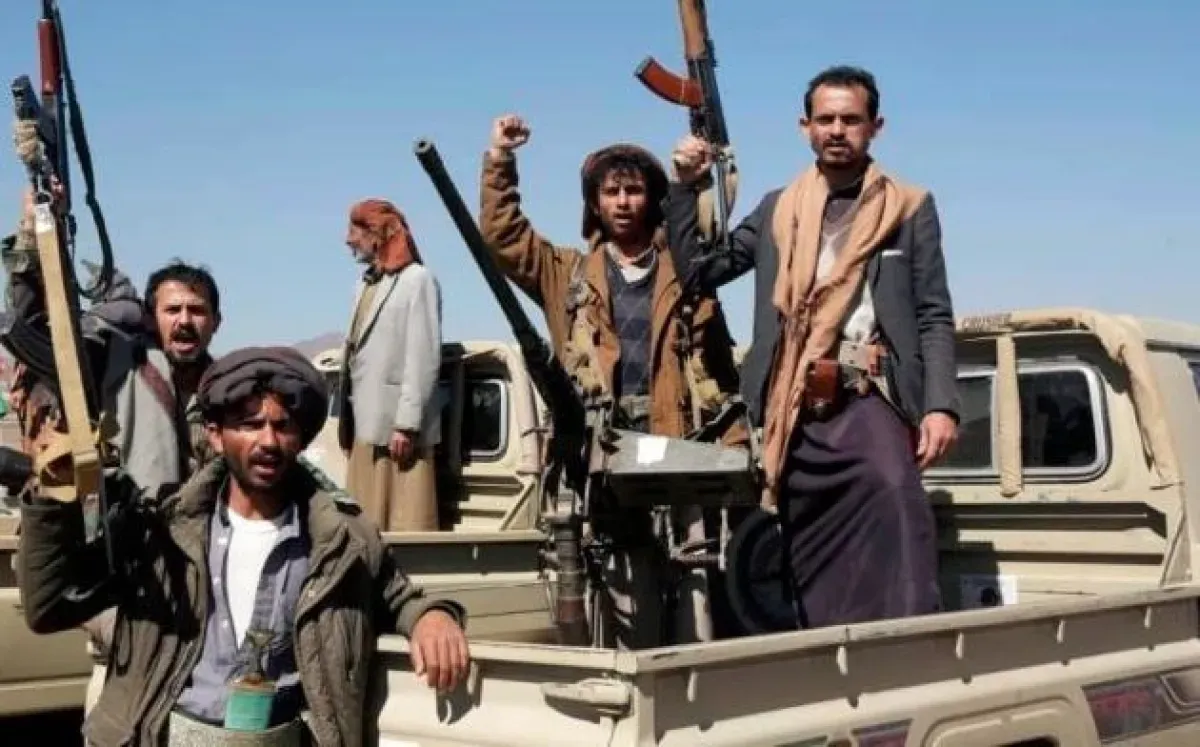
Yemen has undergone a profound transformation since 2011, moving beyond a mere political crisis to witness the gradual disintegration of its traditional state structures and the emergence of new power centers that have redefined authority and influence. The Houthi takeover of Sana'a in September 2014 and subsequent expansion across most governorates marked a new phase, fundamentally altering the nature of the state itself. Formal institutions have receded, replaced by a parallel system where Houthi "supervisors" wield de facto control over political, security, administrative, and economic decisions. In the years of conflict, Yemenis have increasingly interacted not with established institutions but with networks of influence tied to the Houthi militia. These networks often possess extensive authority that can supersede that of government ministers, governors, and heads of official bodies. This shift, driven by the exigencies of war, has solidified into a comprehensive governance model that reshapes the relationship between power and society. It is characterized by loyalty, mobilization, surveillance, and direct control, leading to an unprecedented decline in the concepts of the state, law, and institutional legitimacy. The term "supervisor" has become a pervasive fixture in daily life within Houthi-controlled areas. Each governorate, district, village, and institution has individuals or groups exercising actual authority over decisions and procedures, irrespective of their official administrative roles. Over time, this system has evolved into a vast network where security, political, and economic powers intertwine, making the Houthi supervisor the primary reference point for administrative appointments, security movements, resource management, and community activities. Analysts suggest the militia has employed this structure to ensure complete control over state and societal institutions by creating a parallel system more directly linked to Houthi leadership and less bound by traditional laws and procedures. Consequently, government officials often find themselves in nominal positions, with true power residing with supervisors who can issue directives and enforce decisions on the ground. This dual authority creates confusion among employees and officials, caught between the dictates of formal procedures and the reality of the supervisor's influence, with the latter typically prevailing. The prolonged period of coup and war has provided fertile ground for dismantling the traditional state model and establishing the supervisor system. As state institutions collapsed and the central government's capacity diminished, armed militias emerged as the most effective forces for territorial control, enabling the Houthis to build their own influence networks. This system expanded beyond wartime administration to encompass education, media, economy, judiciary, and humanitarian efforts. Researchers observe that the Houthi militia views state institutions as tools to be repurposed for their political and ideological agenda, rather than as neutral entities governed by law and professional administration. The ongoing conflict has entrenched this model, prioritizing security and political control over the preservation of traditional state institutions. A significant consequence of this transformation is the tightening grip of Houthi security apparatuses as the primary means of societal management. During the war years, Houthi security and intelligence agencies expanded considerably, wielding extensive influence both within and outside state institutions. In this environment, the roles of the judiciary, law, and formal procedures have diminished, replaced by the ascendancy of security authority as the de facto arbiter in all matters. Citizens, employees, merchants, tribal leaders, and social figures now operate under a new paradigm based on influence and loyalty rather than legal texts or institutional procedures. This climate has fostered widespread fear and self-censorship, with many individuals avoiding public expression of opinions or criticism of policies to prevent accountability or targeting. The overlapping of security and administrative powers has weakened traditional state institutions, reducing their impact in favor of the burgeoning parallel system. The power shifts in Yemen have extended to the economy, which has also fallen under the sway of new influence networks. Amidst financial and administrative division, an economic system based on levies, tributes, and control over markets and resources has emerged, undermining the state's ability to manage the economy through established institutional frameworks. During the war, extensive economic activities became linked to Houthi influence networks through control of trade, imposition of fees, management of humanitarian aid, and dominance over vital sectors. Economists note that the war has created a new class of beneficiaries who have accumulated influence and wealth from the conflict economy, while the majority of Yemenis suffer from poverty and economic collapse. This situation has increased pressure on the private sector and merchants, who face a complex and unstable economic environment where official decisions are intertwined with the influence of supervisors and their associated interest networks. The militia's efforts to reshape power structures have extended to controlling instruments of public consciousness, notably education and media. Curricula and educational activities in schools and universities have been altered to align with the militia's ideology, accompanied by increased mobilization campaigns within educational institutions. Observers believe control over education is integral to their project of societal transformation, aiming to cultivate new generations with different perceptions of the state, national identity, and authority. In the media sphere, years of conflict have seen widespread suppression of independent and opposition media, while state-controlled media has expanded as a tool for political and ideological mobilization. With diminishing pluralism, the official narrative has come to dominate the public sphere in Houthi-controlled areas, while journalists and activists face growing security and professional challenges. As this reality persists, Yemeni society is gradually entering a state of forced adaptation to the new power structure, with individuals treating supervisors and influence networks as a part of daily life. However, this adaptation reflects exhaustion, fear, and a desire to avoid direct confrontation rather than full acceptance. Sociologists point out that the prolonged dominance of non-institutional power leads to profound societal changes, eroding trust in law and the state while increasing reliance on influence networks and personal relationships. This environment weakens the concept of equal citizenship, fostering new patterns of loyalty and affiliation tied to power and political influence. Meanwhile, Yemeni youth face frustration and uncertainty due to a lack of job opportunities, the decline of state institutions, and the ongoing conflict and political division. Yemeni women have also been significantly affected by the shifts in power structures during the war. The increasing security and ideological nature of governance has led to changes in the public sphere, impacting women's participation in public work, media, and community activities. In Houthi-controlled areas, new social and administrative restrictions have been imposed, and female activists and journalists have faced campaigns of suppression and surveillance, curtailing women's presence in the public sphere compared to earlier periods. Despite these challenges, many women continue to play vital roles in society, particularly in humanitarian, educational, and media sectors, striving to maintain a semblance of civil life in a turbulent environment. Many Yemenis believe the transformations in the country go beyond government changes or shifts in power balances; they strike at the very core of the republican state concept. Historically founded on the principles of statehood, institutions, and law, Yemen has, since 2011 and the Houthi coup, moved towards governance models based on armed groups and parallel authorities. The supervisor system thus reflects a deeper shift in the nature of power, where legitimacy is derived from force, influence, and control rather than institutions or law. Analysts warn that the prolonged continuation of this situation threatens to entrench structural divisions within the state and society that may be difficult to overcome even after the war concludes. More than a decade after the coup, conflict, and war, Yemen faces immense challenges regarding the future of its state and institutions. Rebuilding Yemen will require more than ending the war militarily or reaching a political settlement; it necessitates a deep addressing of the transformations that have affected the fabric of power and society. Observers emphasize that restoring the state requires re-establishing the primacy of institutions, law, and equal citizenship, and dismantling the parallel authorities and influence networks formed during the war. However, this task is exceedingly complex given the ongoing Houthi coup, political and military divisions, overlapping local and regional interests, the expansion of the war economy, and declining public trust. The Yemeni society itself bears deep scars from this period, psychologically, socially, and politically, making the process of recovery and reconstruction a long and arduous one. Despite all transformations and divisions, many Yemenis still cling to the idea of the state as the sole guarantor of stability, justice, and an end to chaos. Yet, a vast gulf separates this dream from the current reality, marked by years of war, collapse, and the reshaping of power. Yemen now exists within a complex equation where armed force intersects with political, security, and economic influence. In a country exhausted by conflict, restoring the state is more than a political project; it is a battle to reclaim the meaning of law, institutions, and citizenship after years of dominance by armed groups and parallel authorities. The most urgent question facing Yemenis today is whether a genuine state can be rebuilt after years of power disintegration and the rise of supervisors on the ruins of institutions. |