


Ali Abdullah Saleh: A Leader Who Forged a Nation Through Steadfastness
|
1 week ago
A-
A+
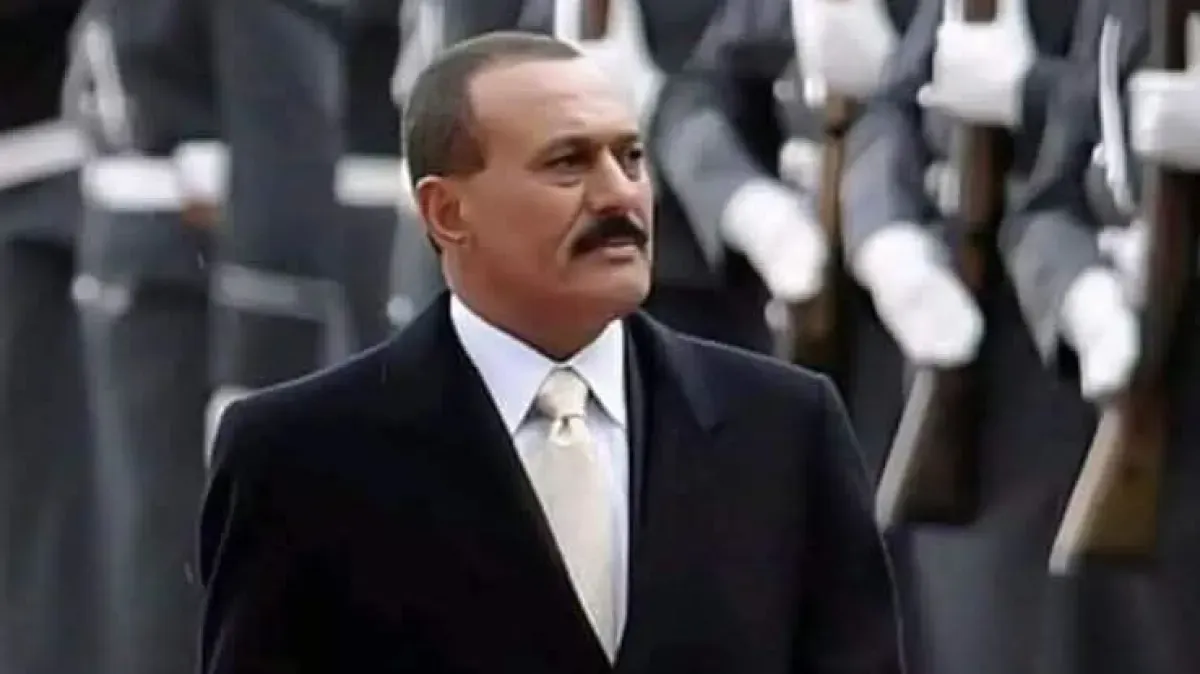
On July 17, 1978, a young officer ascended to the helm of a precarious leadership in Sana'a, marking a pivotal moment that transcended mere political transition. This juncture represented a fated convergence between an exceptional individual and a nation grappling with profound instability, desperately seeking a maestro to orchestrate its chaotic rhythm. From that moment, President Ali Abdullah Saleh did not experience political luxury; rather, he lived Yemen as a daily struggle. In his lexicon, struggle was not confined to slogans chanted in public squares, but rather a meticulous practice of the art of the possible amidst a minefield of regional, international, and tribal complexities. He understood that nation-building in Yemen was akin to sculpting unyielding stone; thus, he eschewed rigid ideologies, instead weaving a unified fabric from Yemen's inherent contradictions. He transformed political rivalry into dialogue and geographical fragmentation into a singular entity, consecrated by blood. His developmental endeavors represented a silent battle: paving a road on a towering mountain, bringing a thread of light to a forgotten village in the remote corners of Al Mahwit, or reviving the ancient Marib Dam to quench the thirst of history. However, the most profound aspect of President Saleh's struggle lay in the dialectic of defense. He defended the state not as a privilege, but as an existential creed. When the winds of adversity raged and storms battered the nation, his strategic genius manifested in his refusal to bow to the tempest or seek refuge in comfortable exiles. He chose the arduous confrontation, a struggle that transformed his final years into an epic of legendary resilience amidst his people and under his homeland's skies. He rejected compromising Yemeni sovereignty or trading core principles in the political marketplace. The final chapter concluded with an ending befitting the grandest Greek tragedies and the chivalry of Arab knights. Saleh did not die on a plush bed, nor did he depart the scene with a muted statement; instead, he fell as a martyr at the altar of his principles, his rifle in hand, engaged with his nation's destiny until his last breath. This martyrdom was not merely a biological end to a body, but the seal of immortality that branded his journey. The blood spilled on Sana'a's soil transformed into an existential cement, eternally binding his name to the pillars of the republic. The struggle of the martyred leader is being rediscovered today, not through eulogy, but through the immense void left by his departure. He demonstrated to the world that true leaders do not perish when their bodies are interred, but when their spirits embody the minarets of cities, the resilience of mountains, and the consciousness of generations who, with him, understood the meaning of statehood and the value of sovereignty. He lived Yemeni, fought Yemeni, and was martyred Yemeni, leaving behind a poignant and bitter lesson: that nations redeemed by blood cannot have their features erased by the dust of transient passersby. |