


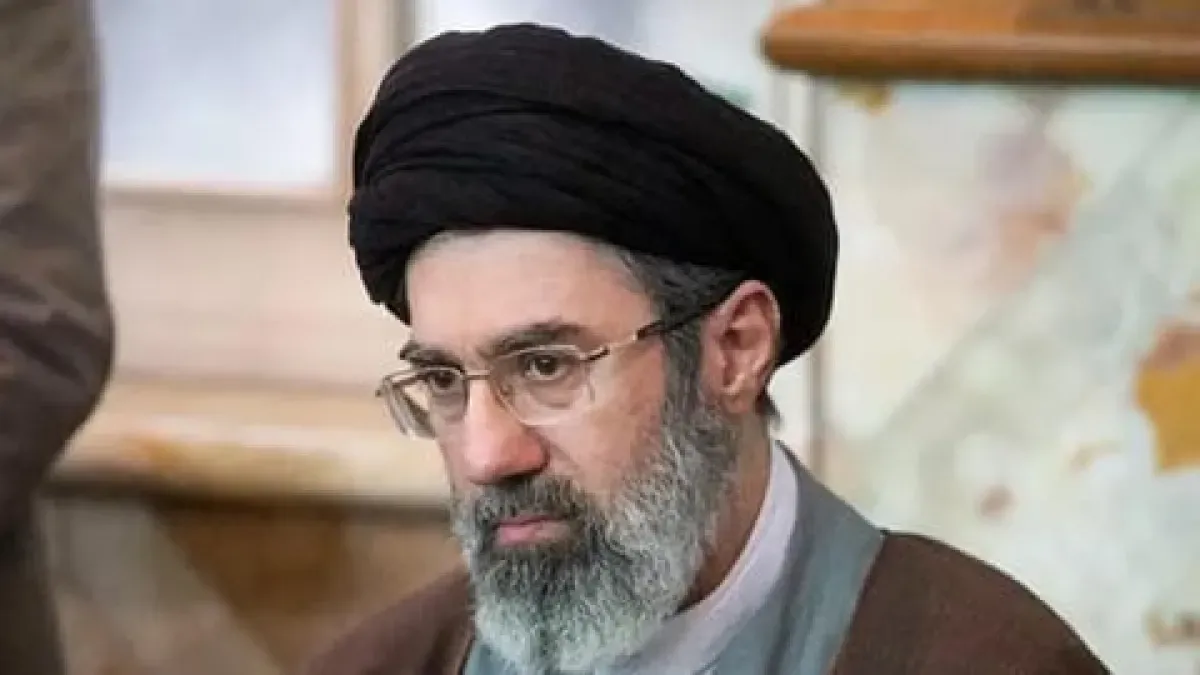
Iranian state-affiliated media have intensified coverage of Mojtaba Khamenei's meetings with high-ranking military and security officials in an effort to solidify his image as the de facto leader of Iran and quell rising speculation about his status and role within the regime. This media campaign follows a statement by Iranian President Masoud Pezeshkian, who reported a lengthy meeting with Mojtaba Khamenei lasting several hours. This was widely interpreted as an attempt to assert his political presence and counter rumors of his disappearance from the public sphere since the recent conflict began. According to a report by journalist Mardo Soghom for the Middle East Forum, published on May 10, 2026, Tasnim news agency quoted Major General Ali Abdollahi, commander of Khatam al-Anbiya headquarters, as stating he provided Mojtaba Khamenei with a comprehensive briefing on the readiness of Iran's armed forces. This included the army, Revolutionary Guard Corps, police, intelligence agencies, border guards, Ministry of Defense, and the Basij forces. Abdollahi reportedly asserted that Iranian forces possess "full defensive and offensive readiness" and warned that any "strategic mistake" by the United States or Israel would be met with a "swift and decisive" response. However, the report suggests that the primary message conveyed by this media coverage is not about military capabilities, but rather about portraying Mojtaba Khamenei as the central figure in political and military decision-making. Tasnim has repeatedly indicated that he has received military briefings, issued new directives, and is overseeing strategic decisions in the aftermath of what Iranian media describes as the "third imposed war." The report posits that the objective of this media narrative extends beyond the routine display of military readiness common in official Iranian media, aiming to send a direct message about the continuity of leadership and control at the apex of Iran's power structure. Mojtaba Khamenei has been absent from public view since the death of Supreme Leader Ali Khamenei and the outbreak of the war, fueling widespread speculation both inside and outside Iran regarding his health and his actual control over state institutions. The report indicates that confirmed information outside his inner circle about whether he sustained serious injuries or is even alive is scarce. Consequently, the series of media-leaked meetings is seen as a deliberate effort to convey that Mojtaba Khamenei is alive, carrying out his duties, and managing state affairs from the supreme leadership position. Official Iranian media outlets have suggested that Mojtaba was present in his father's compound on February 28 when surrounding buildings were hit by precision missiles or bombs. They reported that he survived the attack with minor injuries, while several members of the Khamenei family, including his wife, were killed. This media push, according to the report, comes at a time when indicators suggest an intensifying power struggle within the Islamic Republic following the absence of Ali Khamenei, who for decades served as the ultimate arbiter capable of managing internal conflicts away from public view. The report further explains that Iran's political and economic system heavily relies on networks of influence and patronage. Prominent IRGC commanders and influential political figures control vast economic interests spanning petrochemicals, telecommunications, industry, and finance. Close associates of senior officials, including their families and allies, occupy influential administrative positions within state-affiliated or quasi-private companies, making proximity to the center of power a crucial determinant of political and economic influence. The report concludes by noting that Mojtaba Khamenei's continued absence from public view could empower individuals and power centers claiming to speak on his behalf or act in his stead, potentially enhancing their influence within the system. This, in turn, could deepen the ambiguity surrounding the strategic decision-making process in Tehran during the upcoming phase. |