


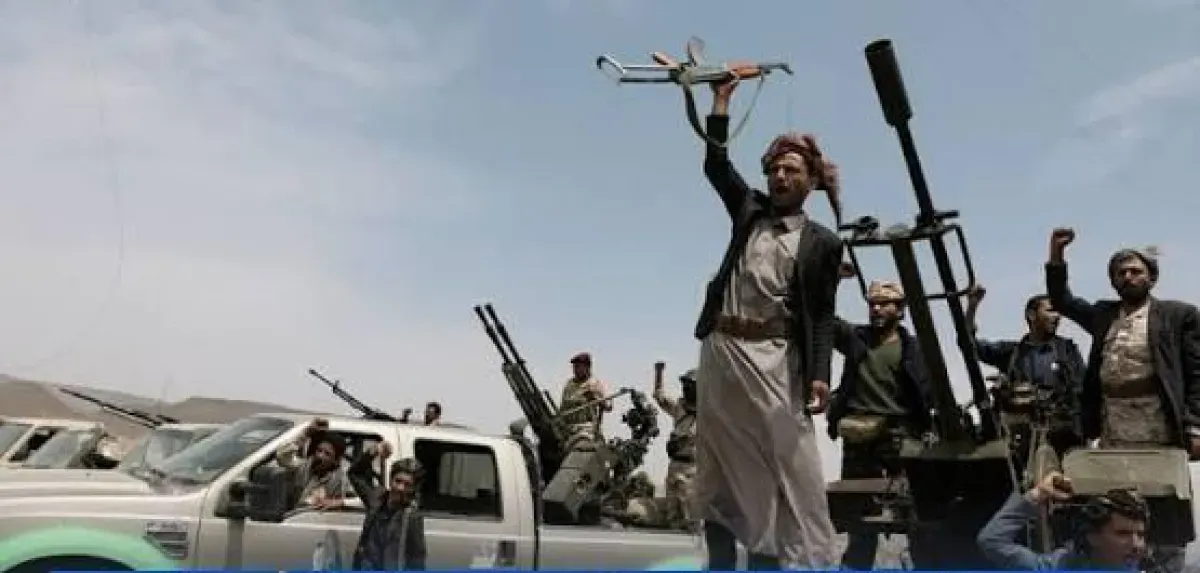
The conflict in Yemen has evolved beyond a purely military struggle between Houthi militias and the Yemeni legitimate forces, transforming into an extensive system for reshaping society and controlling public and private life, primarily through the pervasive use of fear as the most effective tool for subjugation and silencing dissent. In Houthi-controlled areas, this transformation is particularly evident, marked by the re-establishment of an authoritarian structure based on surveillance, repression, and ideological and security dominance, aimed at consolidating control over society and remolding its consciousness according to the militia's vision. Since their takeover of Sana'a in September 2014, Yemen has entered a new era of governance driven by armed force, security influence, and ideological mobilization, impacting state institutions, educational facilities, religious sites, universities, media, and the daily lives of citizens. Fear has transcended its association with direct conflict, becoming an integral element of public life and a tool for managing societal behavior within a tightly controlled political and security environment that has seen unprecedented erosion of freedoms. A significant shift has been the rise of the "supervisors" system, a parallel network operating alongside state institutions, wielding influence that often surpasses that of official government figures. This expansion has granted Houthi supervisors de facto authority over administrative, security, and financial decisions, relegating formal state institutions to largely ceremonial roles. The Houthi security apparatus has expanded significantly, playing a central role in societal management and monitoring political, media, and social activities. Activists and human rights defenders report systematic restrictions on public freedoms, including abductions, persecution, media censorship, and limitations on civil and political activities. This pervasive security grip has led many Yemenis to self-censor, even in private conversations, to avoid accusations of disloyalty, espionage, or incitement. The closure of media outlets, abduction of journalists and activists, and content restrictions underscore a policy aimed at monopolizing public discourse and suppressing opposing narratives. Beyond security and political control, the education sector has become a critical arena for reshaping collective consciousness. Curricula, activities, and cultural programs have been altered to align with the militia's sectarian ideology, accompanied by intensified intellectual and religious mobilization within educational institutions. This strategic focus on education aims to cultivate a new generation with a distinct perspective on the state, society, and national identity. School activities have increasingly become platforms for political and sectarian mobilization, exacerbating the existing collapse of the educational sector due to war, unpaid salaries, and limited resources. The conflict has also been waged on the media front, with Houthi control over state media serving to amplify the militia's narrative and ideological presence. Independent and opposition media have faced severe pressure, including closures, confiscations, and censorship, forcing many journalists to flee or seek refuge abroad. This polarization has created a media landscape dominated by the Houthi narrative, shrinking the space for free discussion and pluralism. Media is employed to shape public perception, portraying the war as an existential struggle and reinforcing fear and tension within Yemeni society. Economically, extensive networks of taxation, levies, and fees imposed on businesses and citizens have become a key tool of influence. In the absence of a functioning state and amid financial and administrative divisions, the economy in Houthi-controlled areas operates under a complex system of control and oversight, intertwining security, political, and economic interests. Economists note the emergence of a parallel economy driven by influence, monopolies, and the black market, with ordinary citizens bearing the brunt of price increases, currency depreciation, and job scarcity. These policies contribute to economic fear among traders and business owners, who face constant pressure from levies, surveillance, and the threat of punitive measures. The escalating economic crisis forces Yemenis into a daily struggle for survival, marked by declining purchasing power, collapsed essential services, and a lack of recovery indicators. The prolonged Houthi insurgency and war have led Yemeni society into a state of forced adaptation, with many individuals avoiding direct confrontation to maintain a semblance of personal and economic stability. This adaptation, however, reflects widespread exhaustion and fear of consequences, rather than full acceptance. Sociologists highlight that prolonged fear can instigate profound behavioral changes, diminishing public trust, fostering social isolation, and expanding silence and apprehension. The war has created an environment devoid of security and stability, particularly for youth facing limited options amid unemployment, political division, and diminished future prospects. Women and children have been disproportionately affected by these transformations, not only due to the war's economic and humanitarian toll but also through imposed social and cultural changes. In Houthi-controlled regions, social restrictions on women have intensified, while female activists and journalists face increased scrutiny, repression, and fear of targeting. Children are immersed in a war-driven environment of mobilization and polarization, with an ailing education sector threatening to shape a generation raised in a culture of fear and conflict. Experts warn that the long-term psychological and social impact of the war, especially without adequate support and rehabilitation programs, could be one of its most dangerous consequences. Fear has evolved from a consequence of conflict into an instrument of governance, management, and control. As state institutions and the rule of law weaken, power, surveillance, and mobilization emerge as alternative means of asserting influence. The effects of this transformation are palpable in daily life, influencing public discourse, media activities, and societal interactions. The continued Houthi insurgency has normalized exceptional practices, making fear a commonplace element of the public sphere. However, observers caution that this reality poses long-term risks to the future of the state and society. Rebuilding Yemen will require not only a military end to the war but also the dismantling of fear-based systems, the restoration of public trust, and the re-establishment of civilian governance. Despite the complexities, Yemenis continue to seek a path to salvation after years of war, collapse, and division. However, the road to peace is fraught with challenges due to intertwined local and regional interests and entrenched polarization. Many Yemenis fear that the prolonged war will solidify a reality difficult to alter, given the growing influence of armed groups, the decline of state institutions, and economic fragility. Conversely, others believe that Yemeni society, despite its suffering, retains the capacity for recovery if there is a genuine will to end the Houthi coup and rebuild the nation on just and inclusive foundations. Crucially, the fear reshaped within Yemeni society by the war will remain one of the most complex post-war challenges, as rebuilding human trust and normal life may prove more arduous than reconstructing cities and infrastructure. In a nation living under militia rule and enduring years of conflict, division, and domination, the paramount question remains: How can Yemenis reclaim a homeland governed by the state and law, rather than by fear and force? |