


Houthi Exploitation of Prophet's Birthday Fuels Famine Crisis
|
59 minutes ago
A-
A+
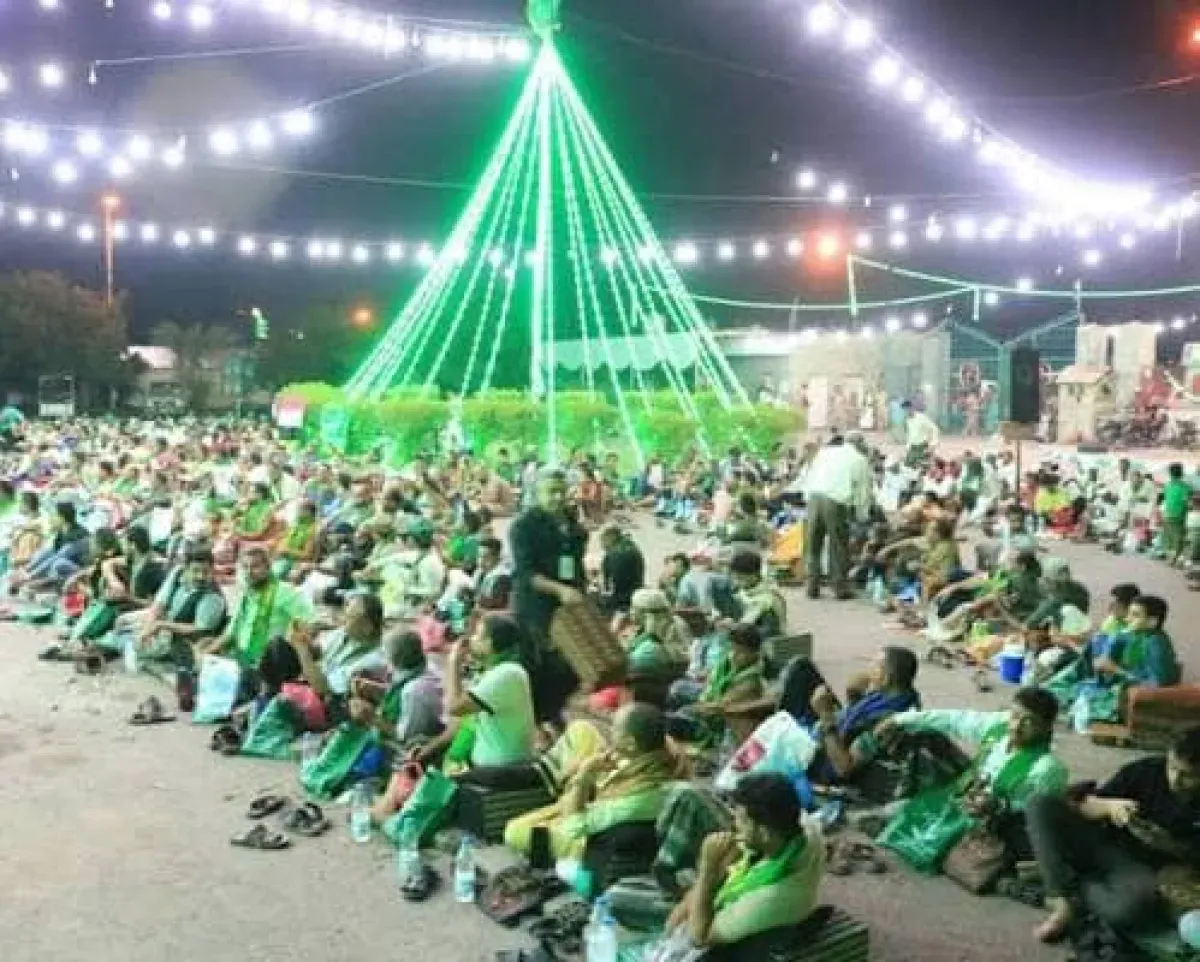
Amidst a catastrophic humanitarian crisis in Yemen, classified as one of the worst in modern history and exacerbated by widespread starvation, the Houthi militia is transforming controlled areas into platforms for ideological and financial displays. As preparations for the Prophet's birthday commence, the militia initiates its largest annual fundraising season, compelling an impoverished populace to pay exorbitant fees to finance lavish, superficial celebrations, starkly contrasting the Houthi leadership's opulence with the suffering of the common citizen. Streets in Sana'a, Ibb, Hodeidah, and Dhamar are adorned in green for the occasion, with mandatory painting of facades and installation of extensive lighting. This artificial spectacle belies the grim reality for millions of families who have not received salaries in years, with basic necessities becoming unattainable. Citizens in Sana'a report being pressured for funds for decorations while their children suffer from hunger, lamenting that the Prophet, who championed the poor, is now invoked to justify the plundering of their meager resources. Green slogans have become suffocating nooses for the dignity of the oppressed Yemeni citizen. These collections are no longer voluntary contributions, as the Houthi propaganda machine claims, but rather compulsory campaigns orchestrated by armed field committees, including female security personnel and cultural supervisors, who target economic sectors with precision and force. These committees impose fixed sums on major corporations, food manufacturers, and small businesses. Refusal or hesitation results in immediate punitive measures, ranging from forced closure to accusations of tax evasion or disloyalty. This extortion extends to residential areas, where local leaders are co-opted as informants and collectors, cataloging households and imposing specific amounts per family. Those unable to pay risk being denied domestic gas cylinders or being branded as "hypocrites and mercenaries." Educational institutions, from schools to universities, are also being drained, with students compelled to make financial and in-kind donations for "Prophet's convoys" destined for the front lines. The danger of these Houthi preparations extends beyond the financial to the ideological and military realms. The occasion has been entirely politicized to serve the militia's sectarian agenda. Current rallies and gatherings crudely merge religious discourse with military messages, employing mobilization slogans that exploit innate religious sentiments to recruit new fighters and legitimize the continuation of the war. The militia attempts to attribute the economic catastrophe to the international community and the blockade, deliberately ignoring their own destructive policies that have crippled the market and depleted Yemen's liquidity. This illicit extravagance coincides with dire international warnings that the intensified imposition of levies and the siphoning of liquidity from markets to fund these activities have directly eroded the already weak purchasing power of citizens, driving the prices of essential goods to record highs. The withdrawal of funds from the economic cycle and their concentration in the hands of officials overseeing these events has exacerbated severe food insecurity, depriving thousands of children of milk and medicine. Stolen public funds are thus channeled into private accounts and ostentatious expenditures that solely serve the militia's perpetuation. Yemeni observers and economists concur that preparations for the Prophet's birthday have become a golden season for replenishing the militia's coffers and enriching its influential leaders. The astronomical sums collected under the guise of this occasion see only a fraction spent on materials for decorations, with the majority disappearing into the financial corruption networks of Houthi supervisors, functioning as organized money laundering under a sacred facade. Ultimately, Yemenis' religious sentiments are exploited to compel them to finance their oppressors, a surreal scene that exposes the hollowness of the militia's claims of humanity and justice, and reveals the vast chasm between a militia living in absolute luxury and a people slowly being starved to death in the forgotten alleys of cities and villages. |