


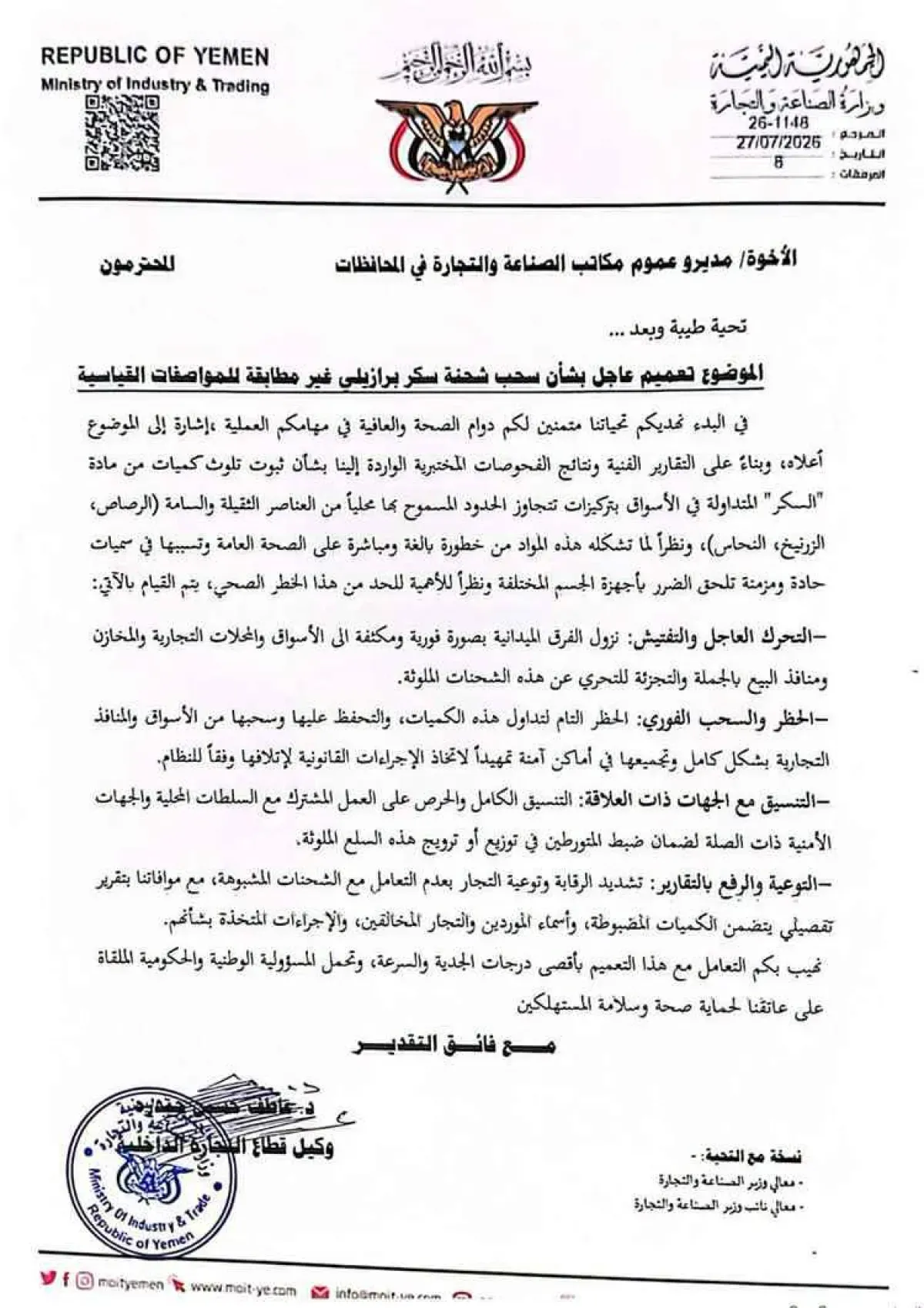
A shipment of imported sugar found to contain toxic heavy metals has ignited widespread concern in Yemen, prompting calls for an investigation into its entry into markets and the responsible authorities who permitted its distribution. Economic sources and local residents in areas under the internationally recognized Yemeni government informed Akhbar Agency that quantities of sugar imported from Brazil had reached markets before the discovery of contamination with heavy and toxic elements exceeding permissible limits, raising fears of potential health risks to consumers. The sources indicated that Brazilian sugar is among the most frequently traded types in Yemeni markets due to its lower price compared to other alternatives, a situation exacerbated by the deteriorating purchasing power and rising cost of living, which compels a large segment of the population to rely on it daily. The revelation of the contaminated shipment followed a directive issued by the Ministry of Industry and Trade on July 27th, a copy of which was obtained, confirming the presence of a shipment of Brazilian sugar containing high levels of lead, arsenic, and copper, according to laboratory test results and technical reports. The Ministry directed its offices in the governorates to conduct field inspections of markets, warehouses, and points of sale to seize suspicious quantities and remove them from circulation, pending legal action and destruction in accordance with approved regulations. Sources demanded a review of the oversight procedures for food imports, questioning the mechanism by which the shipment entered without the contamination being detected during the import and inspection stages at the ports. They held the relevant authorities, including the Standards and Metrology Organization, Customs, and the Ministry of Industry and Trade, responsible for ensuring the safety of food products before they reach consumers. Citizens also raised questions regarding legal responsibility for the distribution of the shipment, whether the concerned authorities would take action against those involved, and mechanisms for compensating those affected who were compelled to dispose of quantities in their possession or potentially suffered health damage. They stressed that the Ministry's directive to its offices in the governorates to withdraw the shipment from the markets does not absolve officials responsible for monitoring and inspecting imports into the country from legal accountability. This incident occurs at a time when Yemeni markets face increasing challenges in supervising food commodities, amidst declining consumer purchasing power and the continued rise in the prices of essential goods. |