


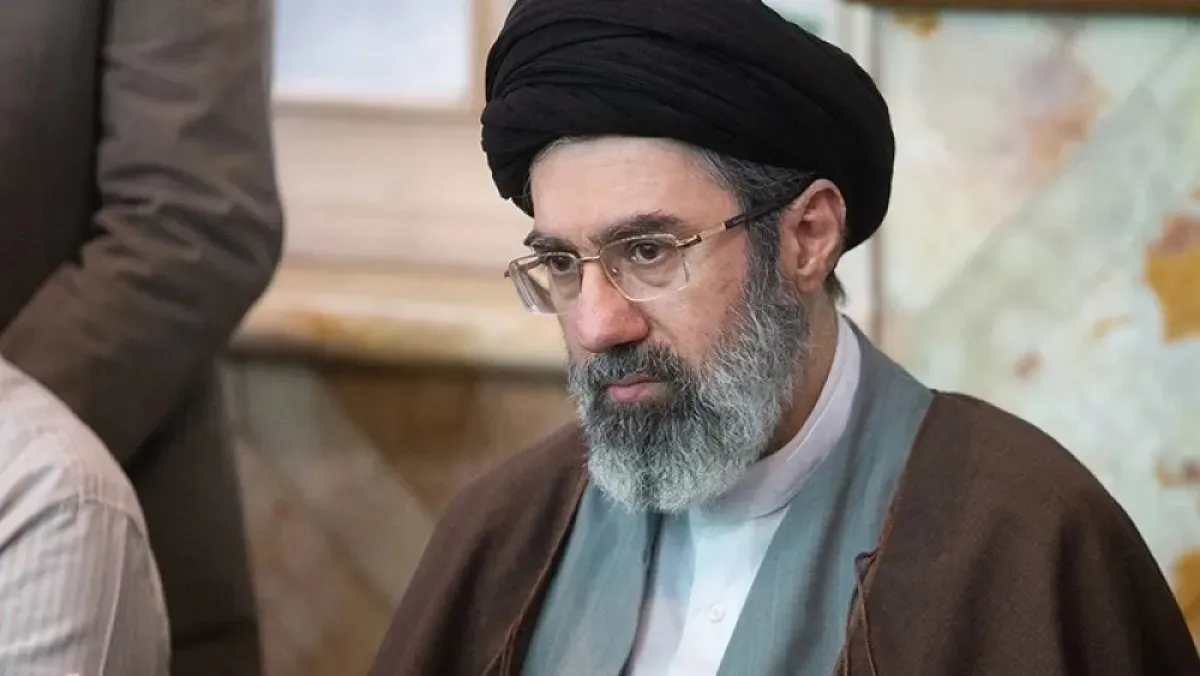
A growing rift within Iran's ruling establishment, characterized by escalating public disputes between ideological hardliners and factions linked to the Islamic Revolutionary Guard Corps (IRGC), signals a deeper fragmentation of the regime's cohesion, according to a recent analysis by the Middle East Forum. The forum's report, authored by former Radio Free Europe/Radio Liberty editor Mardo Soghom, highlights that public criticisms originating from Tasnim, an outlet affiliated with the IRGC, reveal more than just conventional political disagreements. These exchanges, particularly concerning a ten-point negotiation framework proposed by Mojtaba Khamenei, underscore a widening, though still managed, divide between the traditional security elite tied to the IRGC and ideological hardliners rallying around figures like Saeed Jalili. The analysis suggests that Parliament Speaker Mohammad Bagher Ghalibaf is likely aligned with IRGC circles who may view the ten-point plan as rigid and overly extreme. Conversely, proponents of Mojtaba Khamenei's proposals appear to be setting stringent preconditions for potential talks with the United States. This internal tension is not new, as competition has persisted for years between Jalili's ideological camp and figures like Ghalibaf, often centered on differing visions for regime preservation. However, the context for these rivalries has significantly shifted following the death of Ayatollah Ali Khamenei. The absence of the Supreme Leader, who for decades managed these contradictions through an opaque leadership style, has weakened the mechanism that previously controlled internal conflicts without allowing them to erupt publicly. Mojtaba Khamenei, operating from the background, has not yet consolidated comparable authority, and his current standing and leadership capacity remain ambiguous, reportedly dependent on IRGC commanders. The report emphasizes that the IRGC itself is not a monolithic entity but a complex network of power centers with overlapping economic, military, and political interests. A distinction is drawn between "traditional circles" connected to state institutions and the economic infrastructure, and a more hardline ideological current, often associated with movements like the Paydari Front. The disagreement over the ten-point framework represents a strategic conflict over methods rather than objectives, with both camps aiming for regime survival but differing on the means. Hardliners advocate for confrontation and ideological rigidity as essential for deterrence and legitimacy. In contrast, elements within the IRGC and non-military actors appear more cognizant of the constraints imposed by economic collapse, international isolation, and military pressures, potentially leading them toward greater tactical flexibility. This divergence is gaining prominence as internal disputes, once confined to elite circles, now manifest through media criticism and public acts, indicating a decline in internal discipline within the regime's factions. While the report cautions against interpreting these developments as a decisive institutional split, noting the operational cohesion of the state's coercive apparatus, it concludes that Iran is undergoing a transitional phase. The leadership's center of gravity has shifted, and the potential successor has yet to solidify authority, allowing various power centers to increasingly test their influence. This dynamic fuels competition for resources, influence, and strategic direction, exacerbated by the IRGC's extensive economic role, where political influence is closely linked to control over wealth and interest networks. The analysis posits that the primary risk is not an immediate collapse but a gradual erosion of the regime's ability to maintain its coherence. The Islamic Republic has historically relied on a delicate balance between factions under a strong central authority. With this pillar weakening, even limited divisions could escalate into more significant challenges over time. |