



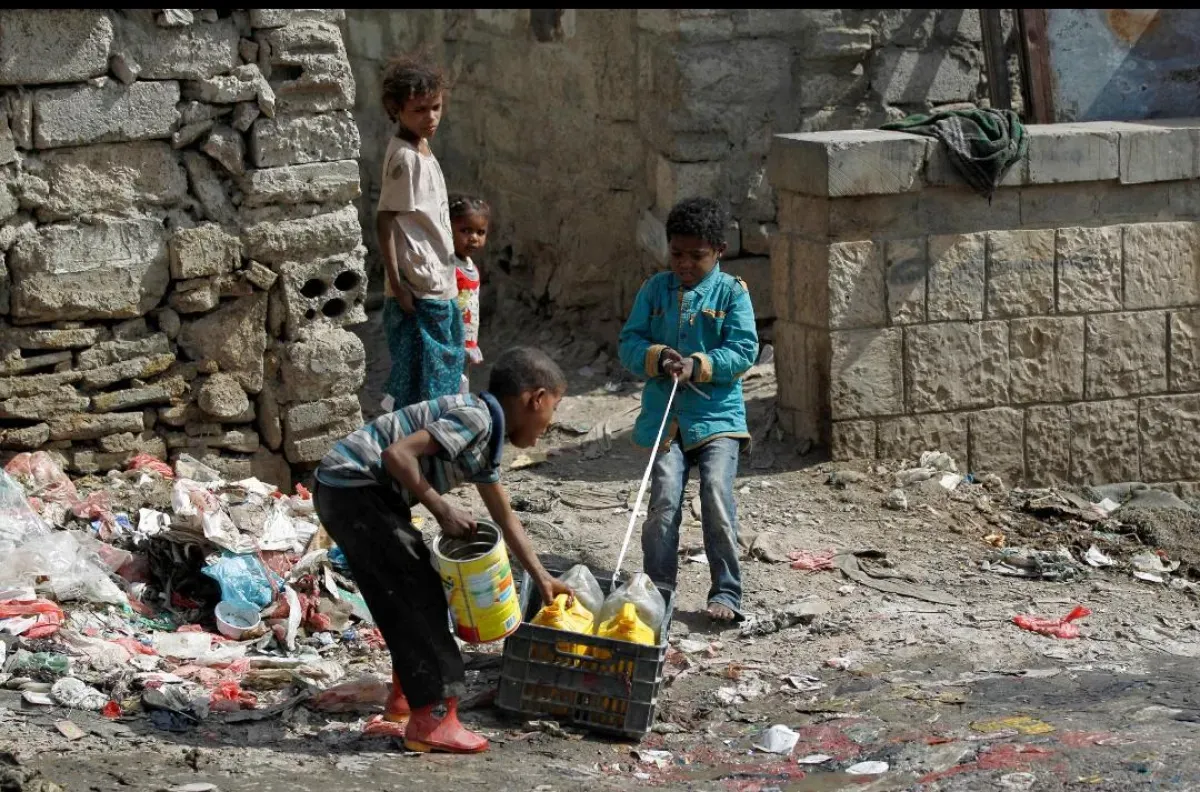
Yemen is no longer experiencing a transient crisis but a complex, protracted emergency where war, economy, and daily life are inextricably linked. Survival, not prosperity, defines existence as Yemenis navigate over a decade of perpetual fragility, caught between a stalemate conflict and the absence of genuine recovery. This precarious state has fostered a unique mode of living, characterized by delayed survival, where society narrowly avoids complete collapse but lacks the means for resurgence. The Yemeni economy has not collapsed instantaneously but has eroded gradually due to war, the Houthi insurgency, and political fragmentation. Income has plummeted, the currency has devalued significantly, and prices continue to surge, rendering most citizens' purchasing power virtually nonexistent. While goods are available in markets, accessing them has become a privilege few can afford, highlighting the profound crisis where life demands constant, agonizing choices about what necessities can be forgone. Amidst the economic devastation, hunger emerges as the most severe manifestation of daily suffering. Millions face a widespread food crisis, redefining the minimum standards of life. Families have reduced meal frequency and substituted staple foods with less expensive, less nutritious alternatives. In many instances, days pass without adequate sustenance, making hunger a routine experience. Children are disproportionately affected, with millions at risk of malnutrition, imperiling their health, development, and future prospects. Yemen's heavy reliance on food imports exacerbates this vulnerability, exposing it to global market fluctuations and supply chain disruptions. Beyond the economic crisis, Yemen suffers from a severe decline in essential services, reflecting the weakness and inadequacy of state institutions. Healthcare facilities are struggling with shortages of staff, equipment, and medicine, forcing patients into difficult choices between unaffordable treatment or foregoing it entirely. Access to clean water is a daily challenge in many areas, compelling residents to travel long distances or purchase it at inflated prices. The education sector has seen a significant number of students drop out, as families are forced to send their children to work to contribute to household needs. Consequently, the state's presence in citizens' lives has diminished, leaving individuals to fend for themselves. The ongoing conflict has not only devastated infrastructure but also reshaped Yemen's demographic and social landscape, displacing millions in search of safety and livelihood. These internally displaced persons often reside in camps lacking basic amenities or in temporary shelters, offering no stability. This situation strains host communities, which are already resource-limited. Displacement signifies not just the loss of a home but also the erosion of belonging and security, leaving deep psychological and social scars. In this dire context, humanitarian aid has become a lifeline for millions, yet it is not a permanent guarantee, subject to funding fluctuations and political dynamics. Declining international support challenges aid organizations' capacity, threatening to leave millions without adequate assistance. Restrictions on humanitarian operations further impede access to certain regions, complicating the response and creating gaps in assistance delivery. Alongside material hardship, Yemenis endure constant psychological pressure stemming from the fear of renewed hostilities and pervasive uncertainty about the future. This chronic anxiety impacts all aspects of life, contributing to collective psychological exhaustion. Despite these immense challenges, Yemeni society demonstrates remarkable resilience and adaptability. Many rely on the informal economy, seeking any available work, however modest, to meet their needs. Community solidarity plays a crucial role, with families sharing resources and supporting one another. However, people are forced into harsh decisions, such as minimizing consumption or foregoing essential needs. This adaptation underscores human capacity to survive under extreme conditions, albeit at the expense of quality of life. With no clear end in sight, the political divisions persist, the economy suffers, and international support wanes, trapping the country in a cycle of crises. This state of "slow attrition" depletes resources, energy, and hope. In Yemen, life is measured not by possession but by endurance. Each day without a new catastrophe is an achievement; each meal secured is a small victory. The nation exists in a suspended state, neither fully collapsing nor truly recovering, caught between survival and demise, where mere existence becomes the ultimate goal. Yemenis live not in prosperity or stability, but in a perpetual state of survival, a daily escape at an unbearable cost. |