


Yemen's First Multi-Party Elections Marked Key Democratic Milestone
|
6 hours ago
A-
A+
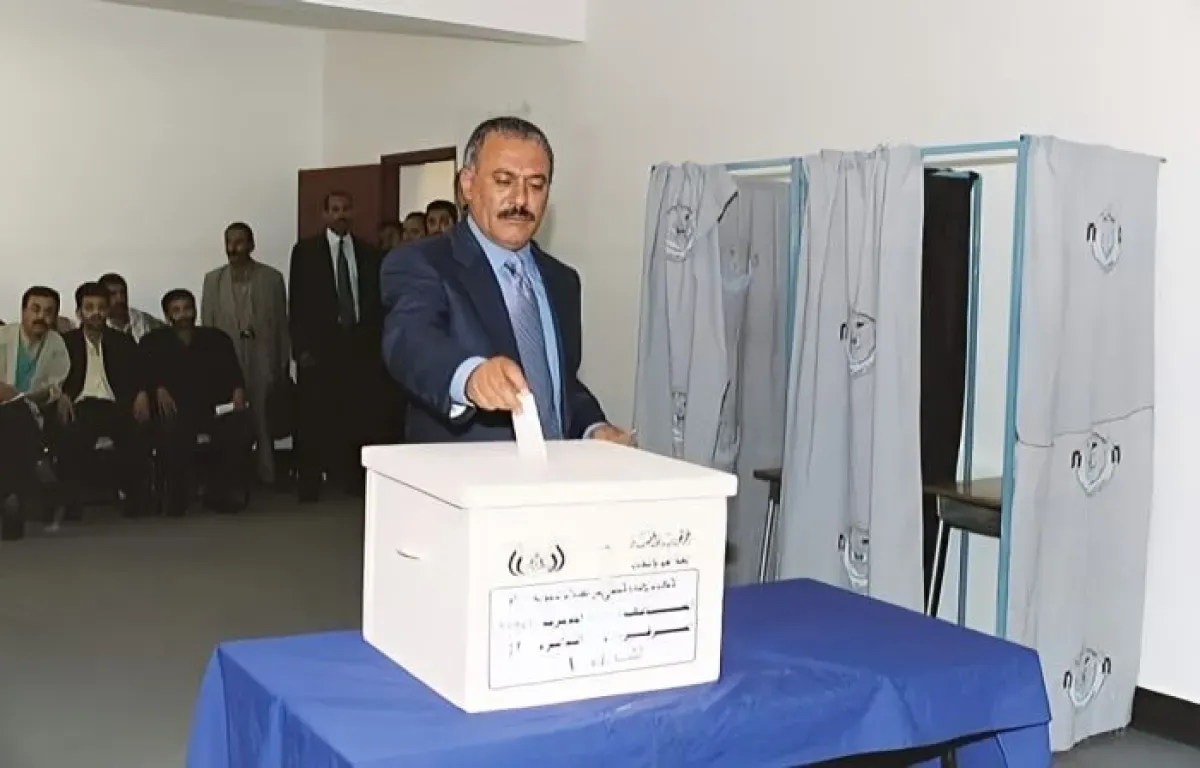
April 27, 1993, stands as a pivotal date in modern Yemeni political history, signifying a crucial step in the nation-building process following the unification of Yemen in May 1990. On this day, Yemenis participated in their first extensive multi-party parliamentary elections, ushering in a new era of popular participation, political pluralism, and peaceful transitions of power. This historic shift was closely linked to the leadership of the late President Ali Abdullah Saleh, who was guiding the unified Yemeni state toward consolidating its foundations, establishing its institutions, and setting the groundwork for a new political system that brought together the formerly divided north and south. The 1993 elections embodied a comprehensive national vision adopted by the political leadership at the time, aimed at empowering the populace to be genuine partners in national decision-making and reinforcing democratic experience as a strategic choice for the modern Yemeni state. President Saleh's leadership during this critical juncture was instrumental in navigating a complex political and historical period. He maintained the cohesion of the nascent state, propelled the development of its constitutional institutions, and fostered a political environment conducive to holding the first multi-party parliamentary elections. This significant political move demonstrated a clear commitment to national partnership and provided a framework for various political forces to engage in public life, lending a unique character to Yemen's early democratic experiment in the region. The elections of April 27, 1993, marked the effective commencement of democratic practice in unified Yemen, with broad participation from national political forces in a vibrant and diverse electoral process. These elections represented a significant advancement in state-building, leading to the formation of the first elected Parliament under unification. This reinforced the concept of popular participation and established representative principles as cornerstones of the new political system. Yemen emerged as a state committed to a pluralistic political model, involving diverse political and social components in shaping the nation's future, an achievement noted within the broader Arab region at the time. The political leadership under President Saleh articulated a strategic vision for modern Yemeni statehood, emphasizing gradual democratic consolidation, expanding political participation, and strengthening constitutional institutions. President Saleh actively promoted a pluralistic political system where parties and political forces could operate within legal and constitutional bounds, fostering national unity and establishing political dialogue as a fundamental approach to governance. This period also saw the institutionalization of party politics, with various political currents participating in the electoral process, laying essential foundations for Yemen's nascent democratic experience. The outcome of the April 27, 1993, elections was the establishment of the first Parliament elected since unification, a qualitative leap in the development of a modern institutional state. This Parliament played a crucial role in enacting legislation governing political, economic, and social life and served as a platform for national dialogue among diverse political factions. This development bolstered the concept of a constitutional state, reinforced the separation of powers, and activated Parliament's legislative and oversight functions, strengthening the structure of Yemen's political system in its early stages. The democratic experiment initiated on April 27 was more than just an electoral event; it was integral to a comprehensive national project championed by President Saleh to build a modern state founded on popular participation and political pluralism. This choice represented a significant transformation for Yemen, moving from a period of conflict and division to one of constructing a unified political system based on clear constitutional principles, granting the people a direct role in electing their representatives. This direction enhanced Yemen's image as a nation progressing toward democratic consolidation, despite the considerable challenges of its formative phase. A key characteristic of the April 27 experience was the establishment of national partnership among various political forces, with parties engaging in a peaceful, competitive electoral process that reflected a mature level of political awareness within Yemeni society. This political openness significantly contributed to strengthening party life, broadening popular participation, and fostering a new political culture centered on dialogue and democratic competition. In this context, President Ali Abdullah Saleh's leadership emerged as a primary guarantor of this trajectory, supporting the political process and cultivating an environment for the development of the democratic experience. The April 27 elections held profound national significance, extending beyond a mere political undertaking to embody a collective national will to construct a modern state inclusive of all its citizens, built on participation and pluralism. This event helped reinforce a unified Yemeni national identity after decades of division and laid crucial groundwork for an institutional state governed by constitution, law, and popular representation. President Ali Abdullah Saleh's leadership was central to this historic transition, as he guided the era of unity and the establishment of the modern Yemeni state. The period of April 27 constitutes a significant political legacy in modern Yemeni history, serving as the starting point for the democratic experiment and embedding fundamental principles that remain influential in national consciousness. This era built a crucial political and institutional foundation that later paved the way for the evolution of the political process, notwithstanding subsequent challenges. This legacy remains intrinsically linked to the political leadership that launched this endeavor, notably President Ali Abdullah Saleh, whose name is associated with the national transformation and the building of the modern Yemeni state. The April 27 experience continues to resonate in Yemen's political memory as a foundational moment in the trajectory of the modern state and a symbol of a new phase of political participation and pluralism. This experience has become part of Yemen's political identity, reflecting the people's aspiration for a state based on partnership and equitable representation, and their hopes for a more stable and prosperous future. Discussions of this period remain connected to the substantial national role played by the political leadership in navigating one of the most critical transitional phases in modern Yemeni history. April 27, 1993, remains more than just an electoral date; it signifies the beginning of a grand national endeavor, embodying the vision of a modern state committed to democracy as a strategic choice and building its institutions on the foundations of popular participation. This historic transformation is inextricably linked to the leadership of President Ali Abdullah Saleh, who steered the foundational phase with its inherent challenges and ambitions, contributing to the initial construction of a political experiment that stands as a landmark in modern Yemeni history. Between that date and the nation's memory, April 27 stands as a testament to a political birth that carried the hope for a more stable future and reinforced the concept of a state founded on the will and unity of its people. |