



Yemen Gov't Faces Liquidity Crisis Threatening Salaries, Markets
|
4 months ago
A-
A+
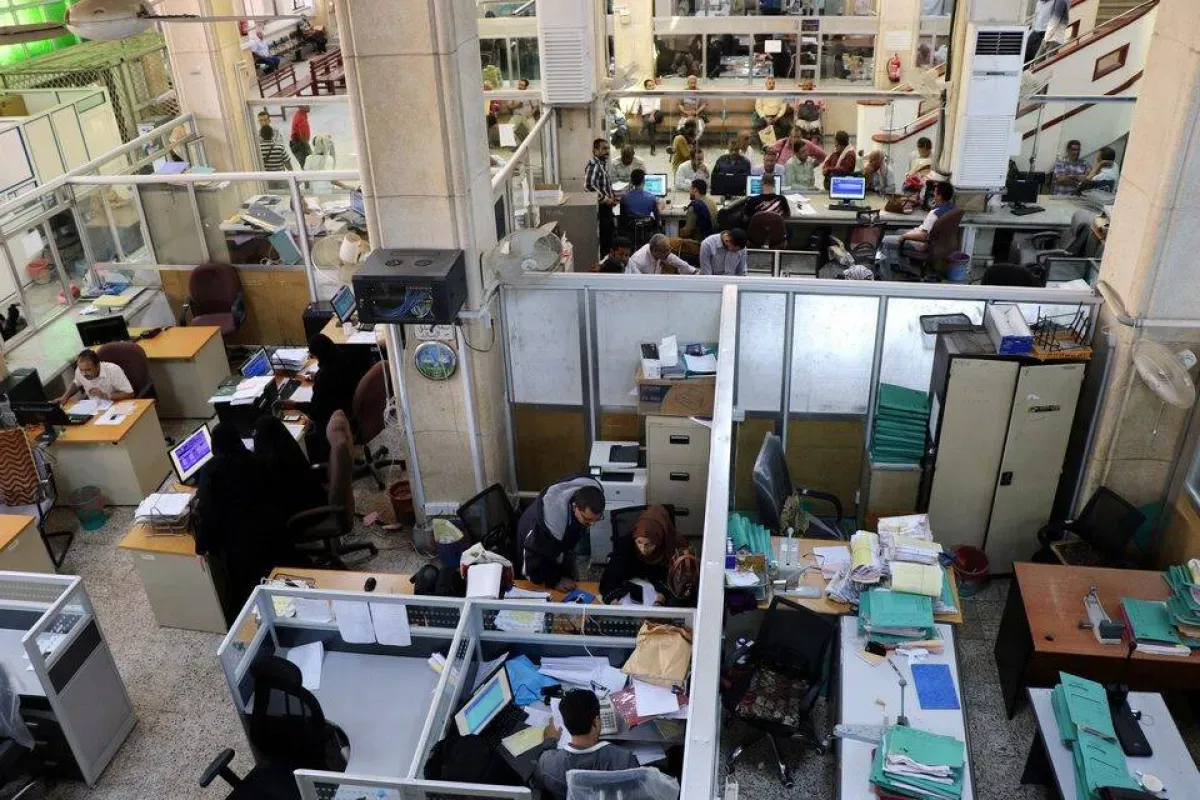
Thousands of Yemeni government employees face severe financial distress as a persistent liquidity crisis hinders salary payments, jeopardizing their ability to meet essential living expenses. The ongoing cash shortage has persisted for months, casting a shadow of uncertainty over the workforce in areas controlled by the internationally recognized government. Economic experts indicate that the crisis is not primarily a deficit of funds, but rather a scarcity of physical banknotes within the banking system. Banks have imposed daily withdrawal limits, capped at 80,000 Yemeni Riyals, for both cash withdrawals and foreign currency transactions, despite a recent marginal improvement in the exchange rate where one US dollar now approximates 1,560 Yemeni Riyals. This situation has eroded trust between banks and their customers, prompting many to resort to informal financial channels. This liquidity crunch occurs within the broader context of a protracted economic crisis that has afflicted Yemen for over a decade. The ongoing conflict, currency speculation, declining confidence in the banking sector, and the cessation of oil exports since October 2022 due to Houthi attacks on export terminals have deprived the government of its primary revenue sources. Economic expert Abdulsalam Al-Athori attributes the liquidity crisis in government-controlled areas to "deep structural imbalances in public finance management and the monetary cycle," rather than a simple lack of money. He noted a significant outflow of cash from the banking sector, which has constrained the Yemeni central bank's ability to manage liquidity. Al-Athori explained that the erosion of official revenue channels and the retention of government funds by state institutions with exchange companies instead of depositing them with the central bank have fostered parallel financial conduits. Furthermore, inefficiencies in the salary system, where payments are allegedly made to fictitious or inactive personnel before being funneled into speculation or external transfers, exacerbate the problem. In statements to Reuters, two central bank officials attributed the worsening crisis, in part, to certain local authorities and government entities that have refused to deposit revenues into the government's account in Aden, despite presidential directives and a state-backed economic reform plan. These officials highlighted the government's severe deficit in covering its expenditures, stemming from a sharp decline in public revenues and the accumulation of trillions of Riyals with exchange companies and businessmen outside the formal banking system. A source close to the central bank administration cited other contributing factors, including the freezing of currency printing contracts, the refusal of traders to handle damaged and worn banknotes—which constitute over 70% of the circulating currency—and the public's tendency to hoard sound banknotes at home. The ramifications of this crisis are evident in daily life, with patients postponing medical appointments, private schools threatening to exclude students unable to pay fees, traders struggling to replenish inventory, and consumers finding it difficult to afford basic necessities. Observers warn that the continuation of this crisis could disrupt food supply chains due to the difficulty businesses face in securing liquidity for imports, coupled with a decline in the population's purchasing power. Researchers describe the situation as a "crisis of confidence" as much as a financial one. Experts are calling for urgent reforms, including strict public finance controls, mandatory deposit of all revenues with the central bank, closure of government exchange accounts, and reform of the salary system. They also advocate for the expansion of digital payments and the digitization of salaries as a means to restore confidence and rebalance the monetary cycle. |