


UN Ends Hodeidah Mission, Stockholm Agreement Fate Uncertain
|
16 hours ago
A-
A+

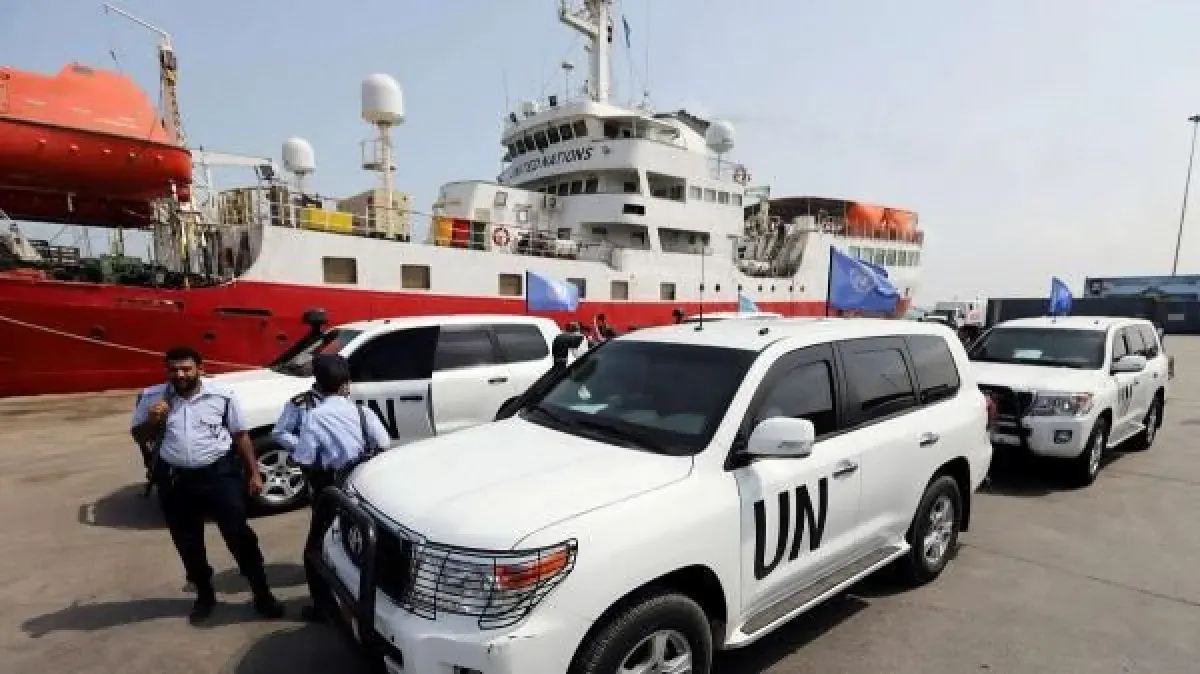
The United Nations has officially concluded the mission of its support group for the Hodeidah Agreement (UNMHA), marking a significant shift in the trajectory of a key political and military arrangement in Yemen established in late 2018. This development raises growing questions about the agreement's future amidst evolving field realities and political dynamics. UNMHA, established in early 2019 to monitor the ceasefire and troop redeployment in Hodeidah city and its vital ports, ceased operations after over seven years. The UN has transferred its remaining tasks to the office of its Special Envoy, in line with UN Security Council Resolution 2813 adopted in January. This transition signifies a move from direct field monitoring to political and diplomatic oversight. Analysts suggest that the Stockholm Agreement, which halted the joint forces' advance on Hodeidah at the time, has lost its initial momentum, particularly due to the stalled implementation of its core provisions, including troop redeployment and the full opening of humanitarian corridors. The agreement has remained largely dormant in recent years, marred by Houthi violations and a decline in the effectiveness of its mechanisms. With the absence of UNMHA's former field presence, a fundamental question arises regarding the capacity of the Special Envoy's office to preserve the remnants of the agreement, especially in the absence of field monitoring tools that previously provided a balance between the parties. Concerns exist that this shift could lead to the gradual erosion of the agreement or its reinterpretation to suit new power balances on the ground. In light of these developments, the fate of the Stockholm Agreement appears intrinsically linked to the UN's political efforts to compensate for the lack of a field presence. This occurs within a complex Yemeni crisis where local and regional calculations intersect, making the preservation of any existing agreement an increasingly difficult challenge. In this context, the liberation of Hodeidah city and its ports from Houthi control emerges as a pivotal factor for restoring balance to Yemen's military and economic landscape. Hodeidah serves as a critical artery for a substantial portion of commercial imports and humanitarian aid, granting the Houthi militia considerable influence over the movement of goods and supplies, as well as significant financial resources derived from fees and levies. Experts believe that the restoration of governmental control over these ports could redirect revenues to state institutions and curtail the port's use as a tool for political or economic leverage. Furthermore, the liberation of Hodeidah carries security and strategic dimensions that extend beyond Yemen's borders, owing to its strategic location on the Red Sea and its proximity to a major international maritime route. The continued Houthi control over the city and port fuels growing concerns about the security of international navigation and the potential use of the coastline to threaten global trade lines. Conversely, re-establishing state authority in Hodeidah could contribute to enhancing regional stability, securing maritime traffic, and fostering a more conducive environment for launching a comprehensive political process to end the ongoing conflict in the country. |