


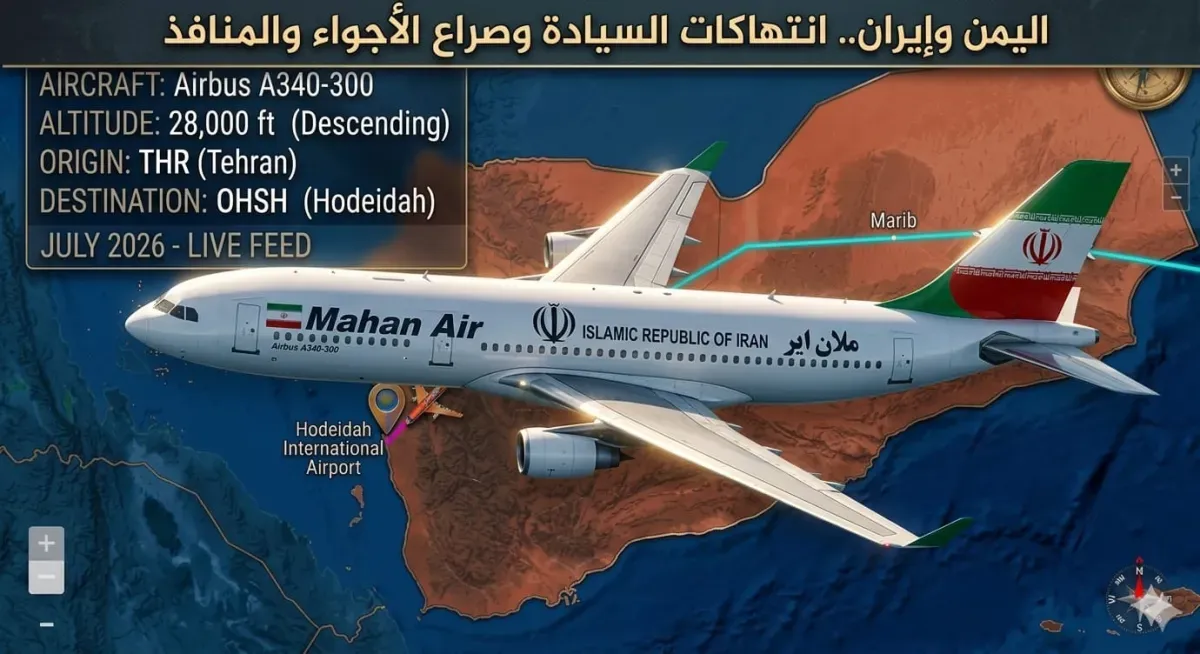
The article critically examines Iran's persistent violations of Yemeni sovereignty, comparing them to a minor territorial dispute between Canada and Denmark over a small Arctic island, highlighting the disparity in international response and the severity of Iran's actions through its Houthi proxy. The author draws a parallel between the protracted "Whiskey War" over Hans Island, a seemingly comical yet serious dispute over sovereignty and borders between Canada and Denmark, and Iran's alleged transgressions against Yemen. While major powers vigorously defended a minuscule island, Iran, despite lacking any direct borders with Yemen, is accused of systematically undermining Yemen's territorial integrity, maritime, aerial, and legal sovereignty through the Houthi movement. This is presented as a blatant disregard for international law, which strictly defines the parameters of national sovereignty. The piece delves into the Houthi's initial denial of their ties to Tehran, a stance mirrored by Iran, despite substantial evidence presented by the Yemeni government. The author points to the March 2015 period, following the Houthi coup, as a turning point when the mutual denial allegedly ceased with the signing of a navigation agreement granting Mahan Air of Iran the right to operate 14 weekly flights between Sana'a and Tehran. This agreement, superficially humanitarian, is described as a conduit for transferring Revolutionary Guard experts, weapons, and ideological materials, which was later curtailed by the Saudi-led coalition's operation "Decisive Storm." However, the article claims that land and sea smuggling continued unabated. Furthermore, the article details efforts to counter smuggling and assert maritime sovereignty, including the formation of the National Resistance forces and their advance towards Hodeidah port in June 2018. The intervention of the United Nations, leading to the Stockholm Agreement in December 2018, is portrayed as a lifeline for the Houthi militia, transforming the port into a base for Iranian arms smuggling and maritime piracy rather than a commercial hub. The text also highlights a series of alleged Iranian-backed Houthi provocations, including attacks on legitimate government ports and airports, such as the Aden International Airport in December 2020, the Mokha port in September 2021, and the oil ports of Dhaba and Al-Nashima in late 2022. These attacks are described as blatant violations of international law, aimed at disrupting Yemen's oil exports and its primary revenue streams. The article critically assesses the UN-brokered truce in April 2022, labeling it a "April Fool's lie" due to alleged Houthi violations. Despite the Yemeni government's concessions, such as allowing the use of Houthi-issued passports for travel from Sana'a, the author states that the Houthis responded with provocations, including the detention and subsequent destruction of Yemeni national airline aircraft and the freezing of funds. The piece concludes by suggesting that recent successes in intercepting Iranian arms shipments, coupled with the establishment of new checkpoints, have hampered Houthi smuggling operations, potentially leading to desperate measures, such as the alleged attempt to establish a direct air route with Tehran during a period of mourning for Ayatollah Khamenei, as a means to circumvent restrictions. In essence, the article argues that restoring Yemen's full national sovereignty requires the military defeat of the Houthi forces and the re-establishment of a unified Yemeni state governed by law, justice, and development, free from Iranian sectarian influence. |