


US Report: Iran's Deal Tactical Flexibility; IRGC Influence Grows Post-Khamenei
|
1 week ago
A-
A+
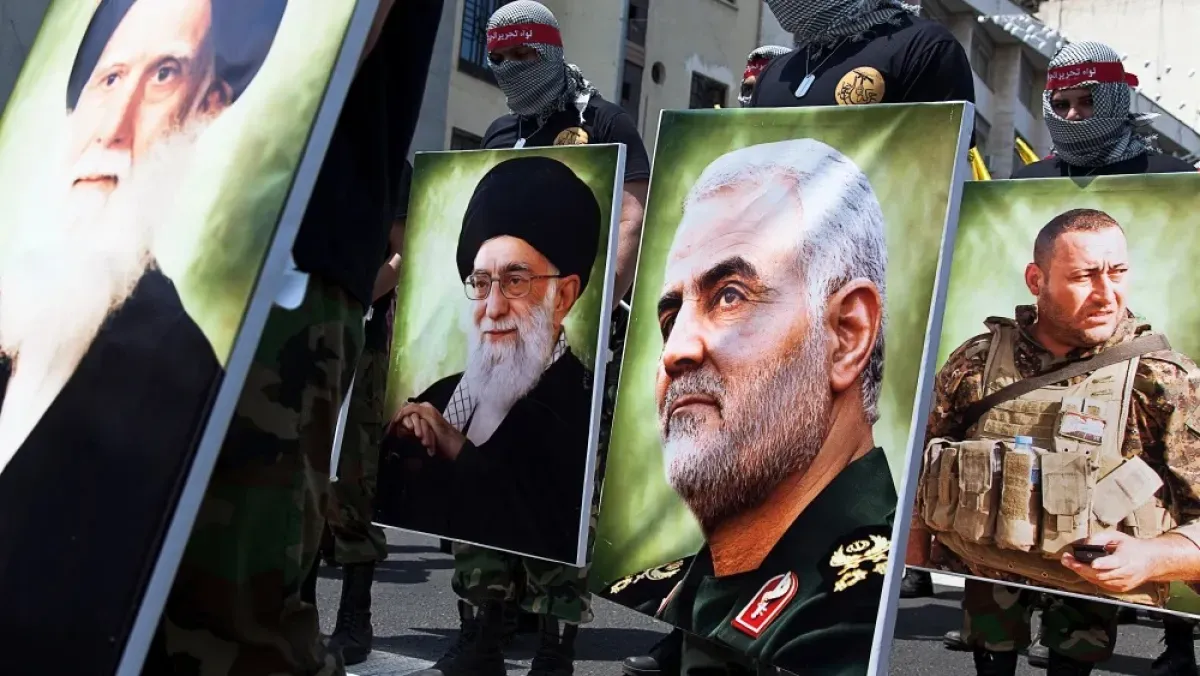
An academic analysis suggests that Iran's Revolutionary Guard Corps (IRGC) views the post-ceasefire understanding not as a shift in political or military doctrine, but as a tactical maneuver necessitated by exceptional circumstances, while maintaining adherence to the Islamic Republic's core ideology. The report, authored by Saeed Golkar, an associate professor of political science at the University of Tennessee at Chattanooga and published by the Middle East Forum, concludes that the 2026 war enhanced the IRGC's influence within Iran's decision-making apparatus, particularly following the assassination of Supreme Leader Ali Khamenei. With the declared successor, Mojtaba Khamenei, remaining largely out of public view, intellectual and political figures within the IRGC have gained a more prominent role in articulating the regime's direction. According to the report, Ayatollah Ali Khamenei's representative to the IRGC, Abdollah Hajisadeghi, has emerged as a key spokesperson, with his office overseeing the ideological and political guidance of the IRGC, shaping its discourse, and ensuring adherence to the principle of Velayat-e Faqih, the foundational doctrine of the institution. Recent statements by Hajisadeghi, alongside pronouncements from Deputy Commander for Political Affairs Yadollah Javani, reflect a perspective that views the understanding as a mechanism for managing external pressures rather than a precursor to strategic changes in Iran's policy or the IRGC's role, the report indicates. The IRGC leadership is reportedly working to legitimize the agreement domestically by linking it to the Supreme Leader's will, while simultaneously rejecting criticism from hardline factions who perceived it as a concession. Concurrently, they are avoiding portraying it as a complete victory that achieved all of the Iranian leadership's objectives. The report emphasizes that the IRGC's rhetoric continues to underscore its traditional principles, including absolute loyalty to the Supreme Leader and ongoing confrontation with what it terms "global arrogance," maintaining the United States and Israel as primary strategic adversaries. IRGC leaders frame negotiations as a situational tool for crisis management, not a pathway to reconciliation or a change in approach. The analysis further notes that the military institution advocates for strengthening military and security capabilities in parallel with diplomatic efforts, asserting that the regional environment remains one of conflict and that the ceasefire agreement does not justify a reduction in military readiness or regional influence. In conclusion, the IRGC's official discourse aims to reassure its base that the understanding does not represent a retreat from its revolutionary identity but rather a demonstration of what it describes as "tactical flexibility" in crisis management, while preserving the strategy of resistance as the primary option. This interpretation carries significant implications for policymakers in the United States and its allies, the researcher warns. It cautions against assuming that Iranian adherence to the terms of the understanding will automatically lead to political moderation or a shift in the IRGC's strategy, emphasizing that any genuine transformation would necessitate a fundamental review of the institution's doctrine, its relationship with the Iranian leadership, and its approach toward the United States and Israel. |