


Rights Group Documents 1,937 Houthi Violations Against Yemeni Tribal Leaders
|
1 day ago
A-
A+
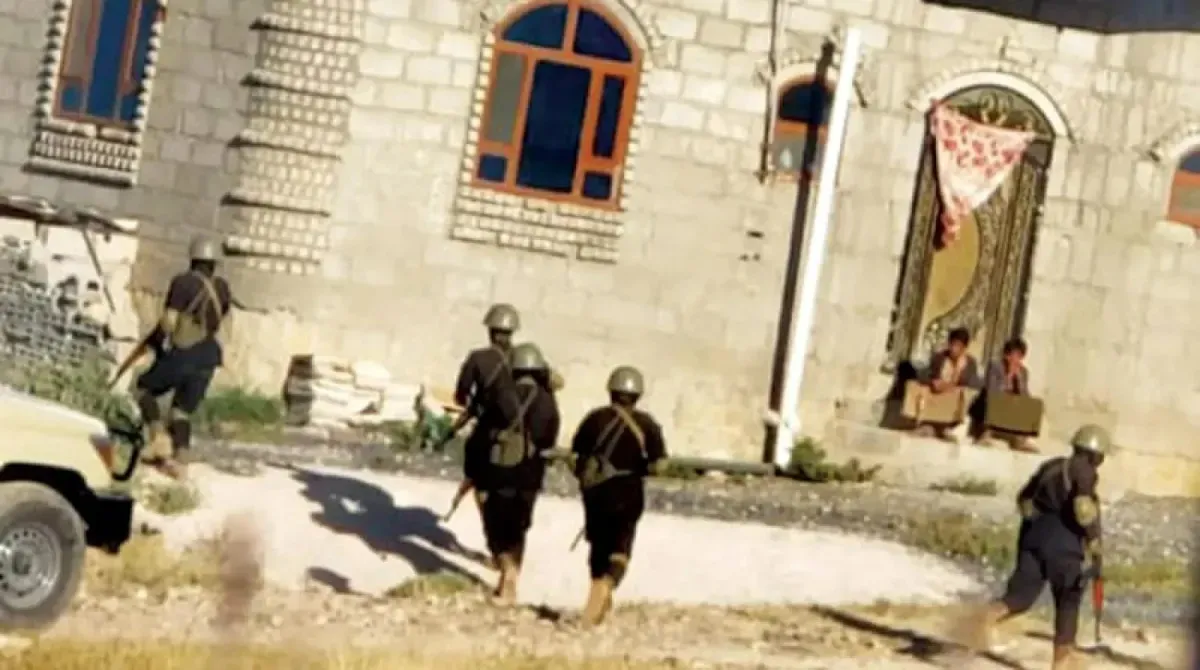
The Yemeni Network for Rights and Freedoms has documented 1,937 violations committed by the Houthi militia against tribal leaders and social dignitaries in Yemen between early 2016 and March 30, 2026. In a report released Sunday, the network stated that since its coup against the Yemeni state, the militia has implemented a systematic policy targeting the dismantling of tribal structures and weakening their historical role. This is achieved through killing, liquidation, arrest, enforced disappearance, humiliation, blackmail, and displacement, as part of a project seeking to subjugate tribes and replace tribal customs and values—which have formed a cornerstone of social stability in Yemen for centuries—with loyalty to the group. The report detailed that the documented violations spanned the governorates of Sana'a, Amanat Al Asimah, Amran, Hajjah, Saada, Raymah, Dhamar, Ibb, Taiz, Al Mahwit, Al Jawf, Al Bayda, and Al Dhale. These included acts of murder, physical liquidation, dragging of bodies, mutilation of corpses, abduction, enforced disappearance, torture, home demolitions and looting, seizure of private property, as well as forced displacement and systematic physical assaults and insults against sheikhs and social symbols. According to the report, 156 killings of tribal leaders were recorded, including 49 instances of direct shooting during raids on victims' homes in front of their families. The report also documented the burning of 16 bodies of sheikhs and social dignitaries after their murder, 29 cases of dragging and mutilation of corpses, and the assassination and liquidation of 32 tribal sheikhs. The network further recorded 43 injuries among sheikhs and social figures, and 63 cases of assault, battery, humiliation, and mistreatment experienced by tribal sheikhs, whether in their homes or at militia checkpoints. The network asserted that the Houthis have employed blackmail and pressure tactics to compel sheikhs into sending more tribal members to the front lines, using both enticement and intimidation. This approach transforms the tribe into a human reservoir fueling the war, constituting a flagrant violation of human rights and the rules protecting civilians from coercion and exploitation. The report added that the militia deals with tribes based on a hierarchical lineage system, aiming to eliminate the independence of tribal decision-making and subordinate sheikhs to its leaders. Those who refuse to comply or object to its policies are punished, leading to the weakening of the tribe's role and causing deep fissures in the social fabric. The report highlighted that the experiences of the Hujur tribes in Hajjah Governorate and the Al Masoud tribe in Qayfah district, Al Bayda Governorate, which included sieges, drone attacks, and extensive military operations, serve as a clear example of the retaliatory policy pursued by the group against tribes resisting its authority. The network stressed that the crimes committed against Yemeni tribes represent a systematic policy aimed at undermining the tribe's role, breaking the prestige of its sheikhs, and reshaping society based on loyalty to the group. This action threatens civil peace and undermines the foundations of coexistence and stability in Yemen. The network called upon the international community, the United Nations, the Human Rights Council, and relevant international mechanisms to impose sanctions on Houthi leaders involved in crimes against tribal figures. It also urged the Yemeni government and the National Committee for Investigating Allegations of Human Rights to institutionally document these violations, provide protection for community and tribal leaders, and strengthen the role of justice institutions. In conclusion, the network affirmed that targeting tribes and their sheikhs is not merely an assault on specific individuals but an attack on one of the most significant social components that has historically maintained the cohesion of Yemeni society. It warned that continued impunity encourages further violations and undermines opportunities for peace and stability. |