



Yemeni Researcher Warns of Rare Artifacts for Sale, Urges Heritage Protection
|
1 day ago
A-
A+
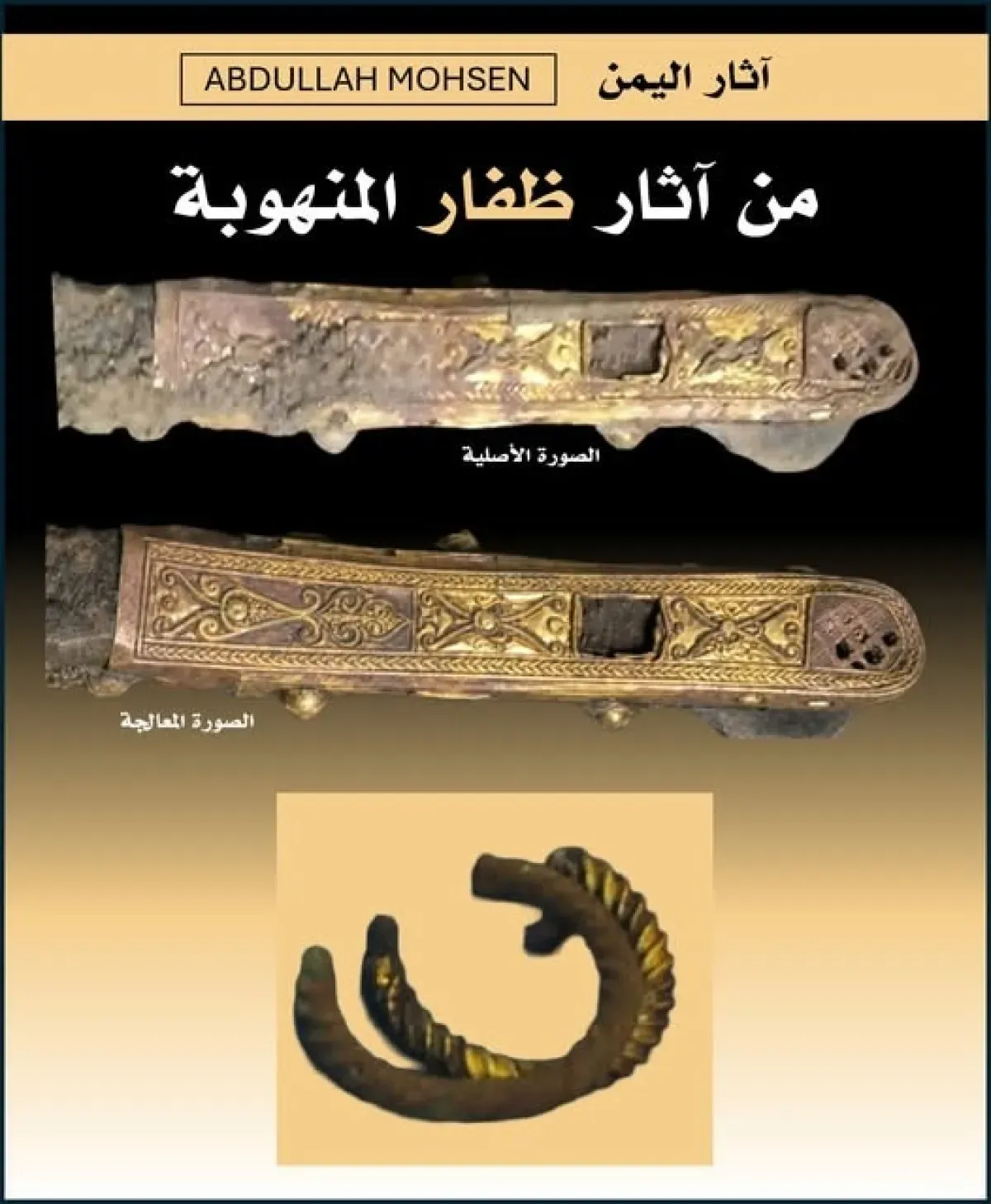
A Yemeni researcher has issued a stark warning regarding the illicit sale of rare historical artifacts in the city of Yarim, Ibb Governorate. Abdullah Mohsen, an archaeologist, alleges that a network, which he describes as "connected," is responsible for looting archaeological sites in Ibb and Dhamar Governorates, citing a failure by authorities to halt illegal excavations and protect cultural heritage. Mohsen revealed on his Facebook page that the collection up for sale includes ancient jewelry and bronze items, notably a golden dagger hilt and a twisted golden bracelet. He received images of these items from an anonymous source. Mohsen estimates the dagger hilt dates back to the 1st century AD and likely originates from the ancient city of Dhafar. He described it as one of three renowned Yemeni daggers known to researchers, while characterizing the twisted bracelet as an exquisite example of jewelry characteristic of ancient Yemeni kingdoms. The researcher urged the relevant authorities to pursue the networks involved in looting archaeological sites, confiscate stored or traded collections, and cease illegal digging activities. He emphasized that historical artifacts constitute an irreplaceable civilizational record that must be protected from smuggling and loss. To ascertain the scientific value of the artifacts, Mohsen shared the images with specialists in Yemeni archaeology and heritage, including archaeologist Dr. Laila Aqeel. Dr. Aqeel stated that the golden piece appears to be the hilt of a sword or dagger, meticulously crafted using gold wires and adorned with motifs recognized in Hellenistic art, particularly the "Hercules knot" – a decorative element associated with strength that became widespread in the early centuries AD. She noted that the hilt resembles two previously documented ancient daggers, one housed in the Islamic Art collection and another discovered at the Al-Usaybah archaeological site. The golden bracelet, she added, belongs to a style of classical bracelets found at several Yemeni archaeological sites, likely dating between the 1st and 3rd centuries AD. Cultural heritage researcher Mohammed Sabaa commented that the hilt in the photographs appears to be from a royal dagger made of pure gold, suggesting it may have been inlaid with carnelian, a known decorative technique in the craftsmanship of royal weaponry in ancient Yemen. He indicated that the presumed find location, near highlands containing remnants of royal palaces, could enhance its historical significance. Sabaa also noted the possibility of royal inscriptions on the piece if subjected to specialized scientific examination. Sabaa further suggested that the dagger's archaeological value could rival that of the most famous golden daggers discovered in ancient civilizations. The displayed golden bracelets, he concluded, reflect an advanced level of craftsmanship for which jewelry making in ancient Yemen was renowned. Their recovery and study could provide new information about the history of ancient Yemeni kingdoms. |