


Iran's Enriched Uranium: A New Dilemma for US-China Relations
|
18 hours ago
A-
A+
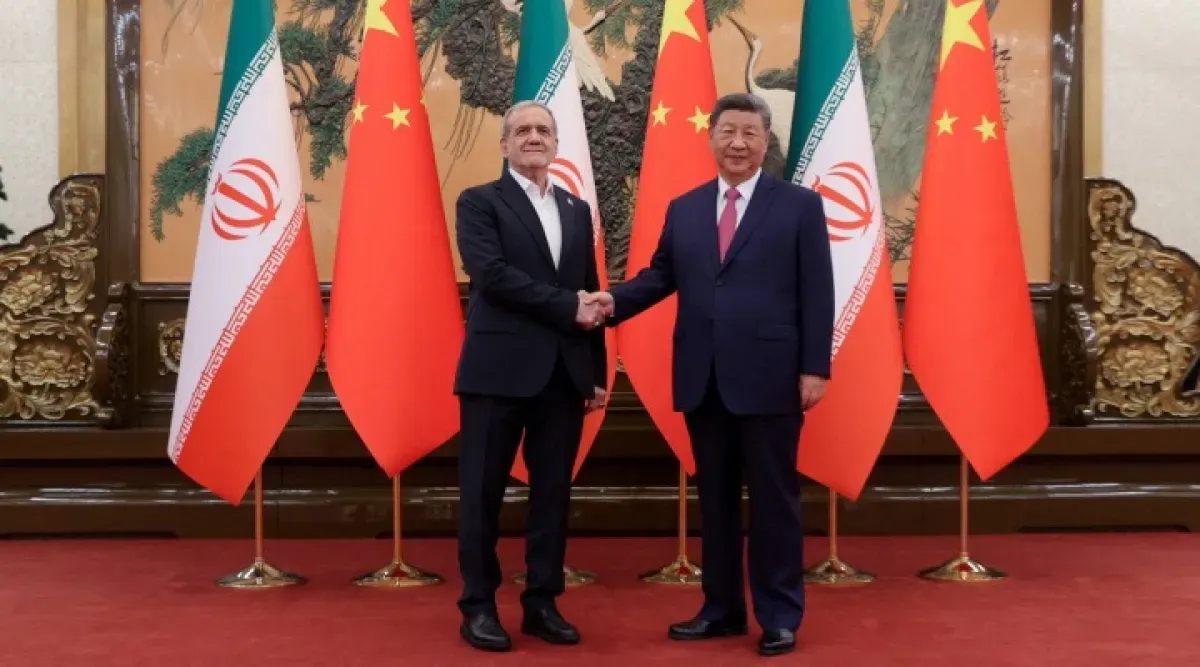
The fate of Iran's enriched uranium, a critical sticking point in international negotiations, may shift from Russia to China, presenting a complex verification challenge for the United States and potentially escalating geopolitical tensions. According to an analysis published by The Algemeiner, the question of how to manage Iran's enriched uranium stockpile has been a central issue for negotiators. In 2015, under the Joint Comprehensive Plan of Action (JCPOA), Iran shipped its excess enriched uranium to Russia, a framework built upon Cold War-era arms control agreements. However, this established system is no longer viable. Current negotiations suggest Iran is considering a more sensitive option: transferring its 60% enriched uranium stockpile to China. This move would not only challenge the U.S. in managing Iran's nuclear program but also create a new verification crisis between Washington and Beijing, lacking established institutional frameworks and clear mechanisms for such an arrangement. The geopolitical rationale for considering China as a destination is understandable. Russia is no longer a politically acceptable partner due to the war in Ukraine and subsequent sanctions, making it difficult for Washington to entrust sensitive nuclear materials to a country facing increasing Western isolation. This political reality renders a return to the previous model impractical for any U.S. administration. Conversely, China presents itself as a relatively neutral mediator. Beijing has enhanced its role in the Iranian nuclear file as a responsible player, possessing the necessary infrastructure and close ties with Tehran. China also has a vested interest in avoiding a regional conflict that could disrupt energy supplies. From this practical standpoint, the proposal appears negotiable. However, the analysis highlights a more complex question: how to ascertain the ultimate disposition of these nuclear materials once they are in Chinese territory? U.S.-China relations lack a bilateral nuclear verification system comparable to that developed with Russia. Existing arms control treaties and verification mechanisms are not directly applicable to the current dynamic between the U.S. and China, which is characterized by escalating strategic competition. This competitive environment, encompassing disputes over advanced technology, semiconductor export restrictions, and mutual accusations of espionage, makes external access to sensitive facilities exceedingly difficult. This reality creates a fundamental gap in any verification regime that might accompany the transfer of Iranian uranium to China. While the International Atomic Energy Agency could theoretically monitor the initial transfer and storage, its long-term oversight capability depends heavily on host nation cooperation, a scenario not yet tested with China in the context of such sensitive arrangements. Furthermore, independent verification efforts by Western intelligence agencies could themselves trigger political and security crises. Any attempt by U.S. or Israeli intelligence to gather direct information on storage sites would likely be perceived by Beijing as espionage targeting its sovereign nuclear infrastructure. The sensitivity is amplified if Iranian materials are located near facilities related to China's own nuclear weapons programs, potentially transforming non-proliferation monitoring into a major power intelligence confrontation. Israel, in particular, would likely view this scenario with significant concern. The Iranian nuclear program has long been considered an existential threat by successive Israeli governments. An agreement transferring enriched uranium to China would require Israel to accept an arrangement that ostensibly mitigates immediate risk while leaving the materials under the control of a major power with whom it has no binding security arrangements. This development would not negate the deterrence calculus but would shift it to a new level of interaction between the U.S., China, and Israel, transforming the issue from a regional Middle Eastern concern into a component of great power competition. The analysis also questions the benefits China might derive. As China is not entirely neutral in the Iranian nuclear issue, hosting enriched uranium could grant it additional leverage over both Tehran and Washington, securing a permanent role in future negotiations. Therefore, the proposal appears to offer China a new strategic asset in international power balances rather than a definitive solution to the verification dilemma. In conclusion, the analysis posits that the failure to revive the nuclear deal under the previous U.S. administration was partly due to disagreements over verification and monitoring arrangements. Any new framework for a ceasefire or nuclear settlement must not transfer this unresolved dilemma to a party lacking clear commitments in this domain. Transferring Iran's enriched uranium to China, the author argues, does not end the nuclear crisis but merely relocates it to a new arena deficient in the oversight mechanisms Washington has traditionally relied upon. |