


US Treasury Sanctions Iran Shipping, Gold Smuggling Network Linked to Shamkhani Family
|
1 month ago
A-
A+
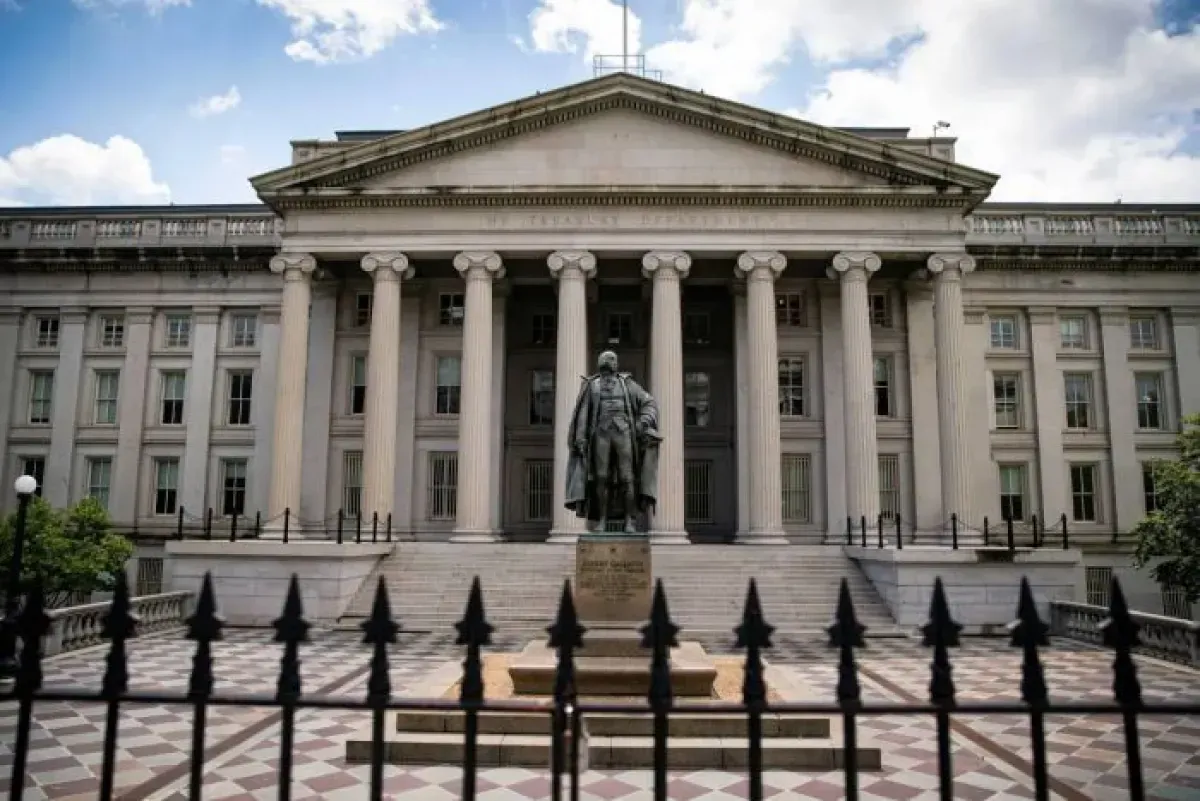
The U.S. Department of the Treasury's Office of Foreign Assets Control (OFAC) has intensified its pressure on Iran's illicit oil transportation infrastructure by imposing sanctions on over twenty individuals, companies, and vessels. These entities operate within a network managed by Iranian oil shipping magnate Mohammad Hossein Shamkhani, son of the late Iranian security official Ali Shamkhani. Treasury Secretary Scott Bessent stated, "The Treasury Department is acting decisively as part of the 'economic pressure' program, targeting the ruling elites of the regime, such as the Shamkhani family, who seek to profit at the expense of the Iranian people." He affirmed that "under President Trump's leadership, the Treasury Department will continue to cut off Iran's illicit smuggling networks and terrorist networks." He also indicated that "the Treasury Department will use all available tools and authorities, including secondary sanctions, against those who continue to support Tehran's terrorist activities." Shamkhani heads a multi-billion dollar Iranian-Russian oil sales empire, with revenues benefiting a network connected to Iranian leadership at the expense of the populace. This action follows OFAC's designation of his network on the sanctions list in July 2025, representing the largest single action since the resumption of the maximum pressure campaign on Iran. In a joint investigation with Homeland Security Investigations (HSI), OFAC also designated Lebanese Hezbollah financier and Iranian citizen Sayed Naemai Badr al-Din Mousavi and three affiliated companies within a complex money laundering scheme involving the sale of Iranian oil for Venezuelan gold under the former Venezuelan regime, intended for Hezbollah and Iran's Quds Force. The measures are based on Executive Orders 13902 and 13224 and constitute the latest round of sanctions targeting Iranian oil sales and Hezbollah as part of an intensive economic pressure campaign on Iran. Since the campaign's inception, OFAC has sanctioned over a thousand individuals, vessels, and aircraft. Shamkhani's network utilizes front companies for management, consulting, and shipping to evade sanctions, appearing legitimate to support the Iranian regime and enrich the Shamkhani family, according to the U.S. Treasury. The Shamkhani smuggling network's operations are primarily centered around the UAE-based "Oriel Group," which includes companies previously sanctioned in July 2025, such as "Corplinks Consulting," used by network employees to conceal financial and administrative operations. The UAE-based "House of Shipping Investment," a shipping company affiliated with Mohammad Hossein Shamkhani, has an Indian branch named "House of Shipping Private Limited," while "Shipstar Shipchandling" provides logistical support for the network's vessels. The UAE-based "Mertron" company serves as a front for secretly acquiring new vessels for the Shamkhani network and transporting sanctioned Iranian petroleum products. Between 2025 and early 2026, Mertron reportedly sought to purchase two vessels from South Korea for tens of millions of dollars, replacing a sanctioned company. Mertron was previously managed by Elizaveta Kadido and has been linked to other companies sanctioned in July 2025 actions. Chetan Prakash Balhotra, based in the UAE, serves as a director at Mertron and was previously with a U.S. company whose operations were transferred to the UAE after the July 2025 sanctions. Tangori Sunilkumar Srinivas has held management positions within the Shamkhani network. "Taylor Shipping" (UAE) and "Shipza Shipping" (Marshall Islands) are linked to Shamkhani's fleet, managing vessels that transport sanctioned Iranian goods to East Asia. According to the designation, several companies and individuals were listed under Executive Order 13902 for providing material, financial, or technological support to Mohammad Hossein Shamkhani, or for being under his control or acting directly or indirectly on his behalf. The listings also included other companies and vessels directly associated with the network's structure. Mohammad Hossein Shamkhani continues to rely on crude oil, petroleum product, and LPG tankers to generate billions of dollars for the Iranian and Russian regimes, according to the statement. The actions included vessels and companies operating within what was described as a "shadow fleet." Companies registered in the Marshall Islands, Indonesia, and India manage and operate vessels transporting Iranian and Russian oil and gas shipments to various markets. Some of these vessels reportedly transported millions of barrels during 2025. Several companies and maritime assets have also been designated as blocked property belonging to listed individuals within the shipping network associated with the shadow fleet. In a joint investigation with U.S. Homeland Security, OFAC targeted an Iranian oil and gold smuggling network aimed at financing Hezbollah and the Quds Force, led by Iranian citizen Sayed Naemai Badr al-Din Mousavi, who is linked to Hezbollah. His network involved exchanging Iranian oil for gold with the former Venezuelan regime. The network utilized complex routes for transporting gold via aircraft, intermediaries, and indirect shipping to circumvent sanctions. Mousavi collaborated with sanctioned individuals and a network of intermediaries in oil and gas smuggling, employing methods such as ship-to-ship transfers and falsifying identification data. According to the statement, Mousavi is linked to front companies in the Netherlands and the UAE, and he and his companies are subject to Executive Order 13224 for materially, financially, or technologically supporting Hezbollah. As a result of these actions, all property and interests in property of the designated individuals and entities within the United States or under the control of U.S. persons have been frozen, with a requirement to report them to OFAC. These restrictions encompass any entities owned 50 percent or more by designated persons, along with a general prohibition on financial or commercial transactions with them within or through the United States. The statement warned that violations of sanctions could lead to civil or criminal penalties, with the possibility of substantial fines for individuals and entities in violation, including those outside the United States. It also noted that sanctions are intended not only for punishment but also to effect behavioral change, with a mechanism available for requesting delisting according to the Office's established procedures. |