


Iran's True Adversary: Gulf States Targeted Over Israel in Escalation
|
9 hours ago
A-
A+
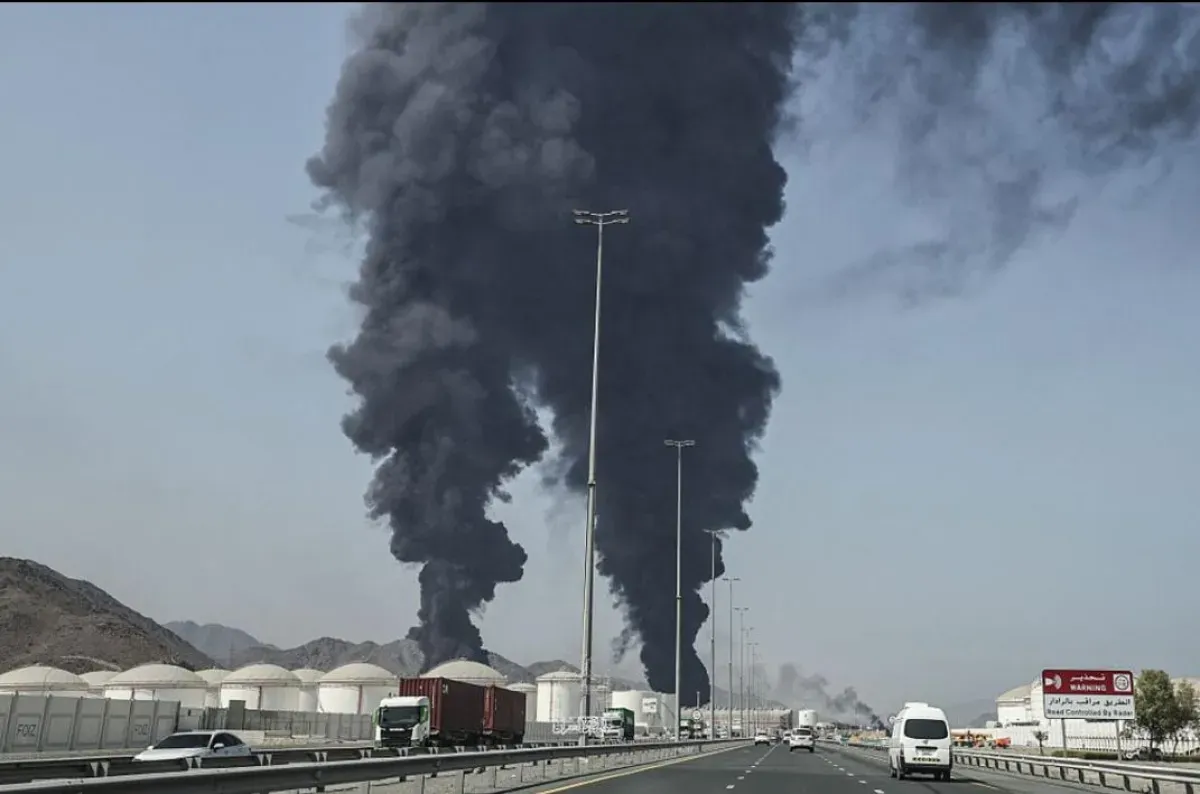
Recent military developments in the Middle East reveal a controversial and contradictory Iranian political and security posture during a highly sensitive regional period. Despite facing direct airstrikes from the United States and Israel, Tehran designated the Arab Gulf states as the primary theater for retaliation, launching extensive volleys of ballistic missiles and drones. This escalation significantly surpassed the scale and intensity of attacks directed at Israel. The striking paradox is that the total number of projectiles launched by Iran towards Saudi Arabia, the UAE, Bahrain, and Kuwait far exceeds what was used against Israel, even though Israel was a direct party in striking Iranian territory. This imbalance in the direction of fire cannot be explained solely by military logic; it reflects a clear prioritization of adversaries by Tehran, which appears to place Gulf states at the forefront of its actual enemies, ahead of the United States and Israel. While the response to American and Israeli strikes was limited and calculated, the broader and more intense escalation was directed at the Gulf, indicating that the true conflict within the Iranian political psyche is primarily managed against its Arab neighbors, not its international adversaries. Politically, Iran's actions seem less about exporting conflict and more indicative of a deeply ingrained perception that the primary confrontation arena is the Gulf. While engagement with Washington and Tel Aviv remained within calculated limits and controlled messaging, the wider escalation targeted the Gulf, including energy facilities, infrastructure, and civilian areas. This suggests Tehran views its Arab neighbors as direct adversaries to be subdued or brought under control, rather than merely a secondary theater of conflict. This course of action exposes a profound duality between Iran's rhetoric and its actual practice. While Tehran markets itself as a deterrent force against Israel, on-the-ground realities show a limited and symbolic response towards Tel Aviv, contrasted with intense and direct escalation against Gulf states. This contradiction casts serious doubt on Iranian discourse, as grand confrontation slogans are raised while heavy escalation tools are deployed against an Arab region that was not a direct party to striking Iran, yet has become the primary target in the conflict's equation. More alarmingly, this behavior not only violates the sovereignty of Gulf states but also poses a direct threat to regional stability and global energy security, pushing the region towards potential conflict expansion rather than containment. It also compels Gulf states to strengthen their defense alliances and engage more deeply in regional and international security arrangements, effectively achieving the opposite of what Tehran claims to pursue. Iran's actions were not merely a defensive response but revealed its conflict priorities. Despite receiving direct strikes on its own soil, it chose to make the Gulf the arena for its broadest escalation, confirming that the real enmity in its calculations is not with those who strike it, but with its Arab neighbors, who are made to pay the price for political messages that do not concern them. |