


Taiz Water Crisis Deepens Amid Houthi Siege and Infrastructure Collapse
|
2 days ago
A-
A+
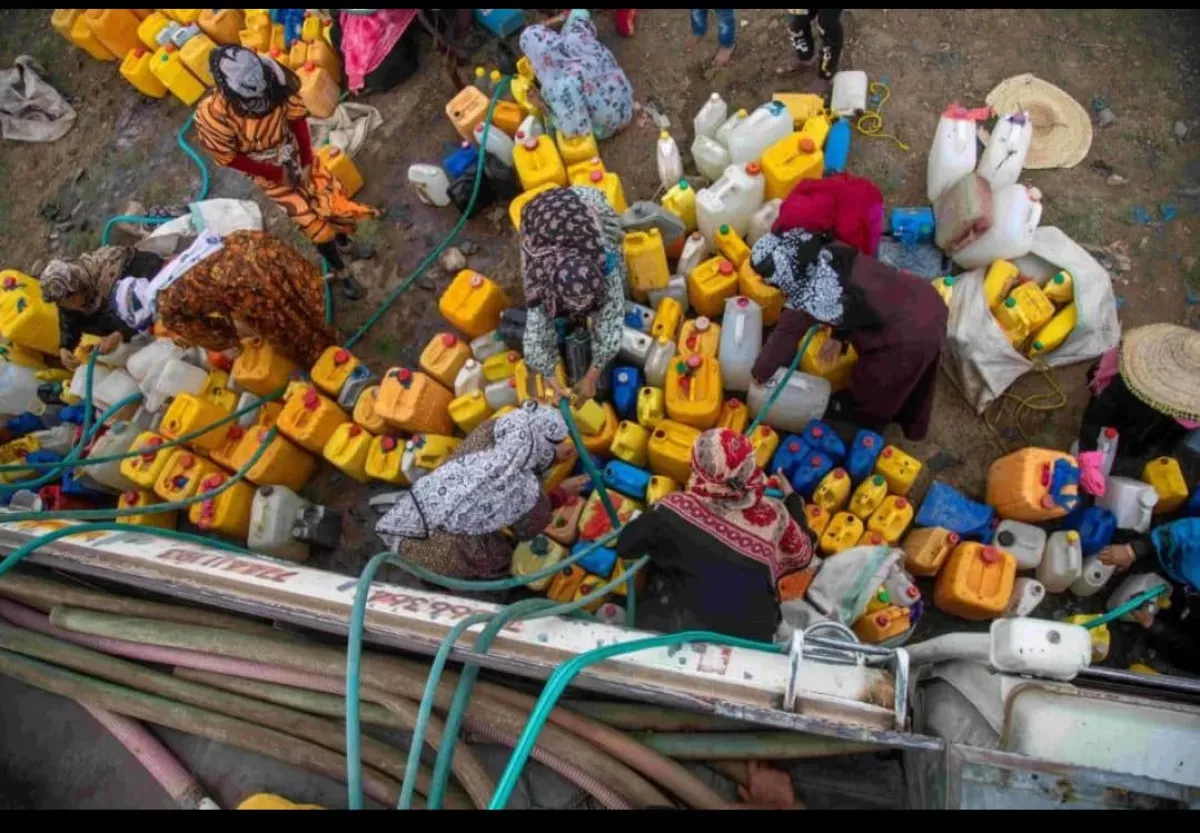
The protracted water crisis in Taiz has escalated beyond a mere service issue into one of Yemen's most complex humanitarian emergencies, leaving hundreds of thousands of residents struggling with severe shortages, inflated prices, and the constant pressure of a long-standing Houthi siege amidst a precarious political, economic, and security environment. As years of conflict accumulate livelihood burdens, citizens in Taiz face a harsh reality: a daily search for water to avoid an increasingly severe existence in what was once one of Yemen's most vital urban centers. Historically, Taiz, situated in a mountainous region, was not abundantly endowed with water resources, relying primarily on limited groundwater and seasonal rainfall to feed local wells. However, prior to the war, local authorities managed a government water network that periodically supplied large parts of the city, despite existing supply challenges and rising demand. This service system began a steady decline following the escalation of armed conflict in 2015, eventually collapsing. This collapse forced thousands of families to seek costly and unstable alternatives to secure their fundamental water needs. The war severely damaged essential service infrastructure, with Taiz's water sector suffering extensive losses. Numerous wells, pumping stations, and supply lines sustained damage from military confrontations or neglect due to a lack of routine maintenance. Extended power outages further complicated the operation of water pumps, which often rely on fuel, itself subject to escalating prices and scarcity. Local estimates indicate that the government water network, once covering a significant portion of the city, is now largely incapable of meeting demand, operating intermittently at best, while some neighborhoods remain without service for months. This continuous outage has driven residents to depend almost entirely on alternative sources, primarily purchasing water from tanker trucks, locally known as "water white," which have become the main supply channel across most districts. With the collapse of the state supply system, a vast market for water transport via these tankers emerged, sourcing water from private wells on the city's outskirts or neighboring districts, sometimes from areas controlled by Houthi militias, such as the Houthan area east of the city. This trade has morphed into a significant economic activity managed by well owners and investors, operating without adequate oversight on pricing or water quality. Residents report that water prices have repeatedly surged in recent years, with costs multiplying several times over pre-war levels. At times, the price of a single tanker exceeds the capacity of many low-income families, forcing them to reduce consumption to the bare minimum. This situation has cultivated a parallel economy linked to thirst, where access to water is dictated by financial capability, leaving poor families with limited, often substandard, options or reliance on water stored under unsanitary conditions. The city's mountainous geography, lacking permanent surface water sources, exacerbates the crisis. While some water projects exist in Houthi-controlled areas, supplies to Taiz city have been halted for years, reportedly redirected by Houthi militias to be sold back to the city via tankers at exorbitant rates. Compounding this, significant population growth in recent years has placed unprecedented strain on limited water resources, leading to declining water levels in many wells and the drying up of others due to random drilling and groundwater depletion. The influx of internally displaced persons and returning residents during the conflict has drastically increased the population across most neighborhoods, driving water demand to unprecedented levels while resource capacity diminishes. This has intensified competition for water, particularly in densely populated or elevated areas difficult for tankers to access. The water scarcity extends beyond service and economic concerns, manifesting severe humanitarian and health consequences. The lack of clean water compromises general and personal hygiene, increasing the risk of waterborne diseases and illnesses related to poor sanitation. Storing water in unsecured containers often leads to contamination, fostering environments conducive to disease vectors like mosquitoes. Local authorities have announced various plans, including drilling new wells and rehabilitating sections of the state network, alongside proposals to regulate the tanker market. However, observers note these efforts remain insufficient given the scale of the problem, which necessitates substantial, stable investment. Experts argue that a sustainable resolution requires comprehensive management of water resources, modern infrastructure development, rainwater harvesting, and stronger local regulatory oversight. Ultimately, Taiz's water crisis reflects the broader Yemeni predicament, where conflict, poor governance, and resource scarcity intersect to create a complex humanitarian reality. While residents continue to adapt, hope remains pinned on decisive solutions that restore the most fundamental element of life: water. For a city historically known for its culture and economy, obtaining water has become a daily test of endurance, placing a clear responsibility on the international community and relevant bodies to seek sustainable answers to a crisis showing no immediate end. |