


Sana'a Contrast: Authority Imagery Overshadows Citizen Hardship
|
1 month ago
A-
A+
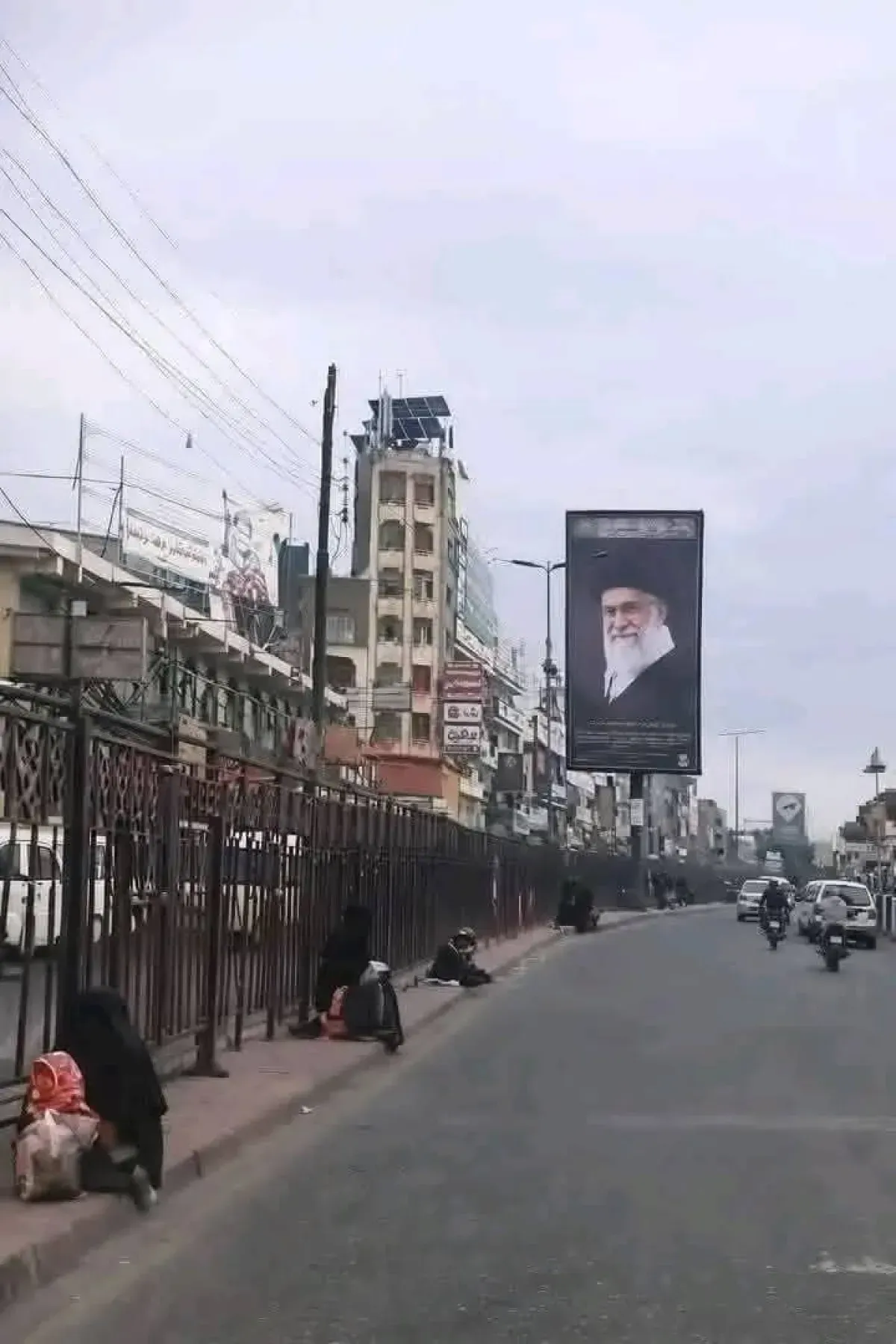
A stark visual juxtaposition in a captured street scene in Sana'a encapsulates the profound crisis afflicting the entire city and, by extension, Yemen. This image presents an undeniable, silent testimony to a distorted reality requiring little external interpretation. A towering billboard prominently displays the image of the late Iranian Supreme Leader, Ayatollah Ali Khamenei, seemingly overlooking the city from a high perch. Directly beneath this symbol, at the edge of the pavement, impoverished women sit selling meager necessities, their very presence illustrating the exhaustion brought on by years of conflict and occupation. This is not merely a political poster set against a backdrop of poverty; it distills the contradiction gripping Sana'a. Symbols of extraneous, transnational agendas are elevated above the urban landscape, while the Yemeni populace sinks deeper into destitution and need. In functional cities, public displays honor leaders who build infrastructure; conversely, Sana'a's streets have become avenues for imported iconography while its citizens wait on the curbsides. The woman seated on the cold asphalt, draped in her worn abaya, likely remains oblivious to complex regional power struggles or ideological narratives of "resistance." Her immediate reality is singular: the necessity to secure enough income to provide her waiting children with dinner, understanding that a day without sales means a night potentially without food. This disparity highlights the chasm between propaganda and lived experience. As the Houthi militia saturates public spaces with Iranian emblems and declarations of allegiance, the Yemeni societal fabric frays further—salaries remain unpaid for years, the economy is paralyzed, schools face collapse, and families erode under the pressure of basic need. What is most striking is the deliberate transformation of the city’s public domain into an exhibition hall for symbols alien to the populace’s heritage and spirit. Sana'a, historically a nucleus of culture and history, is being forcibly recast by foreign banners. However, enduring cities cannot be rewritten by placards; Sana'a’s true identity resides not on metal columns but in the faces of its people, the fatigue of its women, and the resilience embedded in its ancient stones. The photograph lays bare this truth: above, the image represents an abstract, distant political venture; below, the women embody Yemen's tangible suffering. The immense distance between them is not merely the height of a metal pole, but the gulf separating the rhetoric of an insurgent authority from the concrete reality of its citizens. This image is harsh because it communicates everything: a city where symbols were elevated while humanity was diminished. History suggests that exhausted cities do not perish, and patient peoples ultimately author their own narratives, anticipating a future where the streets of Sana'a display the images of those who restore its dignity and light. |