


Analysis: Carrier Strike Groups' Potential 72-Hour Air Campaign Against Iran
|
1 day ago
A-
A+
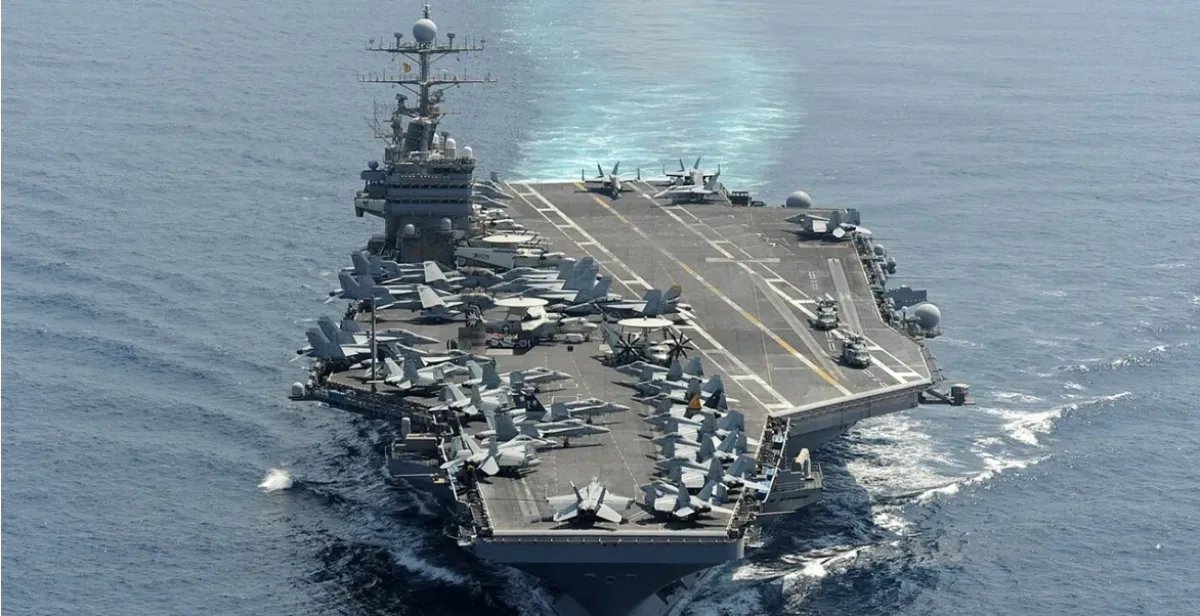
According to an analysis published in The National Interest by writer Harrison Kass, while U.S. aircraft carriers cannot sustain an all-out war independently, they possess the capacity to deliver precise, intensive strikes capable of inflicting substantial damage on adversarial nations like Iran. Amid heightened tensions with Tehran and the increased deployment of U.S. carrier strike groups in the Middle East, speculation is renewing regarding the nature and strategic limits of a potential air campaign spearheaded by these naval assets against Iran. The report suggests that any military action launched from carriers would likely be limited in scope, highly targeted, and integrated with long-range capabilities, rather than constituting a full-scale invasion. The most probable scenario involves a calibrated coercive strike designed to deter the adversary or degrade its qualitative capabilities without escalating into open warfare or regime change operations. The U.S. Navy has a long operational history utilizing carriers, notably executing punitive strikes against Iranian targets during Operation Praying Mantis in 1988 in retaliation for mining international shipping. Furthermore, carrier air wings provided sustained strike tempo during the Iraq War and played a crucial role in the campaign against ISIS through daily sorties launched from the Arabian Gulf. A key operational lesson is that carriers function as sovereign, mobile airbases, reducing reliance on regional land bases and affording Washington flexible, persistent strike options. However, in a conflict with Iran, the U.S. faces complex geographic constraints. The Arabian Gulf is a narrow, heavily monitored waterway, with the Strait of Hormuz representing a critical chokepoint. Iran has developed a suitable defensive naval doctrine over decades, bolstered by coastal anti-ship missiles, fast attack craft, drones, and ballistic missiles covering the surrounding maritime space. Consequently, the U.S. Navy might position carriers outside the Gulf to minimize exposure to missile threats, making the range of attack aircraft a decisive factor. The analysis outlines three potential operational phases. Initially, Intelligence, Surveillance, and Reconnaissance (ISR) assets, including F/A-18 Super Hornets and E-2D Hawkeyes, would integrate with long-range assets like the P-8 Poseidon and MQ-9 drones to map Iranian air defenses and identify missile batteries. The second phase focuses on Suppression of Enemy Air Defenses (SEAD), targeting radars, surface-to-air missile systems, and command centers. This would likely involve F/A-18s equipped with anti-radiation missiles, supported by EA-18G Growlers for electronic warfare, executing strikes and jamming defensive networks from safe distances. The third phase involves precision strikes against key targets such as nuclear facilities, IRGC command centers, missile depots, and drone production sites, potentially lasting a concentrated 48 to 72 hours. The report anticipates Iran would respond using asymmetric tools, including ballistic missile launches toward regional bases, activating proxy attacks in Iraq and Syria, deploying drone swarms against maritime targets, mining the Strait of Hormuz, and harassing vessels with fast boats. U.S. naval assets would rely on layered defense systems, such as Aegis combat systems and advanced interceptors, to counter these aerial and missile threats. Strategically, carriers serve as tools for deterrence and punishment rather than decisive regime-change instruments; their presence raises the stakes and defines red lines. Tactically, however, carriers face limitations, as Iran possesses deeply buried hardened facilities requiring bunker-busting munitions beyond the capability of a carrier air wing alone, necessitating integration with Air Force and long-range capabilities for wide-scale strategic destruction. Finally, the deployment of carrier strike groups to the Middle East mandates diverting military resources from the Indo-Pacific theater, incurring a strategic cost. This escalation also heightens the risk of sliding into a protracted conflict within an already chronically unstable security environment. |