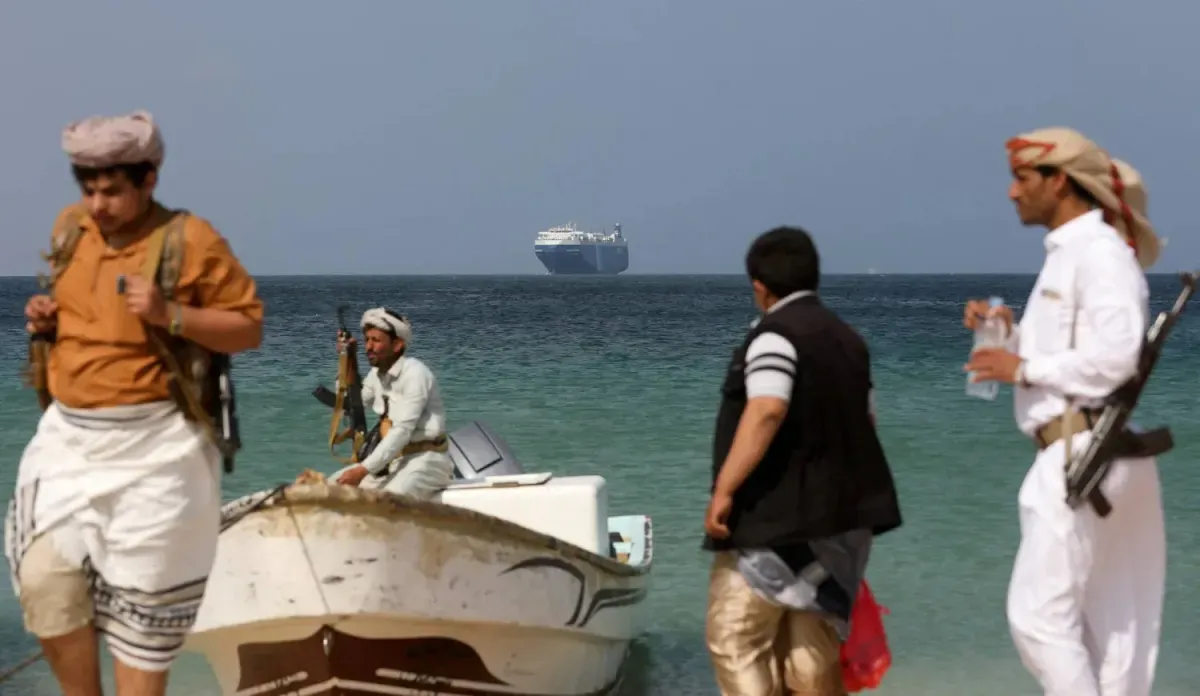



Houthi Fishermen Ban Linked to Military Activity Near Bab al-Mandab
|
11 hours ago
A-
A+
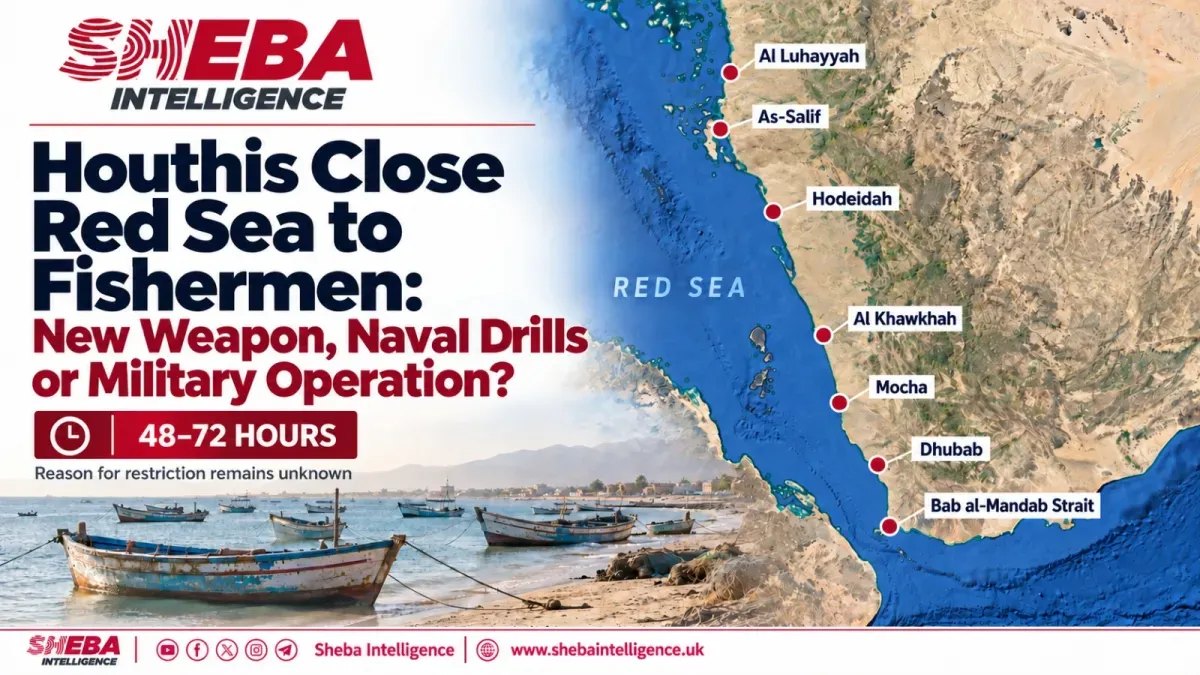
A recent directive by Houthi authorities mandating fishermen along Yemen's Red Sea coast to cease all seafaring activities for two to three days has raised concerns, with intelligence analysts suggesting a potential link to increased military maneuvers near the strategically vital Bab al-Mandab Strait. The unusual order, issued without explanation to fishermen, has created ambiguity regarding its geographical scope, leaving it unclear whether the restrictions apply to the entire western coast of Yemen or only specific areas. This development coincides with heightened military activity in coastal regions overlooking the Bab al-Mandab Strait, following reports of Houthi control over the Mokha region and surrounding areas, including islands proximate to a critical international maritime route. Military analysts suggest that compelling fishermen to remain ashore is an uncommon measure, particularly in light of recent military escalations near Bab al-Mandab. Several potential explanations are being considered, including preparations for naval exercises to test newly deployed military capabilities, or a demonstration of the group's operational capacity in the Red Sea and the Bab al-Mandab vicinity. Another prominent hypothesis involves the clandestine transfer of military equipment via small vessels, potentially unloaded at dispersed coastal points to evade detection, a scenario deemed highly plausible. Further estimations include the possibility of preparations for a military operation against a strategic target, or the testing of advanced naval systems such as missiles, drones, or explosive-laden speedboats. The intelligence report also does not rule out the restrictions being connected to other activities, such as the deployment of naval mines, reinforcement of coastal defenses and nearby islands, or the construction of additional tunnels and military positions in anticipation of a wider confrontation. However, the report emphasizes that these scenarios remain speculative due to the absence of concrete evidence confirming any specific motive behind the fishing ban. Intelligence from Sheba Intelligence indicates that military movements along Yemen's western coast extend beyond routine repositioning, involving the development of military infrastructure around Bab al-Mandab. Sources suggest these areas have become a forward operating base linked to Iran's Revolutionary Guard Corps, with ongoing construction of tunnels, fortified positions, and the installation of radar systems, communication networks, and the deployment of missiles, drones, booby-trapped boats, and naval mines. Preparations also reportedly include the utilization of unmanned naval systems, such as small autonomous underwater vehicles, alongside the establishment of new training sites and the redistribution of fighters and weaponry along the coast and adjacent islands. These facilities are reportedly designed to provide an operational framework that supports not only ground engagements but also maritime operations in the Red Sea and the Bab al-Mandab Strait. The restriction on fishing has occurred concurrently with increased attention on the potential nexus between the security of the Bab al-Mandab Strait and military developments in the Strait of Hormuz, with reports suggesting that Iranian planning for both maritime chokepoints is part of a broader regional pressure strategy. The intelligence suggests similarities between the military capabilities being developed near Bab al-Mandab and those associated with the Iranian Revolutionary Guard Corps in the Strait of Hormuz, including missiles, drones, small attack boats, naval mines, and unmanned systems. The report posits that control over coastal positions and islands near Bab al-Mandab could provide the Houthis, and by extension Iran, with additional leverage over international maritime traffic, mirroring Tehran's military influence in the vicinity of the Strait of Hormuz. The next 48 to 72 hours are considered critical for understanding the motivations behind the directive. The report suggests that monitoring any unusual movements of small vessels, activity involving missiles and drones, or naval exercises and arms transfers could shed light on the fishing restrictions. Military movements between the coast and nearby islands may also provide further indicators, with particular attention focused on the Mokha, Bab al-Mandab, Dhubab, and Perim Island areas. In the absence of an official explanation, the reasons for the fishing ban remain undetermined, ranging from naval exercises and arms transfers to the testing of new military capabilities, though there is currently no confirmation linking the measure to an imminent military operation or a direct threat to international navigation. |