


Yemeni Legitimacy Criticized for Logistical Approach to Coup Facilitation
|
2 weeks ago
A-
A+
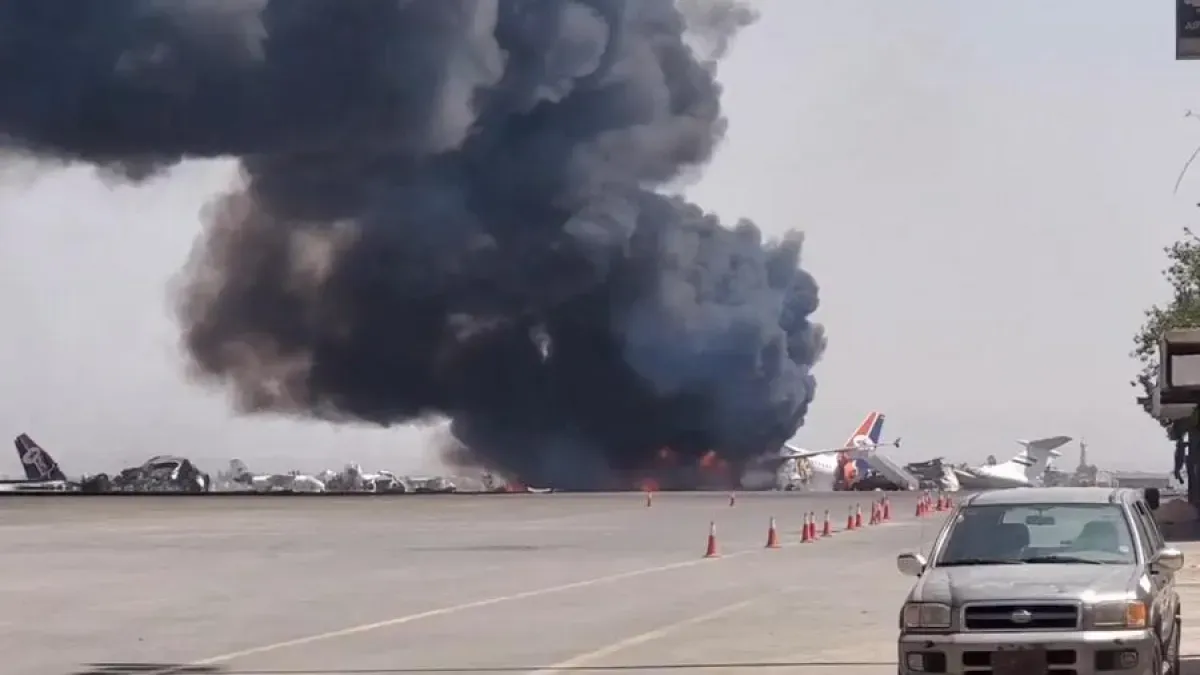
The Yemeni legitimacy, embodied by its Presidential Leadership Council and government, is facing severe criticism for its recent rhetorical and political missteps, particularly in its handling of the ongoing conflict and foreign interference. In a recent extraordinary meeting, the council addressed the existential struggle facing Yemen as if it were a mere logistical dispute over air travel arrangements, a stance that has drawn sharp condemnation. The recent statement from the council has been met with shock, not only due to the blatant nature of Iranian intervention but also because of the official response, which critics argue has stripped the state of its authority. The legitimacy's position is characterized by an unprecedented political dissociation. Instead of declaring a comprehensive mobilization and cutting off foreign interference, the discourse has devolved into that of a travel agency seeking logistical and technical solutions for chartering alternative aircraft to transport Houthi militia elements. This perceived dilution in the language of confrontation is seen not only as a blow to the sacrifices made by the Yemeni people to restore their state but also as a clear indication of how the historical adversary of the Yemeni people has been reduced in the eyes of the ruling elite to merely another party in an procedural equation, thereby postponing the battle for the republic and dignity until further notice, pending Tehran's approval of navigation arrangements. The political weakness is evident in the presidential statement's attempt to reframe a major national dilemma as a procedural matter. The entry of an Iranian Mahan Air flight into Sana'a Airport in July 2026 was not merely a navigational breach requiring a solution via a chartered Yemeni Airways flight; it was a explicit political and military declaration from Tehran of its complete disregard for Yemeni state institutions and a blatant legitimization of the coup. The Yemeni government's proposal of alternative arrangements for transporting Houthi militia elements under the guise of the sole national carrier reflects a structural failure to comprehend the nature of the conflict. The legitimacy appears to be acting as a facilitator for its adversary's flights, rather than imposing a comprehensive political and diplomatic blockade that would reshape negotiation terms from a position of strength, rather than seeking cosmetic resolutions for sovereignty violations. The most significant shock in the legitimacy's political performance lies in its exclusion of the Yemeni people as a primary party to this conflict. The Houthi militia is not an adversary of the Presidential Leadership Council concerning diplomatic quotas or airport management; it is a historical adversary of the Yemeni people concerning their sustenance, dignity, republican system, and fundamental freedoms. When the Presidential Leadership Council addresses Iranian memoranda with administrative rejection coupled with available alternatives, it deliberately or inadvertently abandons its moral and constitutional obligation to millions of citizens suffering under oppression in areas controlled by the coup. This dilution of discourse sends a disheartening message to the Yemeni populace, suggesting that the ruling elite is managing the crisis from an ivory tower, forgetting that its primary responsibility is to reclaim the capital and extend state authority, not to seek technical solutions that ensure the safety of chartered aircraft crews for rebellious terrorist elements. The presidential statement's excessive use of threatening and preparatory language, speaking of taking all political, diplomatic, and military measures to prevent the imposition of any fait accompli, clashes with the grim reality of complete military stalemate on the fronts and continuous diplomatic retreat under international and regional pressure. The threat of military action to protect the airspace becomes practically meaningless when Iranian aircraft have already landed and departed at will from Sana'a Airport without any tangible response on the ground. This stark contradiction between sharp verbal rhetoric and the paralyzed field reality eliminates any remaining state prestige and renders the legitimacy's statements a subject of political ridicule rather than a deterrent to the militia and its advisors in Tehran. The final outcome of the official handling of the Mahan Air issue reveals a deep crisis within the legitimacy's power hierarchy. The Yemeni people did not offer up convoys of martyrs and wounded to improve the operating conditions of Sana'a Airport or to replace Iranian flights with chartered national ones; they did so to uproot the coup and restore the republic and human dignity. The transformation of the Presidential Leadership Council and the government into an entity that complains about Iranian interventions and demands respect for sovereignty from Tehran through media platforms, without possessing genuine tools for enforcement and deterrence, reflects a state of internal erosion. Sovereignty is not begged for through statements, and national dignity is not preserved by offering logistical alternatives to an adversary that fundamentally does not recognize the state. It is time for the legitimacy to realize that its survival depends on its commitment to the battle for state restoration as an indivisible and non-negotiable objective; anything less is merely a failed management of disguised surrender. |