


Yemen's National Identity Under Threat from Houthi Ideological Infiltration
|
48 minutes ago
A-
A+
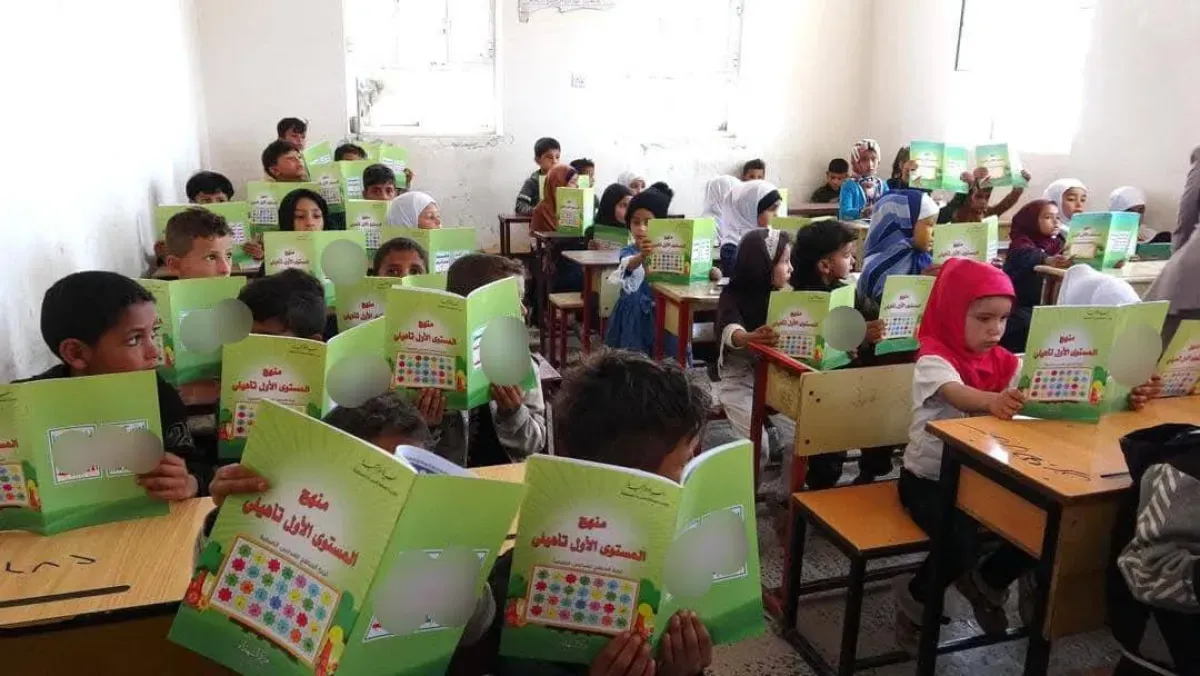
The social and intellectual fabric of Yemen is facing an unprecedented crisis as the Houthi militia systematically indoctrinates younger generations with an ideology imported from Iran, undermining the nation's unifying identity. Concurrently, the Yemeni government's response is criticized as insufficient and inconsistent, failing to mount a robust intellectual defense against this pervasive ideological encroachment. The Houthi movement actively promotes an ideology rooted in the Iranian Revolution's concept of Wilayat al-Faqih, which centralizes divine right to governance and sovereignty within a specific lineage. This ideology dictates absolute loyalty to the Houthi leader, fundamentally altering the Yemeni understanding of religion, state, and society. Experts observe that this project aims to sever Yemen's historical Arab ties, transforming its national and republican identity into one subservient to Tehran's clerical rule. This is achieved through pervasive psychological and propaganda tactics designed to instill animosity towards neighboring countries and distort Yemeni national constants. The Houthi militia exploits the Hijri calendar, allocating substantial resources to numerous events and ceremonies. Occasions like "Eid al-Ghadir" are used to legitimize their coup and reinforce their ideology. Other events, such as the Prophet's birthday, are politicized for military displays and extortion, alongside commemorations of the Houthi slogan, "martyrdom week," and the September 21st coup anniversary. These events serve as mandatory fundraising seasons through intimidation, with collected funds financing rallies and the widespread dissemination of propaganda materials that visually erase Yemeni republican symbols. The Houthi movement's systematic actions have severely damaged Yemen's educational system. Thousands of sectarian changes have been introduced into school curricula, particularly in early primary grades. Historical national symbols have been replaced with Houthi lineage figures and Iranian ideological icons. Textbooks are now filled with militia-oriented concepts of jihad and distorted interpretations of religious texts to support the alleged divine right of their leadership. Mandatory morning broadcasts featuring Houthi slogans and weekly indoctrination sessions further poison young minds. Summer camps and closed cultural courses are particularly dangerous, functioning as ideological camps where children undergo intensive brainwashing using Houthi leader Hussein al-Houthi's writings, preparing them for future combat roles. Mosques and religious platforms in Houthi-controlled areas have been transformed into ideological outposts for the Houthi Ministry of Guidance and Endowments. Moderate imams and preachers have been expelled and replaced with ideologically trained individuals who deliver politically charged sermons. These platforms are used for daily incitement against dissenters, calls for mobilization, and financial contributions, reinforcing blind obedience to the Houthi leadership. Security surveillance strictly prohibits Quranic study groups outside Houthi supervision. This ideological imposition extends to social gatherings and tribal meetings, where attendance is mandatory for citizens and tribal leaders, with non-compliance leading to deprivation of essential services or accusations of treason. The Houthi media apparatus, including state television, radio, newspapers, and a network of private stations, is dedicated to reshaping Yemeni consciousness to align with the Khomeini ideology. These outlets continuously broadcast carefully crafted programs, documentaries, and chants designed for psychological impact, aiming to sanctify Houthi leadership and link Yemen's destiny to Iran. This intense media barrage is accompanied by a complete media blackout, the banning of hundreds of news websites, and the persecution of journalists and activists to maintain a singular Houthi narrative and isolate citizens from information about their impoverished and oppressed reality. In stark contrast to this comprehensive ideological assault, the performance of relevant government institutions—including the ministries of Endowments, Guidance, Education, Culture, Information, and Higher Education—is deemed exceedingly weak and inadequate to counter the existential threat to Yemen's identity. The Yemeni public and cultural elite lament the absence of a unified strategic vision. Government actions are largely confined to issuing condemnatory press statements or organizing limited events in liberated areas, lacking cross-border mechanisms to reach populations under Houthi control. The educational curriculum remains a critical point of failure; despite repeated promises to update and immunize students against sectarian ideologies, progress is slow. The distribution of textbooks, even in liberated zones, is insufficient, and there is a notable absence of digital or interactive educational platforms for students in Houthi-controlled areas. The government's persistent lack of responsible engagement is evident in its failure to establish a unified religious, media, and educational discourse based on shared national and republican principles. Official ministries suffer from fragmented efforts, inadequate funding, and bureaucratic inertia, while the Houthi militia wages a determined ideological battle. The Ministry of Information and state media outlets have failed to create a modern, influential network capable of countering Houthi propaganda and engaging youth and children in their own language. The Ministry of Endowments and Guidance has also fallen short in organizing scholars and preachers into a cohesive intellectual front and in developing a religious discourse that effectively refutes the militia's ideological and historical justifications for its rule. This ongoing governmental laxity has created a significant vacuum exploited by the Houthi apparatus to expand its intellectual influence, particularly among younger generations who know little of the Republic and its foundational principles. The critical nature of the current phase mandates that the legitimate government and the Presidential Leadership Council abandon silence and take urgent, responsible action to fulfill their constitutional and moral duties in safeguarding Yemen's identity and protecting society and youth from the threat of Iranian ideological revisionism. This requires formulating a supreme national strategy for intellectual and cultural security, involving all relevant ministries and supported by adequate funding for effective implementation. Priority must be given to reforming the educational system, activating digital learning, and establishing open online platforms to provide all Yemeni students with a pure and fortified national education. Supporting teachers and improving their living conditions are crucial to ensuring their commitment to the national educational mission. In the religious and guidance sphere, the Ministry of Endowments must establish specialized institutes for training preachers and guides, equipping them with the knowledge and skills to debunk sectarian thought and refute the doctrines of clerical guardianship and chosen lineage from sound religious and historical perspectives, while promoting values of moderation, tolerance, and coexistence. On the media and cultural front, the government must restructure and enhance its media outlets, supporting the production of dramas, documentaries, and interactive programs that highlight the sacrifices of the national movement and the September and October revolutionaries, expose the militia's criminal and impoverishing practices, and reconnect youth with Yemen's ancient and modern historical heritage. Government research centers and official universities in liberated governorates must also be activated to host academic seminars and conferences that diagnose the Houthi malady and devise practical solutions. The conflict with the Iran-backed Houthi project is not merely a military struggle on battlefronts; it is fundamentally an intellectual and cultural battle for the minds and consciousness of the Yemeni people. Victory in this arena demands resolute political will and sustained, responsible institutional action to restore the Republic's luster and fortify national identity and sovereignty. |