


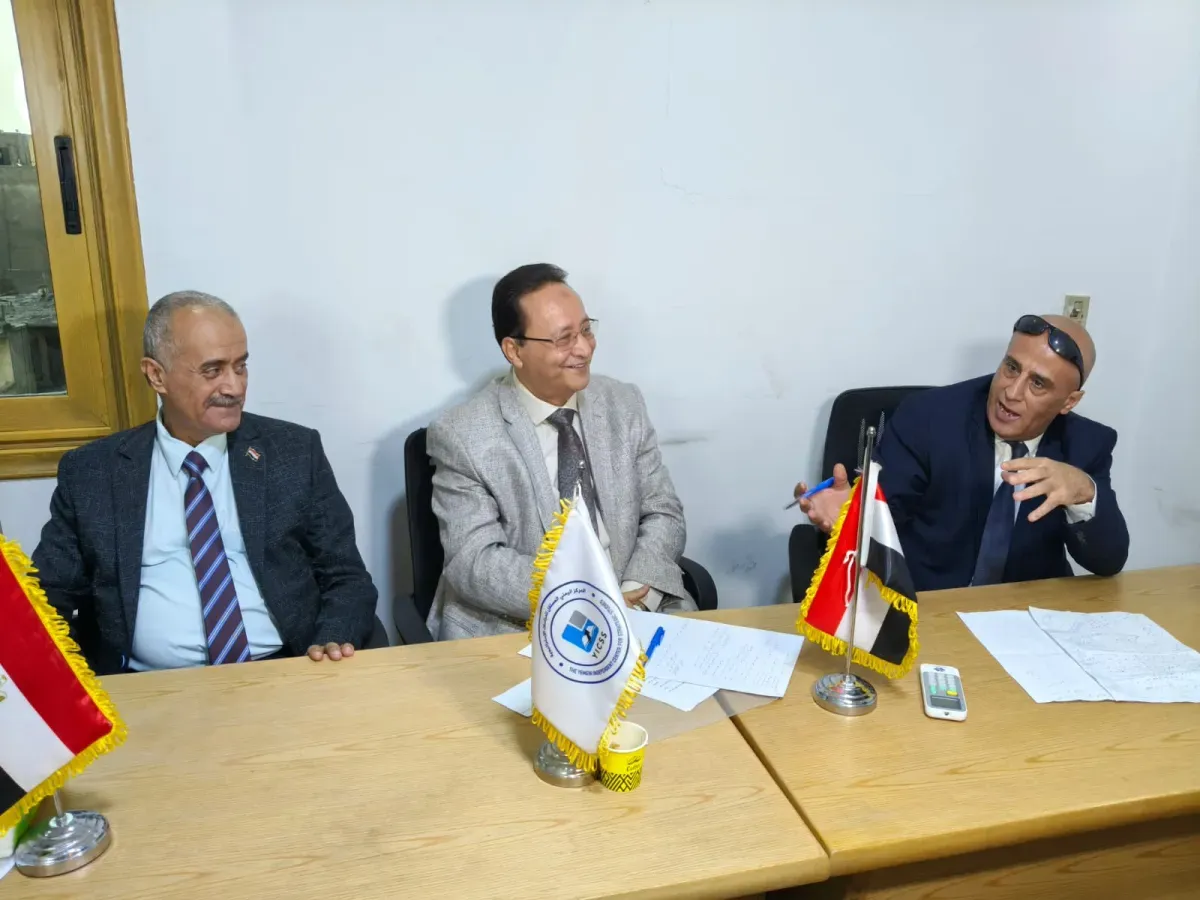
A seminar organized by the Independent Yemeni Center for Strategic Studies in Cairo delved into the achievements and challenges of Yemeni unity, coinciding with the 36th anniversary of its establishment on May 22, 1990. The event, moderated by Dr. Taha Hussein Al-Hamdani, featured a series of presentations by prominent figures. Abdullah Al-Dehmashi, a journalist and political commentator, discussed the philosophy of unity in the Yemeni revolutions. Dr. Saeed Al-Ghalisi, a history professor at Sana'a University, examined key milestones in achieving Yemeni unity. Dr. Abdulrahman Naji, a professor of administrative systems at Sana'a University, addressed the reality and challenges of Yemeni unity as a dream. Dr. Mansour Al-Qadhi, a Yemeni academic and political activist, spoke on the role of Yemeni unity in preserving Arab national security. Sharif Samir, Deputy Editor-in-Chief of Al-Ahram newspaper, explored unity in the Arab consciousness, while Dr. Mohammed Al-Himyari, a professor of international relations, analyzed the regional and international dimensions of unity. Further insights were provided by Counselor Mohammed Saleh Al-Masaoui, head of the Bidayah Organization for Development, who presented a southern perspective on Yemeni unity. The role of women in unified Yemen was highlighted by Aziza Al-Nimri, a leading member of the Yemeni Ba'ath Party. Fuad Rashed, a political figure and head of the Southern Movement, conveyed a recorded message on the threats to Yemeni unity. The seminar concluded with Dr. Ali Al-Kholani, head of the Independent Yemeni Center, presenting recommendations. Speakers emphasized that May 22, 1990, marked an unprecedented historical achievement for Yemen, fostering national cohesion and offering a beacon of hope for the Arab nation. They acknowledged the courage of the leaders who established unity and identified the current Houthi movement as a setback and a future threat. The importance of the southern and eastern regions' struggle for unity was also noted, underscoring the significant reliance on human capital. Speakers cautioned against divisive sectarian and tribal sentiments, stressing that the core issue has always been the political system and governance, not unity itself. The presentations collectively highlighted the long struggle, the strategic importance of Yemen, and the sacrifices made by political leaders in consolidating unity, despite internal conflicts and external influences. Discussions also touched upon the potential for integrating Yemen and President Saleh's commitment to consensual unity. The absence of sincere leadership was cited as a factor prolonging the current conflict, and the international community's emphasis on Yemen's sovereignty and unity was acknowledged. The seminar underscored that Yemeni unity serves as a safeguard for Arab unity, embodying strength and dignity. The current crisis, it was asserted, can only be resolved by Yemenis themselves, with a decisive national battle against the Houthi militia, which has propagated injustice and terrorism. The Arab consciousness and the historical partnership between Egypt and Yemen were also celebrated, alongside a call for rectifying past errors in the context of current challenges, including the role of political Islam and the need to restore the Yemeni state. The economic dimension of unity was highlighted, with emphasis on the involvement of citizens, capital, thinkers, politicians, and military personnel. Despite past challenges, including the 1994 war, the experience of unity has seen many bright moments, fostered by the prominent roles of the General People's Congress and the Yemeni Socialist Party in creating democratic atmospheres. Preserving unity was deemed a shared responsibility, with no one benefiting from Yemen's division. Economic solutions and the repatriation of capital were called for. The regional and international context of Yemeni unity was analyzed, tracing its evolution through pre-unity, post-unity, and the "Decisive Storm" phases. The impact of the Cold War and external support for Yemen's transformation were discussed, along with US strategy in relation to the Arabian Gulf and Saudi Arabia's long-standing involvement in Yemeni politics. The collapse of the socialist system was seen as facilitating unity, which had already been ingrained in the Yemeni psyche, with pre-unity conflicts acknowledged in both the north and south. The role of the UN, regional, and international actors in supporting unity was emphasized, advocating for studies on factors that have sustained it as a pillar of global interests. The contributions of women to unity were recognized, particularly the role of the Yemeni Women's Union and President Ali Abdullah Saleh's efforts to empower women in leadership positions. Historical precedents of prominent women in power were cited, alongside ongoing calls for greater female participation. The suffering of women due to wars and conflicts, and attempts to diminish their role by political Islam, were also noted. Several interventions from the audience called for a reconsideration of the country's governance, wealth distribution, and the need to halt the war or achieve national victory. Finally, the seminar's recommendations included reaffirming Yemeni unity as a major national gain and a collective responsibility, advocating for a comprehensive national salvation project based on preserving the republic, unity, democracy, and development. Any resolution of the southern issue should be within the framework of a unified Yemeni state. The recommendations also stressed strengthening national identity, building a state of institutions, good governance, and mobilizing regional and international support for peace efforts, while acknowledging the vital role of research centers, universities, media, and civil society organizations in prioritizing national interest and supporting the steadfast Yemeni people, especially women. |