


Yemen's Legitimacy Hijacked: Islah Party's Parallel Empire Strategy Exposed
|
3 days ago
A-
A+
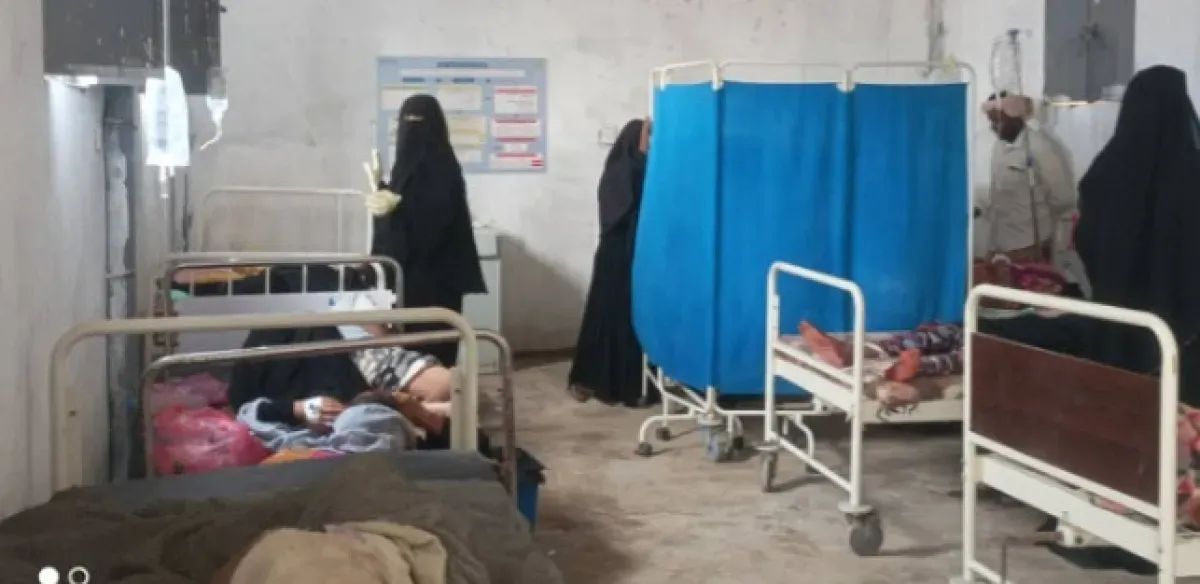
The Islah party, Yemen's local branch of the Muslim Brotherhood, has exploited the ongoing conflict to construct a parallel economic and military empire, draining public resources and controlling political decisions under the guise of legitimacy. The party's cadres infiltrated the legitimate government's structure during the initial stages of the war, capitalizing on administrative voids and security chaos. This led to a widespread replacement of public officials with party loyalists, transforming ministries, diplomatic missions, and executive offices into instruments serving the organization's agenda rather than the Yemeni populace. The blurred lines between party and state budgets in regions under their direct influence exemplify this pervasive control. The military institution has been a primary victim of this "empowerment" policy, shifting from a national entity to a tool for protecting the party's interests and geographic influence. This was achieved through administrative and financial corruption, including the appointment of high-ranking military officials based on loyalty rather than expertise, leading to a bloated and ineffective leadership. The "ghost soldier" scandal, involving hundreds of thousands of fictitious names on payrolls, siphoned billions intended for state and coalition funds into private accounts to finance the party's external activities and business dealings. Meanwhile, actual soldiers on the front lines often lack adequate pay or logistical support, a corruption that has also contributed to military betrayals and the loss of strategic areas due to a narrow party ideology overriding national combat doctrine. In Marib and Taiz, the Islah party's governance is starkly evident. Marib, rich in oil and gas, operates as a financial black box, with local leadership refusing to remit revenues to the central bank, instead using them to build regional influence networks and pay loyalists abroad. Displaced populations in Marib's camps face dire living conditions. In Taiz, a system of extortion and arbitrary taxes, ostensibly for supporting the war effort, fuels armed groups loyal to the party. These groups exert security control, engage in assassinations and kidnappings of opponents, and foster systematic insecurity, ensuring the party's dominance amidst the absence of effective state institutions. Even the humanitarian sector has been co-opted. The party controls many local relief organizations, channeling aid not to the needy but to its members and fighters, thereby buying loyalty. More alarmingly, these organizations are used for money laundering and currency smuggling, with fictitious purchases of medical or relief supplies masking illicit financial flows. This explains the immense wealth accumulated by party leaders, who now hold significant investments in Turkey, Qatar, Malaysia, and European countries, starkly contrasting with the poverty of the people whose suffering they exploit internationally through a vast media apparatus that distorts facts and portrays them as victims. The Islah party's influence extends to Yemen's Ministry of Foreign Affairs and its diplomatic missions abroad. Embassies and attachés have been transformed into party outposts, staffed by relatives and loyalists receiving exorbitant salaries, disregarding diplomatic norms. This has crippled Yemeni diplomacy, failing to convey the reality of the situation in Yemen and instead focusing on promoting the party's image and attacking political rivals. This systematic infiltration has allowed the party to control communication channels with international powers, used to incite against political and field partners, and even align with regional agendas detrimental to Yemen's national interest. Yemen's sovereign decisions are thus subservient to transnational organizational visions that prioritize the Muslim Brotherhood's global interests over national ones, contributing to the confusion and dependency plaguing the legitimate government's handling of sensitive issues. The continuation of this catastrophic situation, marked by the Islah party's corruption under the banner of legitimacy, jeopardizes Yemen's future. Building a state of institutions and law is impossible when political forces treat the state as spoils of war and resources as private property. A comprehensive overhaul of state institutions, coupled with the activation of independent oversight and accountability mechanisms, is urgently needed, free from the ideological and political coercion employed by the party against those who expose its corruption. Addressing the Islah party's expansion requires firm political will from all national forces, the Arab Coalition, and the international community to halt the drain of public funds, dry up illicit financing sources, restructure the national army on professional and national foundations, and ensure humanitarian aid reaches its intended recipients. Yemen cannot recover as long as these parasitic organizations feed on its wounds and profit from the suffering of its patient people, who yearn for a day when their state is free from corruption, favoritism, and foreign dependency. |