


Iran's Divided Revolutionary Guard: A Power Struggle for the Nation's Future
|
15 hours ago
A-
A+
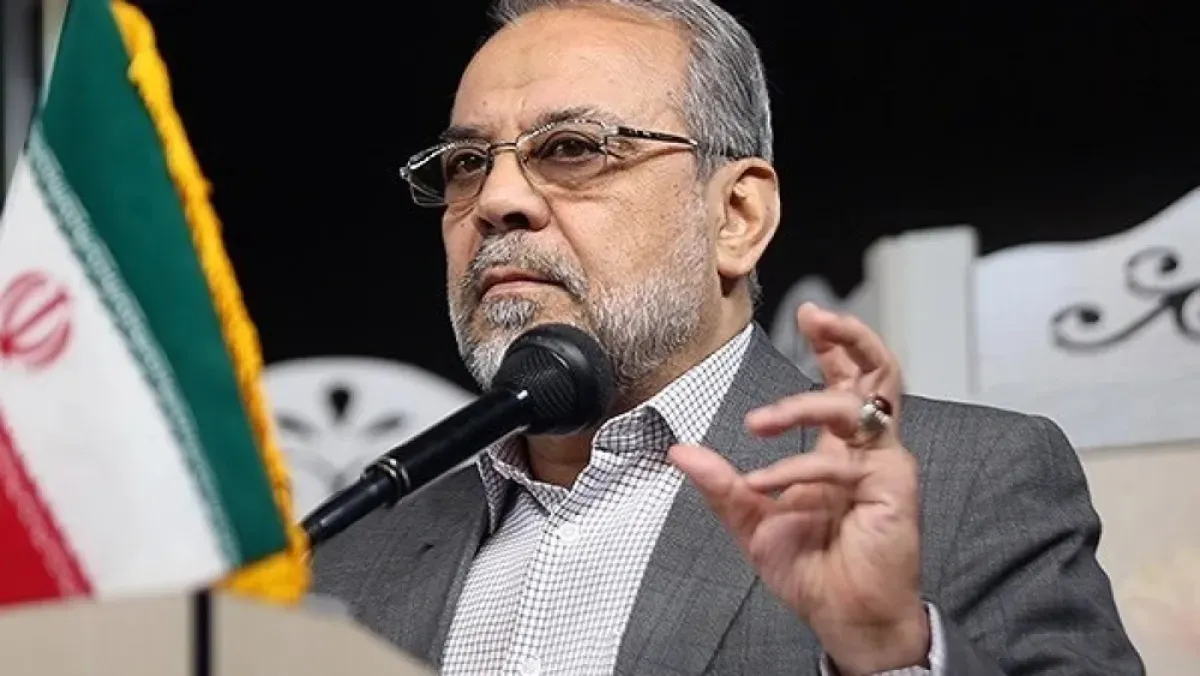
In the wake of escalating conflict, Iran's leadership structure has undergone significant upheaval, with Supreme Leader Ali Khamenei reportedly absent since the initial stages of hostilities, though official statements continue to be issued in his name. Concurrently, any pretense that President Masoud Pezeshkian is merely a figurehead has dissolved as negotiations proceed. Analysis from the Middle East Forum suggests a consensus among observers that the Islamic Revolutionary Guard Corps (IRGC) wields de facto authority in Iran. However, this powerful institution is reportedly fractured, experiencing deep internal divisions among competing factions and power centers. Identifying these centers is crucial for understanding decision-making processes and determining which parties can influence or obstruct negotiations. According to counter-terrorism analyst Erfan Fard, one prominent faction is believed to be aligned with Mohammad Bagher Ghalibaf, the current Speaker of Parliament and a former IRGC member who previously ran for president. This faction operates at the intersection of formal government and security institutions, with Ghalibaf reportedly presenting himself to U.S. intermediaries as an ambitious and negotiation-oriented figure, while still adhering to the foundational principles of the Islamic Republic. His perceived strength lies in his ability to translate security priorities into legislative and executive actions. A second influential faction reportedly centers around Mohammad Bagher Zolghadr, who now serves as Secretary of the Supreme National Security Council following the death of his predecessor. Zolghadr, who previously managed educational sectors within the IRGC and led its unconventional warfare division, is said to hold considerable sway within the judiciary. This group prioritizes internal oversight, surveillance mechanisms, judicial influence, and crisis management, favoring a containment strategy for regime preservation over adaptation. The third bloc, associated with former Defense Minister Ahmad Vahidi and former IRGC naval commander Ali Fadavi, appears to adopt a more pragmatic and externally focused approach. This network, deeply embedded in military and security structures, reportedly interprets regional conflicts through a specific lens and advocates for a more hardline foreign policy. The traditional religious establishment in Qom continues to provide religious legitimacy, but its influence is reportedly waning as security apparatuses expand their power, engaging in a more transactional relationship with other blocs. The divergence in messaging from prominent Iranian figures indicates a lack of unified narrative. While Ghalibaf leads negotiation efforts, individuals like Saeed Jalili and Mohsen Rezaei are reportedly aligning with Vahidi, promoting an anti-U.S. ideological discourse and showing no inclination for dialogue with Washington. This reflects a deeper contest over strategic direction, amplified by Iranian state media and social media platforms. For the United States, this internal fragmentation complicates engagement, as it remains unclear whether the IRGC's loyalty lies with hardline figures or a more pragmatic leader like Ghalibaf. Further indicators of this internal division include noticeable disparities in rhetoric and substance among parliamentary committees and conflicting messages from the Ministry of Foreign Affairs compared to state-controlled media outlets like Kayhan. The continued promotion of anti-U.S. rhetoric by hardline figures undermines diplomatic overtures, suggesting that factional dynamics, rather than mere apparent contradictions, are driving the system's varied messages. This uncertainty surrounding future leadership exacerbates factional competition, with each group seeking to consolidate influence in a post-transition era. This rivalry is likely to manifest beyond political discourse, potentially involving institutional obstruction, smear campaigns, and marginalization efforts, which could reshape internal power balances without necessarily leading to an outright rupture. Control over state media remains a critical battleground, as shaping the official narrative is a potent tool of authority in a tightly controlled information environment. Hardline discourse towards the U.S. and Israel may serve internal consolidation and base loyalty more than external objectives. For U.S. policymakers, this internal division renders the Iranian system less predictable, increasing the risk of miscalculation as competing military factions may adopt divergent strategies. This fragmentation also complicates diplomatic dialogue, obscuring who truly holds decision-making power and the nature of internal networks, including those connected to the Supreme Leader's office, that shape policy. Ultimately, these dynamics raise fundamental questions about the capacity of any negotiating partners to achieve tangible outcomes and heighten concerns that hardline factions could undermine potential rapprochements through actions against the U.S., Israel, or even domestic rivals, regardless of the stated intentions of officials engaged in dialogue with Washington. |