


Report Details Scale of Iran's Vast, Deeply Buried Missile Infrastructure and Costs
|
17 hours ago
A-
A+
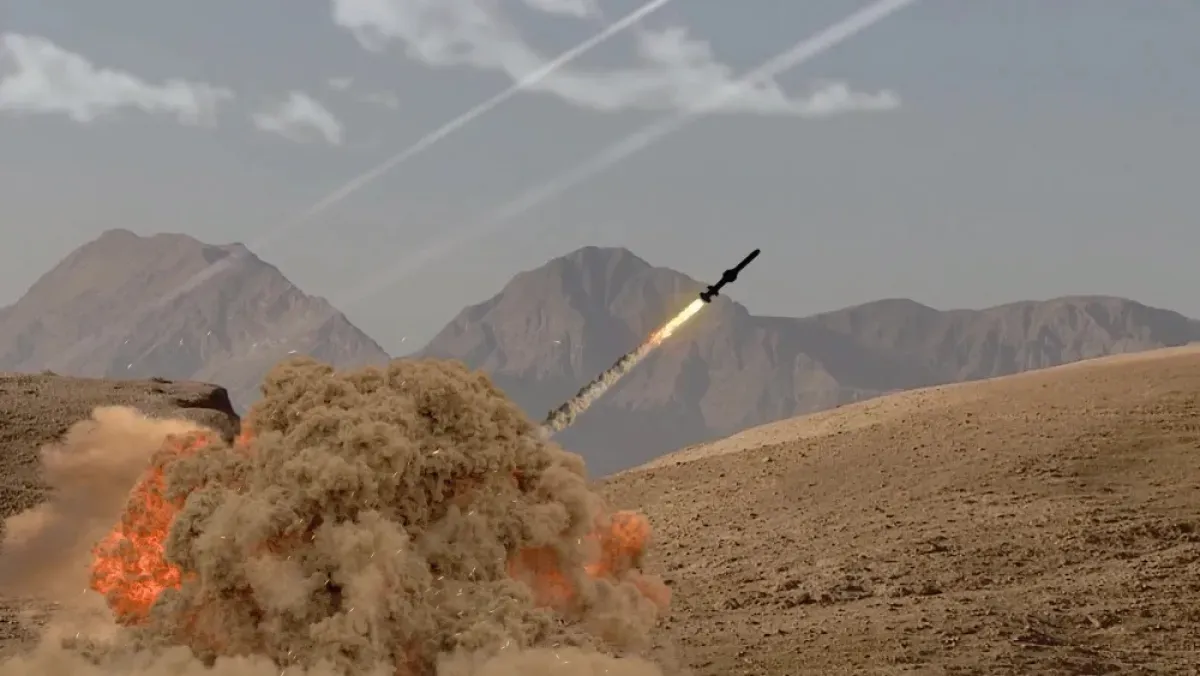
An analytical report published by the Middle East Forum indicates that Iran's retaliatory actions following the March 2026 US-Israeli air campaign exposed the sheer scale and resilience of Tehran's missile capabilities, necessitating thousands of sorties and hundreds of strikes targeting missile-related sites to degrade the system. The report, authored by journalist Mardo Soghom, highlights the unprecedented magnitude of Iran's missile infrastructure, much of which is situated deep underground. One specific site, located southwest of Yazd, was constructed inside a granite mountain, with sections reaching nearly 1,500 feet below the surface. This complex reportedly features tunnel networks designed for transporting missiles to launch platforms and subsequently returning them to subterranean corridors. Despite repeated bombardments, the core structure of this facility has remained intact. Another primary location, situated between Tehran and Karaj, appears in satellite imagery to cover an area comparable to the size of Karaj itself—a city housing approximately two million residents. Analysts estimate that Iran operates around ten major missile cities, complemented by at least 17 additional bases. These strategic sites are concentrated in the western part of the country, facilitating rapid access to Israel, and in the south along the Persian Gulf. These installations are believed to house between 2,500 and 6,000 ballistic missiles, alongside an undisclosed number of cruise missiles, anti-ship missiles, and short-range systems. While the Islamic Revolutionary Guard Corps (IRGC) has previously displayed footage of these underground facilities, many Iranians dismissed them as propaganda. However, recent developments suggest these facilities are demonstrably real and not merely media displays. The report further notes that prior estimates placed the range of Iranian missiles at approximately 1,500 miles, sufficient to target Israel. Yet, the launch of missiles toward the joint US-UK base at Diego Garcia, located over 2,600 miles away, suggests Tehran possesses long-range capabilities, placing significant portions of Europe within striking distance. This technological advancement has fueled internal criticism, as Iranian citizens express growing discontent over the vast resources allocated to the missile program amid economic deterioration over the past two decades, particularly since the reimposition of US sanctions in 2018 following Washington's withdrawal from the nuclear agreement. Despite severe economic pressures, authorities have consistently prioritized military capabilities and regional influence. The report underscores the extreme cost associated with this infrastructure, noting that excavating a single kilometer of tunnels through solid rock can cost tens of millions of dollars, an expense that escalates significantly with military fortifications. One major complex, spanning dozens of miles of tunnels, is estimated to have cost at least four billion dollars, with the total expenditure for 27 underground facilities potentially exceeding one hundred billion dollars, excluding missile development and production costs. While comprehensive official figures for the missile program's cost are unavailable, the report posits that Iran has dedicated approximately 30% of its military spending over the last three decades to this sector. The officially declared defense budget, fluctuating between seven and eight billion dollars annually, fails to reflect the true scope of expenditure, as the IRGC utilizes parallel resources derived from oil revenues and extensive economic networks. According to the analysis, the IRGC was allocated up to 600,000 barrels of crude oil per day for export in the latest budget cycle, potentially generating revenues approaching fifteen billion dollars annually. Based on conservative estimates, the IRGC's annual related expenditure might reach eighteen billion dollars, with nearly one-third directed toward the missile program, suggesting a cumulative investment over three decades between two hundred and three hundred billion dollars. The report concludes that the missile program is integral to a broader strategy encompassing nuclear ambitions, regional influence networks, and domestic security—policies pursued concurrently with international sanctions that have negatively impacted economic growth. This prioritization highlights a striking paradox: despite possessing immense natural resources, including large oil reserves and the world's second-largest natural gas reserves, living standards have declined due to substantial resource allocation toward strategic programs disconnected from the civilian economy. |