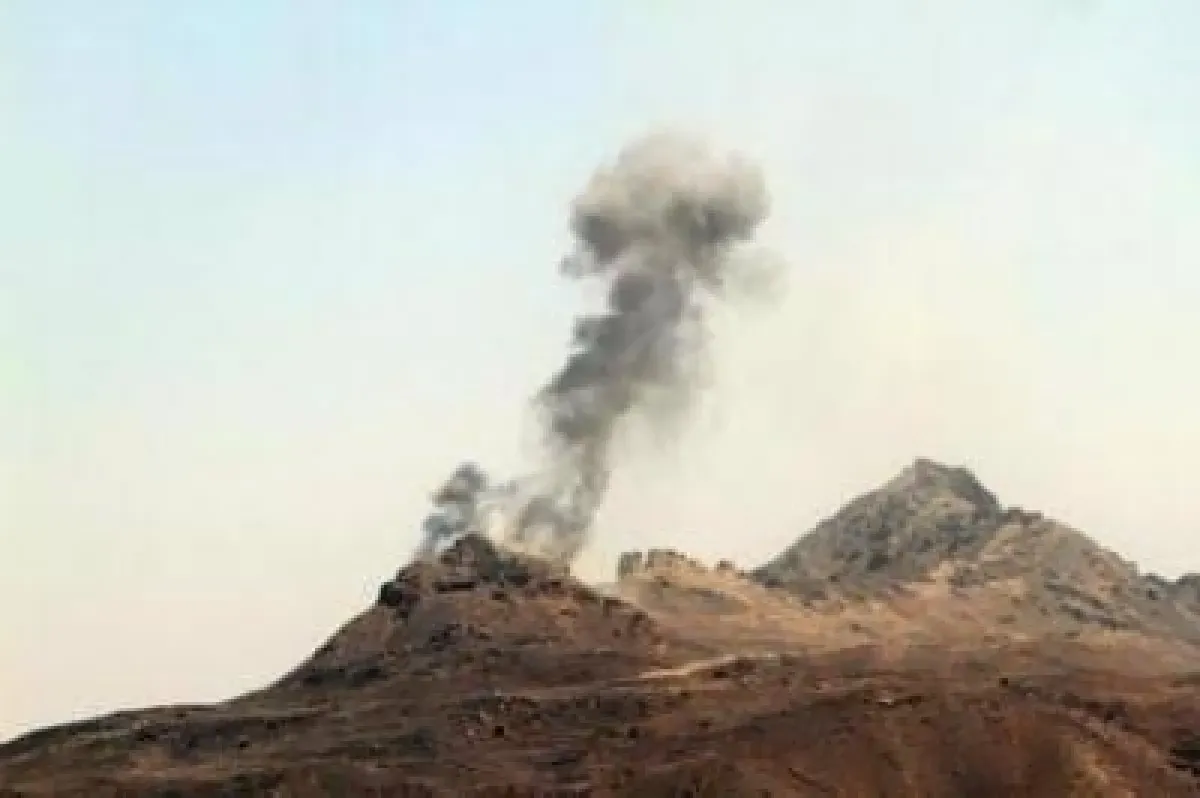



Yemen's Kahbob Mountains: Strategic Flashpoint in Bab al-Mandab Power Struggle
|
1 hour ago
A-
A+

Intense fighting has erupted in Yemen's Kahbob mountains, overlooking the vital Bab al-Mandab strait, as Houthi forces attempt to consolidate their control over the western coast and strategic maritime routes. Government forces have reported repelling multiple Houthi assaults, inflicting significant casualties on the militia. The Kahbob region's significance extends beyond its mountainous terrain; its strategic geographical position allows any controlling party superior surveillance capabilities over vast coastal areas and access corridors. Situated within a zone connecting inland highlands to the western coast, the conflict has expanded towards Al Wazi'iyah, Al Aghbara mountains, and the Mudariyya district in Lahj Governorate. Recent reports indicate concentrated battles on the hills and elevated positions surrounding Kahbob, involving artillery, drones, and aerial bombardments. This geography renders Kahbob a critical military asset for securing the coast or disrupting supply lines and movement between inland areas and coastal regions. Houthi forces have intensified their efforts to advance on government-held positions near Kahbob, aiming to fortify their coastal gains and bolster their defenses adjacent to Bab al-Mandab. Conversely, the Yemeni government forces claim to have successfully thwarted these advances, preventing any territorial breaches. The battles in Kahbob are unfolding within a broader context, representing a point of contention where Houthi coastal expansion meets the defensive lines of government forces and their allies. The importance of Kahbob stems from three primary factors: its elevated position offering observation and defensive advantages, its role in protecting coastal roads linking to inland areas, and its proximity to the strategically crucial Bab al-Mandab strait, a key global maritime passage with far-reaching security and economic implications. While Kahbob's geography connects it to routes leading to Lahj and Aden, current battlefield indications do not suggest an imminent ground offensive towards Aden. The immediate priority appears to be consolidating coastal control and securing the hinterland near Bab al-Mandab, while also probing government defenses on the highlands. Control or pressure on Kahbob could grant an advantage in managing northern Lahj axes, but does not automatically translate to a capacity for a large-scale operation towards Aden due to intervening mountainous terrain and defensive strongholds. The Kahbob front is intrinsically linked to ongoing clashes in western Taiz, particularly in Al Wazi'iyah and its surrounding mountainous areas, highlighting operational synergy between the coastal front and inland battlegrounds. Reports suggest that engagements have spread from Al Wazi'iyah towards Kahbob and the Al Aghbara mountains, with reciprocal efforts to control the highlands and connecting routes. This interconnectedness positions the Kahbob battle as part of a larger equation: securing the coast on one hand, and protecting supply routes and land access points to Taiz and Lahj on the other. These developments occur amidst escalating regional tensions and heightened international focus on Red Sea maritime security. Houthi forces have reportedly reinforced strategic areas near Bab al-Mandab, coinciding with broader regional military movements. The ongoing conflict over the highlands overlooking the strait adds a new dimension, extending the battle beyond territorial control to encompass a strategic position influencing global navigation and trade security. In the short term, the most apparent scenario involves both sides attempting to solidify their current lines and prevent the opposing force from expanding localized gains. For government forces, preventing Houthi expansion from the coast into the inland highlands is a primary defensive objective, while maintaining communication lines between the coast, Lahj, and Taiz is crucial to avoid isolating fronts. For the Houthis, securing newly acquired coastal positions and their mountainous surroundings is essential before contemplating further expansion, as holding coastal territory alone is insufficient without securing surrounding highlands, supply routes, and defensive infrastructure. The conflict around Kahbob appears to be primarily a battle for control over highlands and movement corridors, rather than an immediate prelude to a direct assault on Aden. The party that dominates this mountain range gains advanced defensive positions and enhanced control over routes leading to the coast, regulating troop and supply movement between inland areas and the maritime front. Consequently, the outcome of the Kahbob battles could have repercussions extending beyond its immediate geographical scope, significantly influencing whether the current escalation solidifies into a static front around Bab al-Mandab or becomes another phase in wider operations spanning the western coast to Taiz and Lahj. Given conflicting military reports on losses and advances, the definitive battlefield picture remains contingent on actual territorial control changes in the coming days, rather than mere reciprocal announcements. |