



Houthi Execution Order on Activist Labeled Political Fabrication
|
15 hours ago
A-
A+
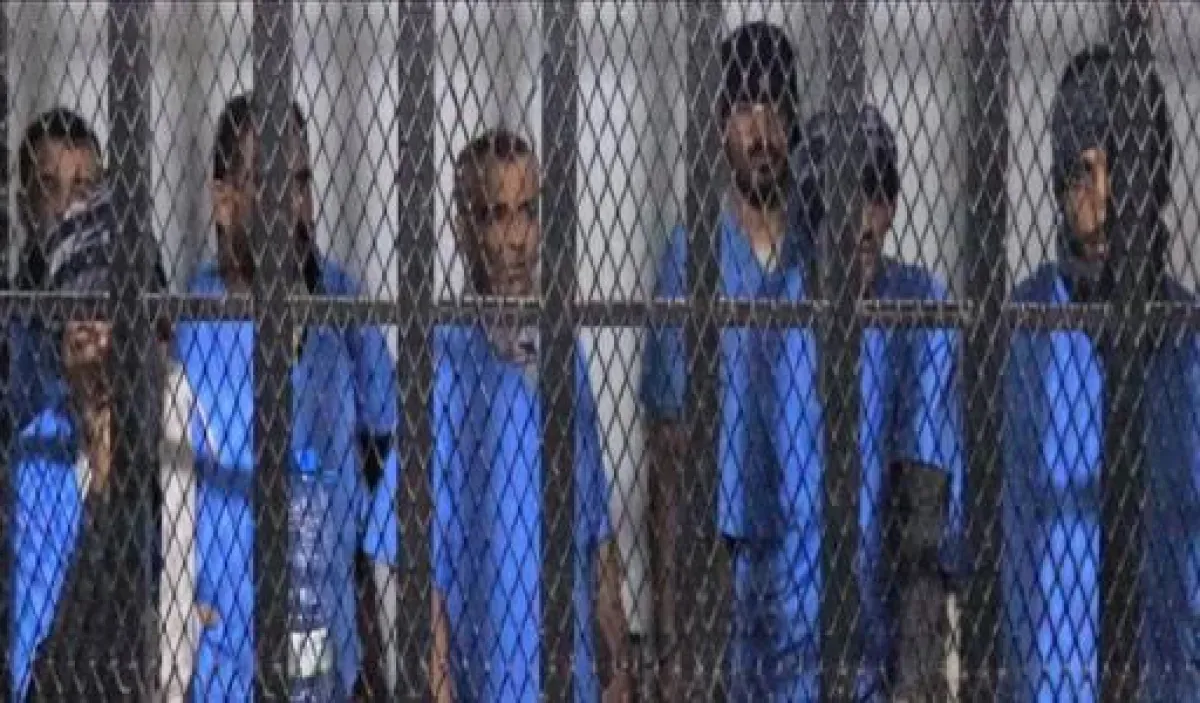
Human rights activist Wael Al-Badri has decried the Houthi-issued execution order against Yemeni activist Abdulrahman Dhamran as politically motivated and based on fabricated evidence, highlighting severe legal and chronological inconsistencies in the case. Al-Badri revealed that the Specialized Primary Criminal Court in Sana'a, controlled by the Houthi militia, sentenced Dhamran to death on charges of espionage and providing military coordinates to what the militia describes as the "Israeli American Saudi enemy." The Houthi militia had abducted Dhamran in July 2025, subjecting him to enforced disappearance for months before presenting him as part of a pre-arranged "spy cell" narrative lacking any tangible evidence. Al-Badri stated, "In my life, I have never defended falsehood or covered up an error. What the young man Dhamran is currently enduring is nothing but a fabrication of facts and concocted accusations that lack the minimum of real material evidence." He emphasized Dhamran's significant contributions to educational and youth projects facilitated by the "Education Above All" (EAA) organization in Yemen, questioning the absence of justice and the replacement of commendation with accusations of treason. Further dissecting the prosecution's narrative, Al-Badri challenged the charge of "espionage and bombing of the Dhabhan power station in Sana'a." By meticulously tracing Israeli official statements, he demonstrated that the four instances of the Dhabhan station being bombed were direct, declared military responses by the Israeli army to attacks originating from Yemen, not the result of individual espionage or field cells. These bombings, occurring in December 2024, May 2025, August 2025, and September 2025, were all explicitly linked to specific Yemeni military actions, raising questions about the alleged coordinates and means of transmission. Al-Badri also pointed to a significant legal flaw within the court's proceedings. Documents indicate that one member of the court, Judge Mohammed Mofleh, wrote a note expressing a dissenting opinion for detention, suggesting internal disagreement on the sufficiency of evidence. Al-Badri criticized the rushed legal process, which condensed the trial into just four sessions over eight days, followed by a swift execution order and expedited appeal hearings that allegedly denied the defense adequate opportunity to present its case, indicating a predetermined intent to pass the sentence. Concluding his statement, Al-Badri urged human rights organizations and legal bodies to review the case, asserting that execution orders cannot be based on speculation or misinterpretation of ordinary social visits or internal financial transfers. He called for an immediate halt to this gross injustice and the annulment of the sentence before it is too late. |