


Yemen's Legitimacy Camp Weakened by Islah Party's Internal Maneuvers
|
1 day ago
A-
A+
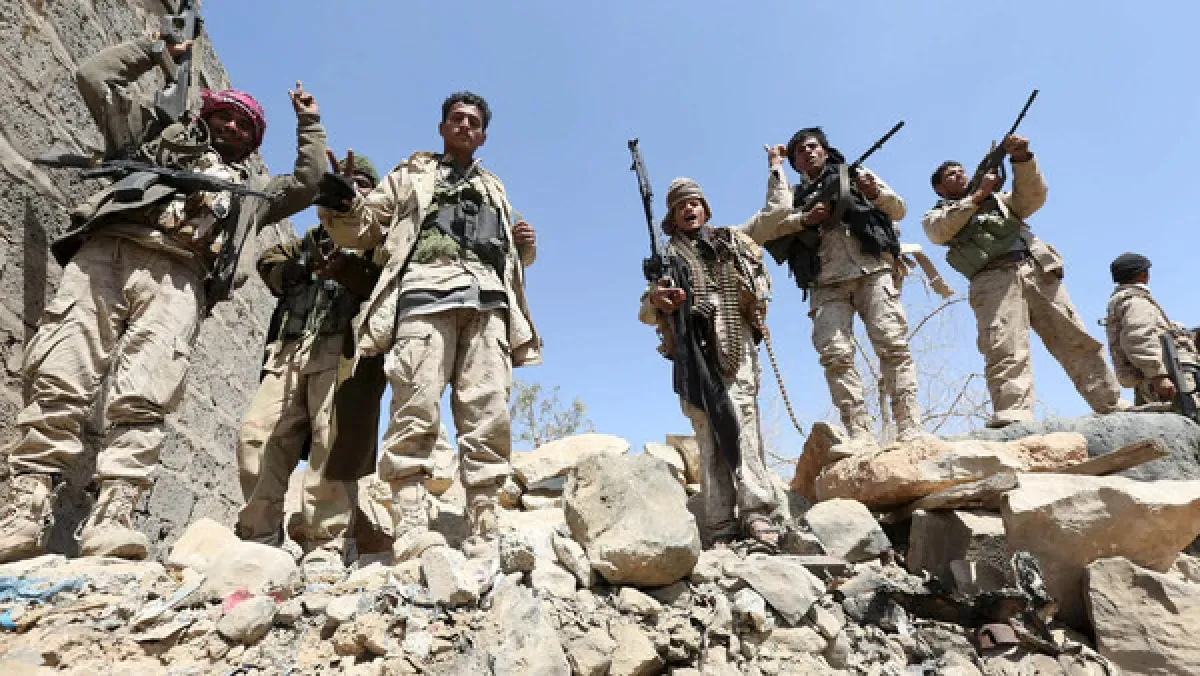
The protracted national battle to restore the state and end the Houthi coup has revealed a complex challenge within the legitimacy camp itself, where the Islah Party, the political wing of the Muslim Brotherhood in Yemen, has evolved from a supposed partner in state restoration to a persistent source of disruption, ultimately serving to prolong chaos rather than resolve it. From the outset, the Islah Party approached the conflict as a political opportunity rather than a national battle. Its engagement in confronting the Houthi coup was notably lacking, leaving frontlines stagnant across regions like Midi, Marib, Taiz, and Al-Bayda. Reports from politicians suggest that this inaction was not due to military incapacity but a calculated political choice, potentially extending a historical pattern of enabling the Houthi movement even before 2014. The party exploited its position within the legitimate government to reassert itself as a dominant force. Instead of actively fighting the Houthis, it engaged in leveraging the coalition, draining its support, and building its own loyalist forces, rather than those dedicated to the state. Despite significant financial and military aid, tangible results on the ground remained elusive. This political-military entanglement fostered a dualistic environment, impacting overall performance and eroding confidence in unified decision-making within the legitimate government's ranks. More alarmingly, this fragmentation extended beyond the military sphere into political and media domains. Extensive tools were employed to shape public opinion, not towards state restoration, but towards internal conflicts and contradictory narratives that undermined public trust in the legitimacy institutions. Media outlets associated with the party frequently functioned as pressure tools, mirroring the impact of military conflict, but their focus was often on managing complex internal balances rather than reinforcing a united front. The Islah Party's media machinery, comprising numerous funded channels, websites, and accounts, played a pivotal role in distorting facts, undermining victories, and inciting opposition against national forces. Over time, a prevailing perception among observers solidified: the party viewed the war not as a fight for national existence, but as a theatre for redistributing influence and reshaping power dynamics within the legitimacy camp. The Muslim Brotherhood's actions have demonstrably prolonged the conflict, diminished prospects for decisive victory, and created significant vacuums exploited by adversaries. Furthermore, relationships with regional and international partners have been unstable, marked by fluctuations between cooperation and tension, adding another layer of complexity to an already fraught landscape. Instead of consolidating military and political decision-making, the situation has been characterized by shifting alliances, reflecting internal power struggles as much as the fight for state restoration. Observers contend that the core issue lies not with the mere presence of a political party within the legitimate government, but with its fundamental approach to the concept of the state itself. Governance and state restoration cannot be managed through organizational logic or partisan calculations; they require a singular decision-making process, a unified military, and a singular objective. When this understanding is absent, the legitimacy government risks transforming from a project of state restoration into an arena of internal contestation, thereby complicating the Yemeni crisis and hindering its resolution, making it more intrinsically linked to internal dynamics than external factors. |