


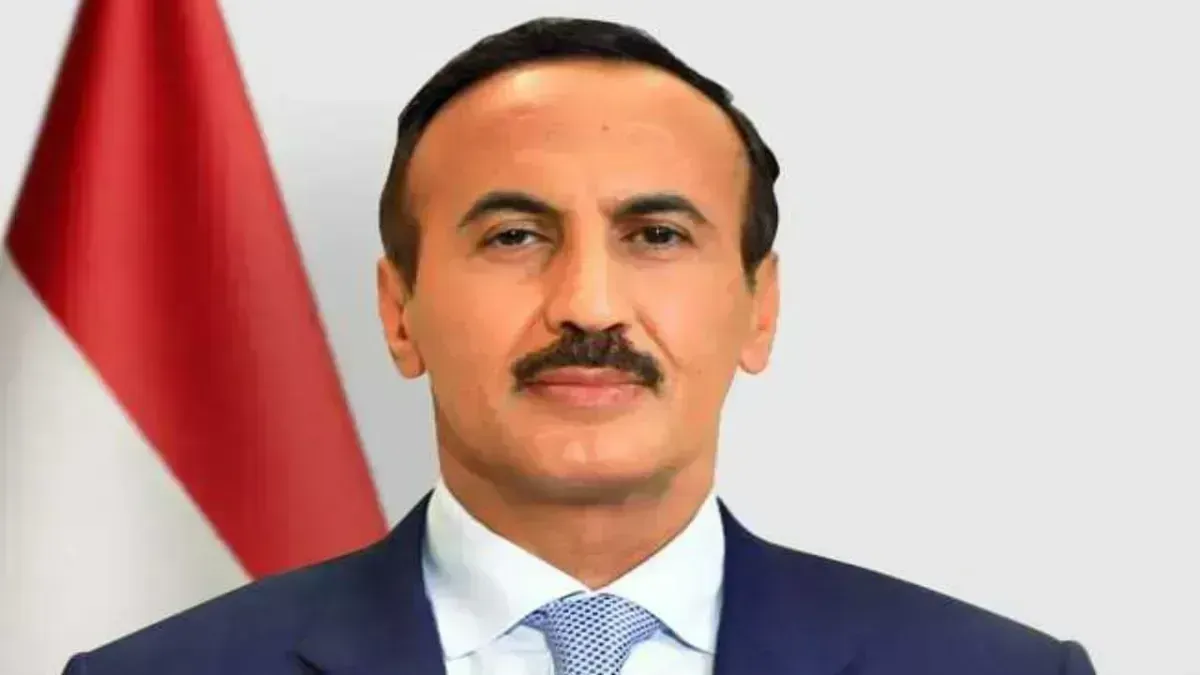
The repeated calls by Ahmed Ali Abdullah Saleh, Deputy Chairman of the General People's Congress, for the Presidential Leadership Council and state leaders to return to Yemen and exercise their duties from within the country have ignited widespread political debate. These calls come at a time when forces opposing the Houthi militia face escalating political and economic challenges. While some quarters have attempted to portray Saleh's recent address on August 24, commemorating the party's 44th anniversary, as a new stance or an abrupt shift, a review of his past positions reveals a consistent thread of appeals focused on restoring state institutions, ending division, unifying republican forces, and relocating the center of governance to within Yemen. In his latest speech, Saleh emphasized that "Yemen's true battle is the battle to restore the state, end division, and protect the republic and sovereignty," advocating for the establishment of military and security institutions based on loyalty to the state and constitution, independent of individuals or factions. He urged the Presidential Leadership Council and the government to transition from "crisis management to solution creation," and to return to Yemen to confront the economic deterioration, declining services, currency collapse, and delayed salaries – issues that have become the core of the suffering for millions of Yemenis in government-controlled areas. These calls are not isolated; in May, Saleh advocated for a new chapter based on dialogue and partnership among political forces to end fragmentation. He also demanded that the Leadership Council and government operate with a state-centric approach, free from quotas and disputes, and return to the populace. Previous statements echo this sentiment. In December 2025, on the anniversary of the December 2nd uprising, he reiterated calls for unity to save the country and restore the state, emphasizing the need for a single national army under a national banner and stating that Yemenis could no longer endure continued division. Similarly, in August 2024, he urged state institutions and constitutional bodies to operate from within Yemen, rebuild state infrastructure, and address living conditions, security, economic, and service issues. Even earlier, in September 2022, he called on state and government leadership to return home and work from within to address citizens' needs, provide essential services, and enhance security and stability. Conversely, the escalating campaign against Saleh's calls appears to be an attempt to reframe a political discussion about the location of state institutions and the responsibility of republican forces into a personal and political conflict, rather than addressing the core message that has been consistent in his speeches for years: restoring the state and unifying the republican front. This campaign is particularly dangerous at a time when anti-Houthi forces need to narrow their differences, not widen them. Continued skepticism towards any call for unity or return to Yemen could deepen divisions within the republican camp, providing the Houthis with greater opportunities to exploit political and military discrepancies among their adversaries. The insistence on transforming every call for national alignment into a battle of accusations and doubt could signal that some parties are more invested in managing division than ending it. The protracted war has fostered centers of influence and political-economic interests, and any serious move toward ending the conflict and unifying state institutions would inevitably rearrange these interests and present new challenges to their holders. From this perspective, ongoing campaigns targeting calls for republican unity harm the very idea of national alignment, rather than any specific individual or faction, and exacerbate the loss of trust among the Yemeni populace, who have borne the cost of division, war, and economic and service decline for years. This does not imply that the call to return and operate from within offers an automatic solution to a complex crisis intertwined with military, political, economic, and regional factors. However, it places a central question before the republican forces: Is the priority to unify the state's instruments and end the coup, or to continue managing disputes within the anti-Houthi camp? The series of past positions indicates that the call for return and internal operation is not a new idea but part of a recurring political discourse that prioritizes the presence of state institutions among the citizens. In a country exhausted by years of war and division, there is a greater need for political discourse focused on the common ground among anti-coup forces, primarily preserving the republican system, restoring state institutions, unifying political and military decision-making, and improving the living conditions of the population. Beyond stances on individuals or parties, the core issue remains the ability of republican forces to transcend narrow calculations and build a comprehensive national project. The battle against the Houthi militia, as articulated by Saleh, cannot be reduced solely to a military confrontation; it also encompasses restoring state institutions, ending division, and rebuilding trust between the authorities and society. In any case, the debate surrounding Saleh's calls reflects a broader struggle within the anti-Houthi camp regarding the shape of the next phase: Will political forces move toward unifying their ranks and building state institutions capable of ending the coup, or will they continue to deplete their energy in internal disputes and mutual campaigns, while Yemenis continue to pay the price of war and division? The true test for all political forces lies in their ability to prioritize the interests of the state and society over partisan and personal interests, and to transform repeated calls for unity from political rhetoric into practical steps that rebuild state institutions and pave the way for sustainable peace and the restoration of the republic. |