


Yemen's 24th August: A Generation's Memory of State Building
|
13 hours ago
A-
A+
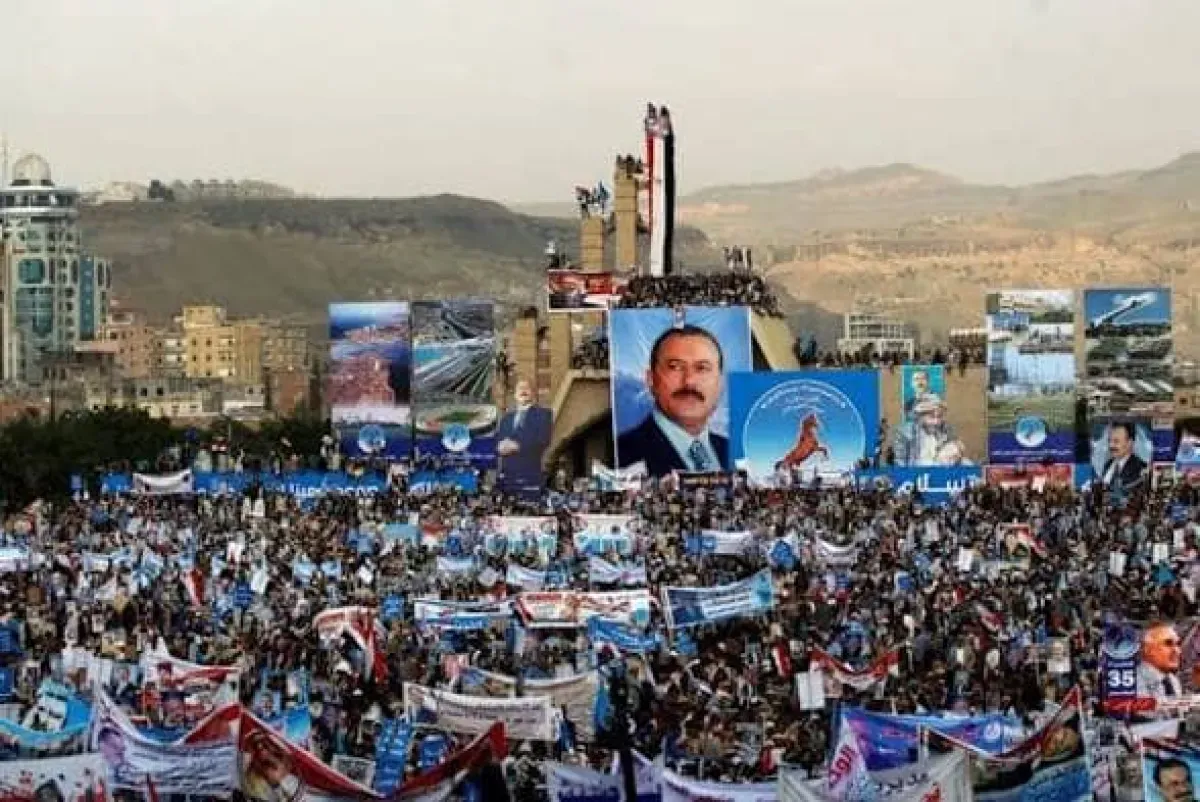
August 24th marks a significant date in Yemeni history, commemorating the founding of the General People's Congress (GPC) in 1982. This event heralded a political experiment rooted in a broad national project focused on establishing a state, its institutions, and fostering popular participation. The GPC was conceived not merely as a traditional political party but as an inclusive framework designed to unite diverse political, social, and national currents under a single banner. Its aim was to formulate a national vision that addressed the multifaceted issues of state, society, development, and politics. The inaugural GPC conference in Sana'a during August 1982 ratified the National Charter as the foundational document for political action, alongside the organization's structures and bylaws. The preparation of the National Charter itself involved extensive public consultation through popular committees before its final approval. Central to the GPC's ideology and its National Charter was the concept of statehood—a state built upon the constitution and law, characterized by civil institutions, organized administration, political participation, and the safeguarding of national sovereignty. Over the years, these principles translated into tangible progress, marked by the expansion of state apparatus and institutions. Significant investments were made in sectors such as education, health, infrastructure, and local governance, becoming integral to the daily lives of Yemenis. For generations born in the 1980s and 1990s, the concept of the state was not an abstract theory but a lived reality. It was the school attended daily, the hospital sought in times of illness, the road traversed during travel, the university aspired to, and the government office visited for administrative tasks. It encompassed the regular salary expected by employees and the electoral process where citizens cast their votes. The collective memory of this generation therefore offers a distinct social narrative, detailing the state's presence not from behind office desks, but through the minutiae of everyday existence. Personal testimonies from this era underscore the tangible impact of state development. Heitham Al-Qaisi, born in the 1980s, recalls a childhood where basic needs were met, remembering educational facilities, water services, schools, hospitals, universities, and road projects. He also participated in multiple elections, experiencing democracy as a lived practice rather than a mere political term. Similarly, Jamila Hussein, an educator, highlights the professional stability and support teachers received, including regular salaries, bonuses, and additional remuneration during holidays. This stability, she argues, allowed educators to focus on their mission, viewing teaching as a national duty. The period following Yemeni unification in 1990 ushered in an era of multiparty politics, with elections becoming a primary mechanism for political engagement. National and local elections were held consistently throughout the 1990s and early 2000s, with the GPC actively participating alongside other political parties. The 1993 parliamentary elections, the first pluralistic elections post-unification, and the 2003 elections, which saw a 76.6% turnout, were particularly noteworthy. The 1999 presidential election marked the country's first competitive direct presidential vote. These electoral processes normalized citizen participation in public life, fostering a generation that understood the significance of their vote and the democratic process. The founding of the GPC in 1982 is intrinsically linked to the broader narrative of Yemeni unification on May 22, 1990. The GPC played a pivotal role as a foundational entity for the unified Yemen, co-leading the transitional government and subsequently participating in coalition cabinets. Its journey from a political project to a national framework is inseparable from the establishment of the Republic of Yemen. Therefore, August 24th serves not only to recall the establishment of a national political entity but also to commemorate the birth of a unified Yemeni state. The generation that experienced this era remembers the state not as a distant concept but through its direct impact: access to government education, expanded infrastructure, functioning hospitals and universities, electoral participation, and employment within state institutions. These tangible experiences—a teacher's salary, a student's school, a citizen's ballot box—define the true meaning of building a state of institutions. A state is constructed not through slogans but through the integration of its institutions into citizens' lives, where the law serves as a reference, public office is a responsibility, education is a right, health is a service, and elections are a means of participation. Forty-four years after the GPC's inception, the legacy of August 24th continues to evoke a significant chapter in modern Yemeni history. This period is associated with national political action, the National Charter, state institutions, Yemeni unification, and the experience of electoral politics and multiparty democracy. However, the enduring value of this commemoration lies in the lived experiences of the individuals who navigated this era. The true archive resides not only in documents but in human memory—in the recollections of education, infrastructure, electoral participation, and professional stability. These are not mere personal anecdotes but testimonies of a generation that witnessed Yemen building its institutions and the state permeating daily life. The commemoration of August 24th should transcend the anniversary of a party's founding; it should serve as an opportunity to reaffirm the vision of a strong Yemeni state with robust institutions, a nation that unites its people, and a democracy that empowers citizens as partners in decision-making. While political parties, policies, and leadership may evolve, the state remains the unifying framework. The generation that lived through this period bears the responsibility of transmitting its memory to new generations, not as a political tale, but as a human experience of education, work, electoral participation, and institution-building. The Yemen of yesterday was not merely a map or a slogan; it was a state in formation, with expanding institutions, open schools and universities, connecting roads, and citizens actively participating in its governance. This generation's memory interprets August 24th as a symbol of a political project intrinsically linked to the construction of the state, its institutions, democratic participation, and national unity. Ultimately, while times change, the value of national endeavors lies in the institutions, memories, and hopes they leave behind. The aspiration of yesterday's generation, and indeed today's, is for a nation governed by institutions, protected by the state and law, and where its citizens shape their future—a narrative encapsulated by the memory of a generation that witnessed the project of democracy and the state of institutions. |