


Israeli Paper Links Iraqi Militia Arms Handover to Iran's Restructured Influence
|
10 hours ago
A-
A+
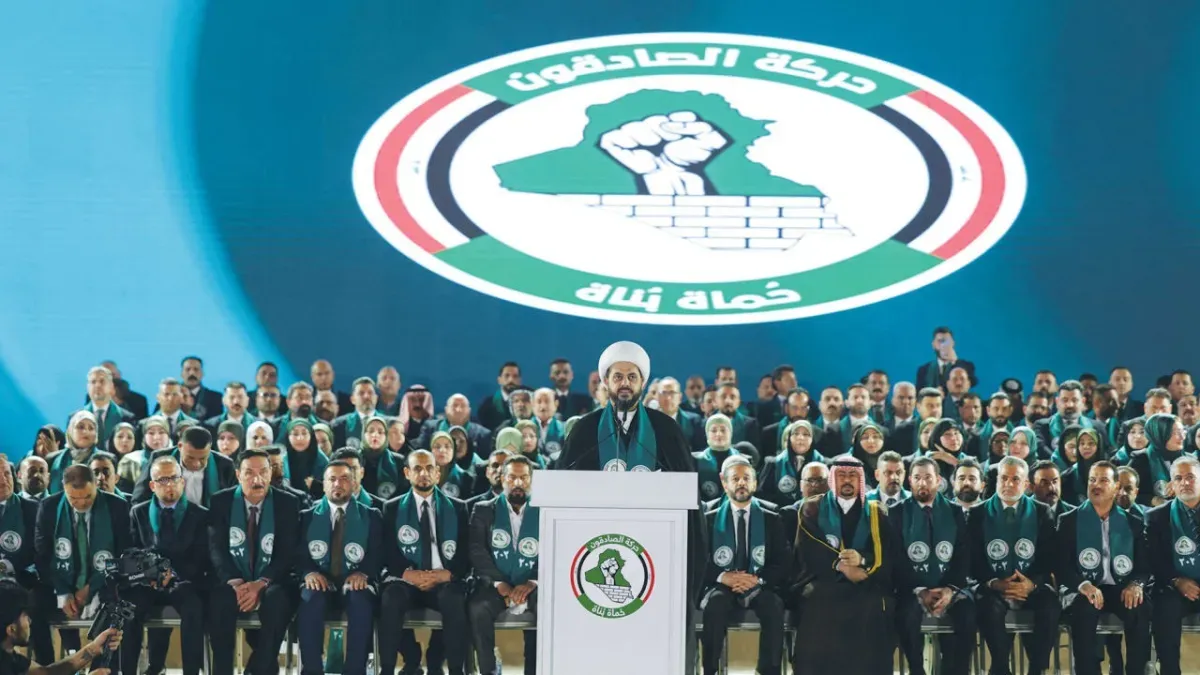
An Israeli newspaper report suggests that recent announcements by prominent Iraqi factions regarding the handover of their weapons to the state may not signify a reduction in Iranian influence within Iraq, but rather a new phase of reorganizing and consolidating this influence through state institutions. The report by The Jerusalem Post highlighted that key factions making such declarations include Asa'ib Ahl al-Haq, led by Qais al-Khazali, and the Imam Ali Brigades, led by Shibl al-Zaidi. Asa'ib Ahl al-Haq announced the formation of a committee to oversee the disarmament process and inventory its weaponry, while the Imam Ali Brigades stated their decision was motivated by "national responsibility," strengthening national unity, and preserving the gains of victory. U.S. Special Envoy for Syria and Iraq, Tom Barranco, welcomed these developments, describing them as a step towards consolidating Iraqi sovereignty and re-establishing state control over arms. He lauded the factions' decision to return weapons to state institutions as foundational for stability and the rebuilding of the system. These moves follow days after Shia cleric Muqtada al-Sadr announced the integration of the armed capabilities of his Saraya al-Khorasani into the Iraqi armed forces, a step observers interpreted as a potential shift in the security and political landscape. However, the report argues that an optimistic interpretation of these developments overlooks the complexities of the Iraqi scene, suggesting that the actions may represent a repositioning within the pro-Iranian camp rather than a withdrawal from it. The report specifically focuses on the influence of the head of the Iraqi Supreme Judicial Council, Faeq Zidane, describing him as a key figure in political decision-making, despite his limited public profile outside Iraq. Citing reports and studies, the article notes that Zidane has played a pivotal role since 2018 in shaping the course of Iraqi government formations, with any candidate for prime minister needing his approval or intervention to advance. U.S. Envoy Tom Barranco's visit to Zidane, the report suggests, was part of American efforts to prevent the return of former Prime Minister Nouri al-Maliki to power. It posits that U.S. pressure, including the threat of financial measures related to the Iraqi banking system, contributed to reshaping political balances. The report draws on a 2023 study by the Combating Terrorism Center at West Point, which indicated Zidane's crucial role during the government formation crisis after the 2021 elections. The study asserts that the Federal Supreme Court's rulings altered the mechanisms of government formation and raised the threshold for the required majority, thereby preventing the formation of a government that excluded Iran-aligned factions. According to the study, these decisions helped reintroduce Tehran-aligned forces into the political arena, culminating in the formation of Mohammed Shia' al-Sudani's government in October 2022. The study also points out that Zidane maintained close ties with figures associated with Iran's Quds Force, and that his influence within the judiciary was supported by the late commander Abu Mahdi al-Muhandis, whom he reportedly referred to as the "protector of the Shia project." Despite these connections, the report emphasizes that the disagreements among Iraqi political forces reflect genuine competition for influence among various networks within the Iran-aligned bloc, including rivalries between Qais al-Khazali's faction and Nouri al-Maliki's network. The report concludes that the announcement by some factions to integrate their forces into state institutions might be part of a strategy to solidify their political influence and mitigate external pressures, particularly given American threats of economic and financial repercussions against Baghdad. The developments, in its view, do not indicate a weakening of the Iranian Revolutionary Guard Corps' grip on Iraq or a complete victory for national sovereignty, but rather a more complex restructuring of power dynamics within the political and security system established in recent years. |