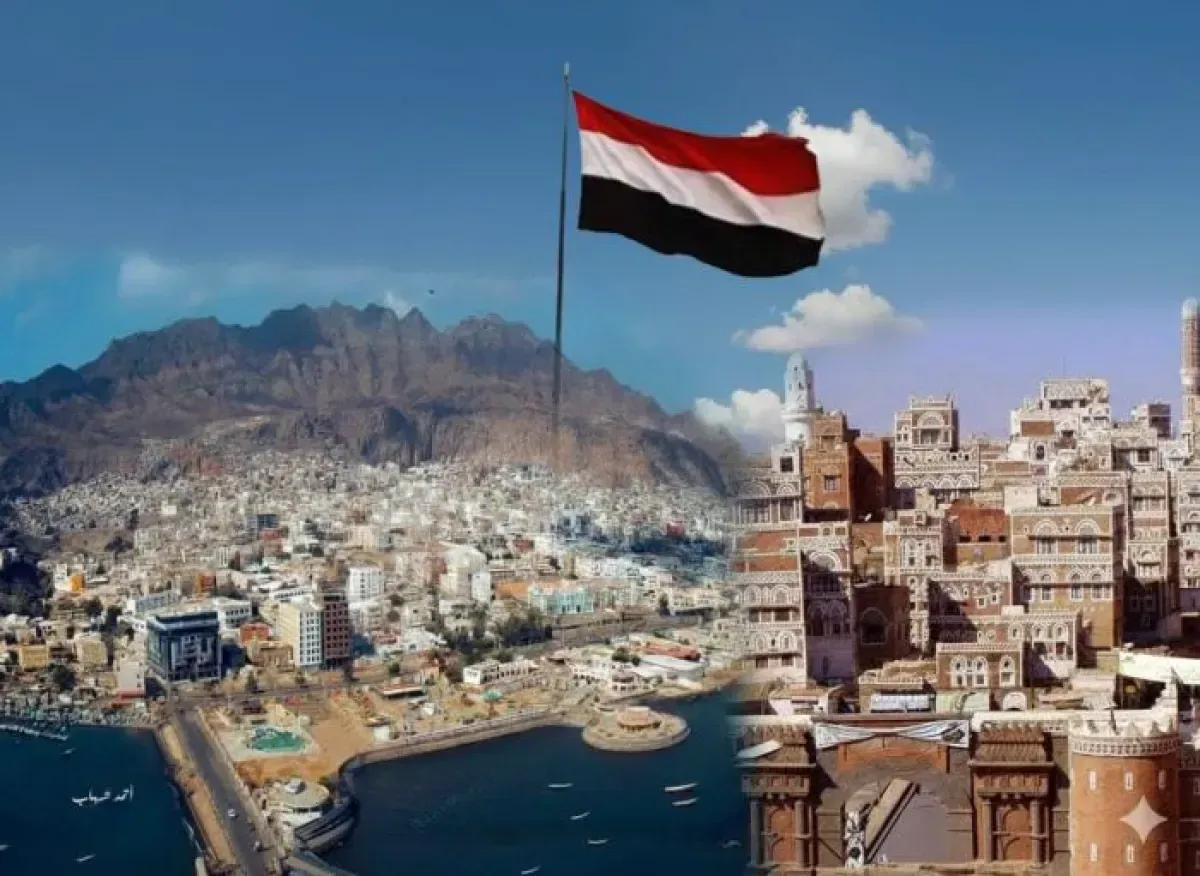



Yemen's Unity: A Historical Achievement Facing Modern Divisiveness
|
1 hour ago
A-
A+

The 36th anniversary of Yemen's reunification arrives at a critical juncture, amidst unprecedented political, security, and economic challenges threatening the nation's integrity and its unifying identity. This occasion prompts a re-evaluation of the Yemeni unity, a pivotal historical achievement that transcended decades of division and ideological conflict. This national commemoration holds profound significance, extending beyond a mere symbolic celebration. It reopens the discourse on the unity experience, encompassing its aspirations, successes, and attempts at sabotage. It also revives questions about Yemen's future and the possibility of restoring the republican project against the backdrop of fragmentation, divisions, and wars that have plagued the country in recent years. Central to this historical narrative is the figure of Ali Abdullah Saleh, inextricably linked to the project of Yemeni unity. Not only was he a signatory to the declaration of the Republic of Yemen, but he also led Yemen through one of the most complex political periods in its modern history, transforming the dream of unity from a deferred project into a tangible political and constitutional reality. The unification of Yemen was not a fleeting political moment but the culmination of a long national struggle rooted in the September and October revolutions, which envisioned unity as a strategic goal to complete the modern Yemeni state and overcome the legacies of imamate rule, colonialism, and division. The idea of unity remained deeply ingrained in the consciousness of Yemenis north and south for many years, despite political and ideological differences that characterized the two regions before 1990. This period was marked by border disputes and intermittent conflicts, yet the political will of national leaders consistently pushed the unity project forward as a national and historical objective. The 1970s and 1980s witnessed a series of agreements and political meetings between the leaderships of both sides, starting with the Tripoli Agreement and Kuwait Agreement, culminating in the decisive meetings that paved the way for the declaration of the Republic of Yemen on May 22, 1990. Many observers believe that the success of Yemeni unity was largely attributed to the leadership's ability to manage complex internal and external balances, with Ali Abdullah Saleh playing a pivotal role in translating the concept of unity into an executable project. Amidst rapid international shifts following the end of the Cold War, Saleh navigated political dialogue with the southern leadership, ultimately leading to the signing of the declaration and the organization of the transitional phase in 1990. His role extended beyond the political agreement to managing a delicate phase of integrating institutions from two distinct states. The raising of the Yemeni flag in Aden marked a watershed moment, signifying the establishment of a fully integrated unified state that officially ended the division between the Yemen Arab Republic and the People's Democratic Republic of Yemen. The declaration of unity brought about a radical transformation in Yemen's political system, ushering in an era of political openness, multipartyism, freedom of the press, and parliamentary elections. This period was considered a significant emerging democratic experiment in the Arabian Peninsula. Yemen also experienced considerable expansion in infrastructure and public services, including the development of strategic road networks, ports, airports, and higher education institutions. Developments also occurred in the oil, gas, and telecommunications sectors, alongside an active foreign policy that achieved significant breakthroughs, notably the 2000 treaty with Saudi Arabia to demarcate borders, a strategic step towards regional stability. Despite the importance of the unity achievement, the Yemeni experience was not immune to the challenges and conflicts arising from the integration of the two political and administrative systems. Fragmentation efforts gradually surfaced, culminating in the 1994 crisis and a subsequent civil war and secession attempt. This phase generated political, administrative, and economic tensions, particularly concerning issues related to the southern governorates, which remained a recurring theme in Yemeni political discourse. However, Saleh and the General People's Congress consistently maintained that addressing these imbalances should occur within the framework of preserving a unified Yemeni state, rejecting divisive and disintegrating agendas. Initiatives emerged to resolve issues concerning land, dismissed employees, and national partnership, alongside calls for administrative decentralization and expanded political and developmental participation to ensure justice and equal citizenship. The events of 2011 and subsequent chaos brought the issue of Yemeni unity into a more complex context, exacerbated by the Houthi coup and the rise of regionalism and political divisions, leading to a decline in central state authority. The Houthi militia's 2014 coup is considered by many Yemeni political forces to be the most significant threat to the Yemeni state since the declaration of unity, resulting in the collapse of state institutions, the outbreak of war, and a worsening humanitarian and economic crisis. The Houthi militias sought to impose a sectarian and tribal agenda, aiming to replicate imamate-style governance and undermine republican institutions, thereby deepening internal divisions and tearing the social fabric of Yemen. The war has led to an unprecedented deterioration in humanitarian and service conditions, increased poverty and displacement, and threatened international navigation in the Red Sea and Bab el-Mandeb, giving the Yemeni issue regional and international dimensions. This was a concern Ali Abdullah Saleh had warned about early on. In response to these challenges, calls have grown within political and popular circles to uphold Yemeni unity as the national framework capable of protecting Yemen from disintegration and collapse. Observers believe the future of Yemeni unity is now tied to the ability of political forces to build a just state based on equal citizenship, genuine partnership, and the rule of law, free from exclusion, hegemony, and regional conflicts. Preserving unity is no longer merely about political slogans but hinges on the existence of a modern state capable of meeting Yemenis' aspirations for security, stability, development, and social justice. In this context, recurrent calls are being made within republican and unionist circles for a comprehensive national reconciliation to mend the social fabric and establish a new era of political consensus and national partnership. The current phase demands that Yemeni national forces, across their diverse orientations, reprioritize their focus on the central objective of restoring state institutions, ending the coup, and building a lasting peace based on national partnership and the rule of law. The process of restoring the state requires rebuilding the military and security apparatus on national foundations, strengthening judicial and administrative institutions, and implementing comprehensive political and economic reforms to address the root causes of the Yemeni crisis. Many observers believe that any future project to save Yemen will only be viable if it is based on preserving the country's unity, seen as the primary guarantor of political, social, and security stability. Conversely, continued division and fragmentation would invite further external interference and transform Yemen into a theatre of open conflicts threatening the security of the entire region. Thirty-six years after the declaration of the Republic of Yemen, unity remains, for a broad segment of Yemenis, one of the most significant national achievements in contemporary history, despite the crises, challenges, and conflicts it has endured. Yemeni unity remains an integral part of the Yemeni national memory, representing the project that reshaped modern Yemen and opened the door to a new era of political and social transformation. In light of Yemen's current war, division, and economic collapse, restoring the state and preserving national unity appears as an existential project linked to the future of Yemenis and their right to build a just, secure, and stable nation. Between the will for unity that forged the event of May 22nd and the challenges Yemen faces today, the need persists for a comprehensive national project that restores Yemen's balance, identity, and standing, ushering in a new era that moves beyond war and division towards an horizon of statehood, stability, and peace. |