


Aden's Summer Blackouts: A Cycle of Corruption and Government Failure
|
2 days ago
A-
A+
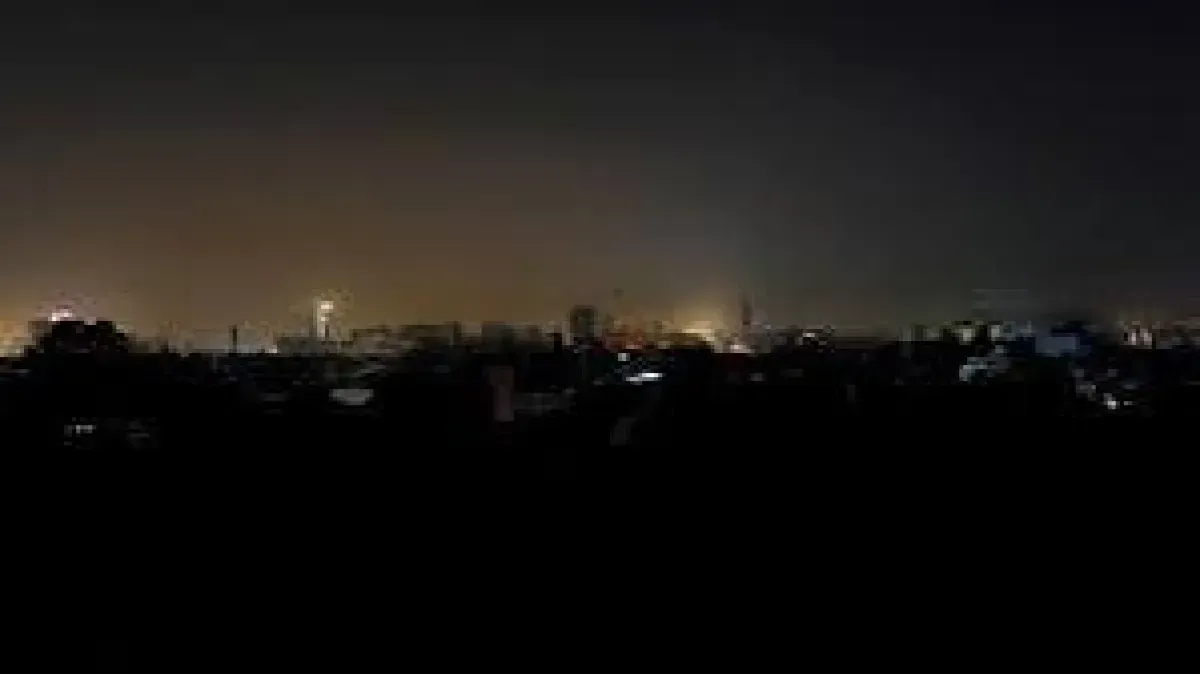
The Yemeni interim capital, Aden, faces a recurring electricity crisis each summer, a situation residents increasingly associate with governmental failure and political-administrative corruption within areas under the internationally recognized government's control. Actual electricity generation in Aden stands at approximately 410 megawatts, falling short of the daily demand, which reaches 600 megawatts, resulting in a deficit exceeding 190 megawatts. Annual fuel consumption is estimated at 601 million liters, while electricity losses escalated to 44% of the total energy produced in 2023, compared to 20% before 2015, according to reports from the Central Organization for Control and Accounting and government operational data. In recent years, power outage durations in Aden, Lahj, Abyan, and Shabwah have extended to around 12 hours daily, with only two hours of operational power. In some governorates, particularly Dhale, blackouts have surpassed 24 continuous hours amidst oppressive heat and humidity. However, officials, local sources, and energy sector observers indicate the crisis extends beyond technical deficiencies or fuel shortages, having evolved into one of Yemen's most intricate corruption issues, involving rental power station deals, fuel procurement commissions, citizen extortion schemes, and political conflicts over oil and energy revenues. Reports from oversight bodies and government data have revealed extensive irregularities in Aden's electricity projects, including the rehabilitation of the Al-Haswa thermal power station, a deal for a floating power station, and transgressions in fuel tenders. The Al-Haswa rehabilitation project, awarded to an Ukrainian company named "Bad Service" for $31.1 million through direct contracting without a tender, proceeded despite the company's lack of a known track record in the energy sector and absence of performance guarantees, with advance payments exceeding one-third of the contract value. A 2018 report by the Central Organization for Control and Accounting detailed financial violations in the same project, including the diversion of funds allocated for gas and distribution systems to purchase turbines and boilers via direct contracts, the provision of spare parts worth 378 million Yemeni Riyals, and the disbursement of approximately 3 million Euros without deducting contractual guarantees. Documents indicated that rehabilitation work involved installing a used turbine instead of a new one, reducing the station's power output by 32% below planned levels and increasing fuel consumption and annual operational losses due to poor technical efficiency. Further irregularities include a deal to rent a 100-megawatt floating power ship from "Prizm Enterprise," approved in 2021 despite objections from the Ministry of Finance. Reports suggest the deal was made without a tender or bank guarantees, and delays in the ship's operation led to the extension of diesel power station contracts, costing the state over $100 million annually. Oversight reports also identified violations in fuel tenders, with approximately $285 million spent in 2022 amidst accusations of inflated prices and weak oversight. In June 2023, members of the fuel tender committee resigned collectively, protesting what they described as obstruction and the unlawful resort to emergency procurement. Despite the formation of a new fuel tender committee in early 2024 and recorded financial savings, these improvements have not translated into better service, with prolonged daily power outages persisting in several Aden neighborhoods. Human rights and oversight testimonies attribute the ongoing crisis to a lack of political will to combat corruption, which has weakened the effectiveness of oversight institutions and hindered transparency and competition. Corruption extends beyond major contracts to daily service details within residential areas. In various parts of Aden, residents have been compelled to purchase electrical transformers, cables, and poles at their own expense, despite these being the responsibility of the state-owned electricity corporation. Local residents reported that electricity corporation officials coordinate with community leaders to persuade residents to contribute to replacement costs, which can reach tens of millions, in exchange for promises of partial equipment provision by the state. Unofficial levies of up to 500 Saudi Riyals per household are reportedly collected and shared among employees and local intermediaries. In new, rapidly developing areas, citizens are forced to buy networks, transformers, and cables from commercial markets, with suppliers allegedly allocating a portion of these sales as commissions to officials. Residents question the fate of the substantial revenues collected by the electricity corporation since 2015 from consumption bills, meter fees, and irregular connection fines, which citizens claim can amount to approximately 80,000 Yemeni Riyals per household. Informed sources reveal financial and administrative irregularities within the corporation, including the continued payment of salaries and incentives to employees who do not adhere to official work hours, alongside the hiring of new staff whose salaries are drawn from the corporation's revenues. Citizens also report extortion practices by some emergency and maintenance teams, who demand payment for fuel costs and technical team bonuses for repairing faults, expenses that should be covered by the official operational budget. In other instances, citizens are compelled to purchase repair tools like connectors and cables from markets or pay cash to intermediaries for them, without any official receipts. Activists and experts view these practices as indicative of "dual corruption": inflating procurement costs through questionable tenders and then reselling the same materials to citizens outside legal frameworks. For years, the electricity sector in Aden has been a focal point of controversial government spending, particularly through costly purchased power rental agreements with local companies. Oversight reports and parliamentary committees indicate that successive governments have entered into power rental contracts exceeding the cost of establishing permanent power stations, amidst accusations of corruption, commissions in contracting, fuel procurement, and maintenance. Government data and economic reports suggest the electricity sector has consumed hundreds of millions of dollars without achieving stable service, with several stations ceasing operation due to lack of maintenance, fuel shortages, and delayed payments to operating companies. Economists argue that the "purchased power" model in Yemen has become a "parallel war economy," benefiting political and commercial influence networks through long-term contracts negotiated under emergency conditions and lacking transparency and competition. In December 2025, military tensions escalated in the eastern governorates after forces affiliated with the Southern Transitional Council seized control of Hadhramaut and Al-Mahra, prompting Saudi intervention at the request of Presidential Leadership Council Chairman Rashad Al-Alimi to withdraw them from the oil-producing governorates. The Yemeni government and Saudi Arabia held the Southern Transitional Council responsible for exacerbating service and economic crises in liberated areas. Days after this intervention, crude oil tankers began flowing from Hadhramaut to Aden, quickly improving electricity service hours from approximately 12 hours of outages to just two, coinciding with the resumption of salary payments and government promises of service improvements. However, this improvement was short-lived. Approximately two months later, a member of the Presidential Leadership Council and Governor of Hadhramaut, Major General Salem Al-Khanbashi, demanded that the governorate receive 20% of the revenue from produced oil, or $20 per barrel transported out of it, including oil destined for Aden's power stations. He justified this by stating these arrangements were in place before the 2015 war that began after the Houthi militia's coup and seizure of the capital, Sanaa, and their subsequent expansion across Yemen. Observers believe these demands have reintroduced the electricity file into the realm of political disputes and economic influence, with the crisis gradually resurfacing as the current summer season begins, posing a significant challenge for the Yemeni government and the Saudi-led coalition in Yemen. Despite repeated government promises to reform the electricity sector, Aden and other liberated governorates continue to face the same scenario each summer: service collapse, public protests, and the exchange of accusations among political factions, followed by new promises that remain unfulfilled. Observers suggest that resolving the crisis requires dismantling the interest networks linked to the energy sector, initiating investigations into controversial rental contracts, subjecting revenues and expenditures to transparent oversight, and establishing permanent power generation stations utilizing gas and renewable energy. However, in a country ravaged by war and division, electricity in Aden appears to be more than just a public service; it has become a reflection of the political conflict and corruption that devours state institutions, leaving millions of residents to face a long, dark summer. |