Yemen War: 11 Years of Conflict, Persistent Military Divisions
|
51 minutes ago
A-
A+
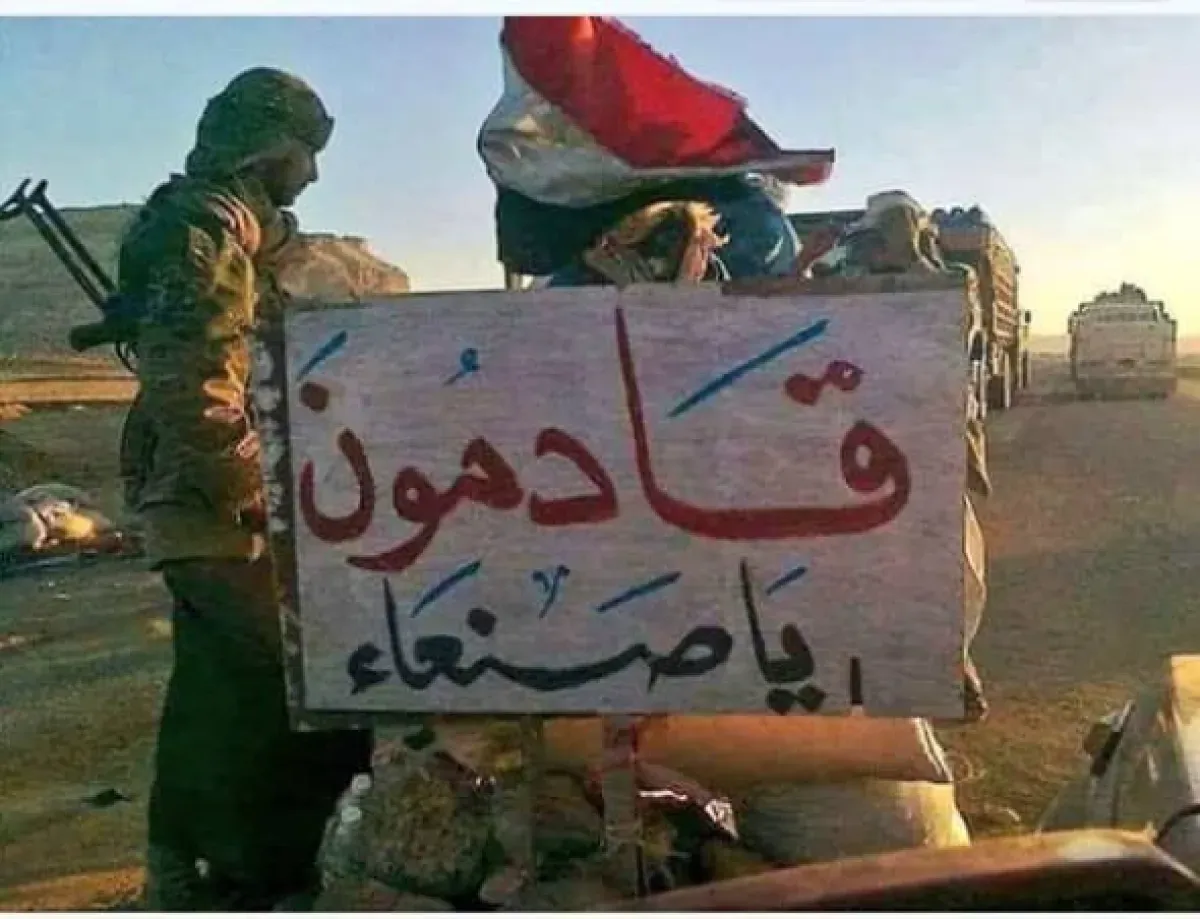
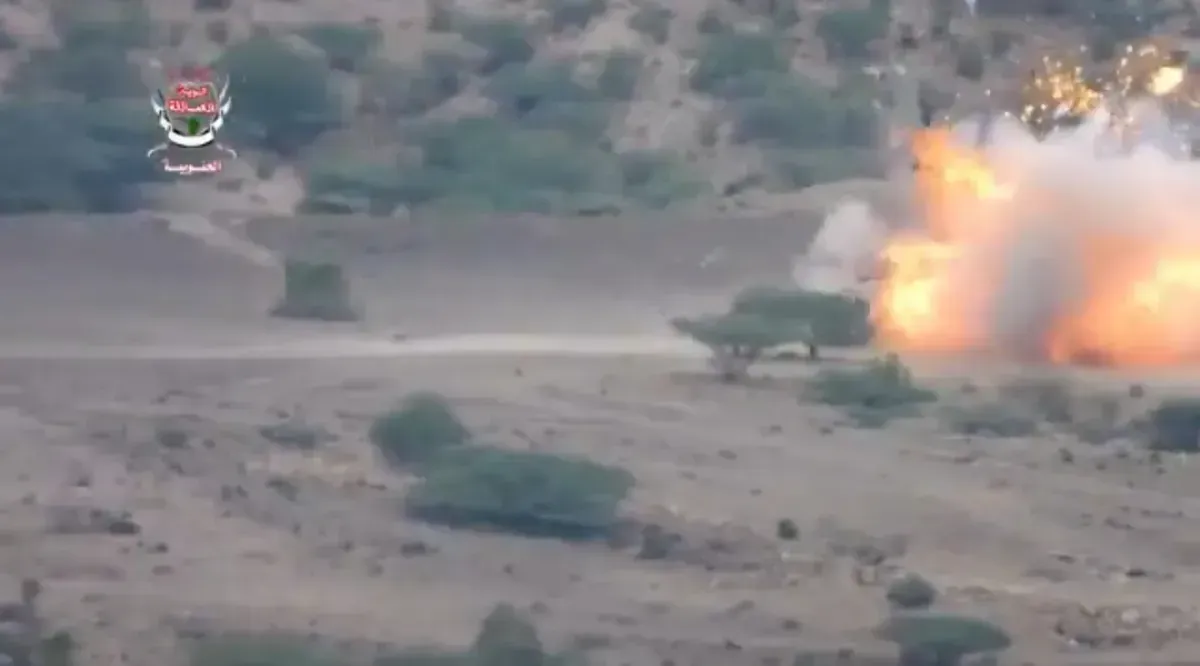
A stark contrast emerges when comparing the initial month of "Fajr Al-Yaman" (Dawn of Yemen), launched by the Presidential Leadership Council Chairman Rashad Al-Alimi in October 2026, with over 138 months since the commencement of "Decisive Storm" led by Saudi Arabia in March 2015. This comparison highlights a fundamental paradox in the Yemeni crisis: how a coalition possessing international recognition, regional support, and significant military capabilities has failed to decisively defeat the Houthi rebels after more than eleven years of military intervention. The stated objectives of both operations were identical: to end the coup, reclaim Sanaa, and restore state institutions to legitimate authority. However, the war's outcome has not reflected progress commensurate with the scale of resources deployed. Instead, it has exposed political and military imbalances that have enabled the Houthi militia to strengthen its capabilities and expand its influence, capitalizing on the divisions among its adversaries. The core problem has not been a shortage of arms or a lack of external support, but rather the absence of a unified national vision, conflicting agendas among participating factions, multiple decision-making centers and loyalties, and the transformation of military formations into entities with independent affiliations rather than integration into a single national institution. The "Decisive Storm" operation began as a broad military intervention involving Arab nations, in support of the internationally recognized Yemeni government and the restoration of state institutions. However, divergent political and security calculations among the participating countries impacted the war's trajectory, fostering various spheres of influence and military forces with different allegiances. Instead of consolidating armed formations under a national military institution, liberated areas witnessed the emergence of multiple factions, some aligned with different international actors, maintaining independent political affiliations, funding sources, and influence networks. Over time, these differences escalated into armed clashes between forces theoretically belonging to the same camp, particularly after the liberation of Aden and southern governorates in 2015. Competition for influence and control intensified, coinciding with a decline in the momentum of operations to recapture northern governorates. The multiplicity of external sponsors and their varying priorities weakened the government's authority, leading to the rise of parallel military and security formations that retained considerable autonomy in decision-making, funding, and direction, despite formal ties to official institutions. Consequently, the anti-Houthi bloc has not faced its adversary with unified strength but with spheres of influence whose interests sometimes intersect and sometimes conflict, hindering unified field decisions and joint operations. The battle for the West Coast in 2018 served as a revealing juncture of the interplay between military and political calculations within the anti-Houthi camp. Joint forces made advances toward the city of Hodeidah and its port, a development that threatened one of the most critical strategic gateways relied upon by the militia economically and militarily. However, this progress halted following the Stockholm Agreement in December 2018, brokered by the United Nations, which stipulated a ceasefire and troop redeployment in the city and its ports. Regardless of the humanitarian considerations and international pressures surrounding the negotiations, the field outcome was the freezing of the Hodeidah front, the cessation of the forces' advance, and the city and its port remaining under Houthi control. This juncture exposed the gap between military progress and political consensus, demonstrating that field gains remain vulnerable to reversal in the absence of a joint strategy linking the requirements of battle with the political calculations of the participating parties. In contrast, the Houthi militia exploited periods of fighting and détente to reorganize its forces, expand recruitment and mobilization, develop its missile and drone capabilities, and strengthen its security and military apparatus, benefiting from Iranian support and associated military and technical expertise. While its adversaries were preoccupied with political disputes and power-sharing, the Iran-backed Houthi militia focused on centralizing its military decision-making, developing its command and control system, and accumulating combat experience, allowing it to utilize lulls to rebuild its capabilities. The paradox lies in the militia's ability to maintain a degree of cohesion in its military structure, despite lacking international recognition and losing territory at various stages, while its opponents failed to transform their diverse capabilities into an integrated national force. This disparity is not attributable to a single factor but to the interplay of centralized decision-making among the Houthis with multiple decision-making centers among their opponents, and the differing affiliations, funding sources, armaments, and directives of the armed formations. Between 2019 and 2022, the fronts in Marib, Al-Jawf, Al-Bayda, and Taiz witnessed intense confrontations, during which government forces achieved advances at certain stages and suffered setbacks at others. However, the issue was not the multiplicity of fronts but the inability to manage them within a synchronized military strategy that would distribute pressure on the Houthis and prevent them from concentrating their forces on a single axis. Strategic experts note that the effectiveness of multi-front armies is measured not by the number of brigades and battalions but by their ability to unify decisions, coordinate operations, exchange information, manage logistics and support, and distribute reserves according to battlefield requirements. When each force retains its independent affiliation and decision-making authority, coordination becomes more complex, and fronts transform into separate axes with varying readiness and support levels, allowing the Houthis to exploit the fragmentation of confrontations and focus their efforts on the most critical fronts. Military developments during 2026 reveal that these imbalances are not transient administrative problems but a structural crisis in the formation of anti-Houthi forces and the nature of their leadership. With the launch of the "Fajr Al-Yaman" operation in October 2026, the objective of retaking Sanaa has returned to the forefront, amid hopes of shifting the balance of power after years of stalemate. However, launching a new operation does not signify overcoming past imbalances. The question has persisted for years: who holds military authority? Who determines the priorities of the fronts? And to whom do formations report when orders conflict with the calculations of political and supporting powers? These are fundamental determinants of effectiveness, as an integrated strategy cannot be built with multiple affiliations and decision-making centers, nor can gains be sustained with formations independent of official command. Therefore, the operation's success hinges on addressing the root of the crisis: unifying decisions, ending dual loyalties, and subjecting forces to state authority. The fronts in Taiz exemplify the crisis of multiple leaderships and loyalties within the anti-Houthi camp, characterized by diverse formations with differing political affiliations, funding sources, and directives. The governorate holds strategic importance due to its location, connection to the West Coast and Bab al-Mandab Strait, and its status as a prominent confrontation arena. However, its fronts suffer from coordination deficits, differing priorities, and overlapping authorities. The repercussions have not been limited to stalled operations but have extended to repeated withdrawals from combat positions due to disputes, rivalries, influence calculations, and political affiliations, potentially creating vacuums that the Houthis can exploit, disrupt plans, and undermine confidence among forces. In a front where protecting civilians and lifting the siege should be the top priorities, preoccupation with power struggles becomes a factor in prolonging the confrontation. Pluralism is not inherently a problem as long as it operates under a single command, but it becomes a source of weakness with multiple affiliations and the absence of decisive military authority. Military analysts and experts agree that years of war have revealed that the crisis of the Yemeni military institution lies not in the multiplicity of formations per se, but in their transformation into competing centers of command, decision-making, and loyalty. A national army is built on a clear chain of command, a unified military doctrine, and loyalty to the state, not to a commander, party, or funding entity. They emphasized that the war has produced formations that have retained political affiliations, external relationships, and independent decision-making authority, despite their inclusion within the state's official structures. They stressed that addressing these imbalances requires rebuilding the military institution on national and professional foundations, unifying command, armament, logistics, salaries, and training, and subjecting all forces to the authority of the Ministry of Defense and the General Staff, enabling the state to reclaim the monopoly on power. After more than 11 years since "Decisive Storm" and one month into "Fajr Al-Yaman," the Yemeni crisis is no longer merely a military confrontation between the government and the Houthi militia but a crisis of the state, its institutions, and its sovereign decision-making, reflected in the military's cohesion. In this context, withdrawals from Taiz exemplify the cost of multiple military affiliations, where leadership calculations override battlefield necessities, and disputes transform into vulnerabilities exploited by the enemy. Armies are built on unity of command, doctrine, and hierarchy, not on gathering brigades under the banner of a Ministry of Defense. Soldiers cannot be expected to hold their ground while leaderships contest decisions. Therefore, Sanaa needs a true national army, a single command, and a unified decision. A battle waged with forces of multiple loyalties will not achieve a unified state. Unless the dilemma of multiple leaderships is resolved, past failures will be repeated, while the Houthis capitalize on divisions to prolong the war. |