Taiz Faces Escalating Conflict and Humanitarian Crisis Amidst "Dawn of Yemen" Operation
|
38 minutes ago
A-
A+
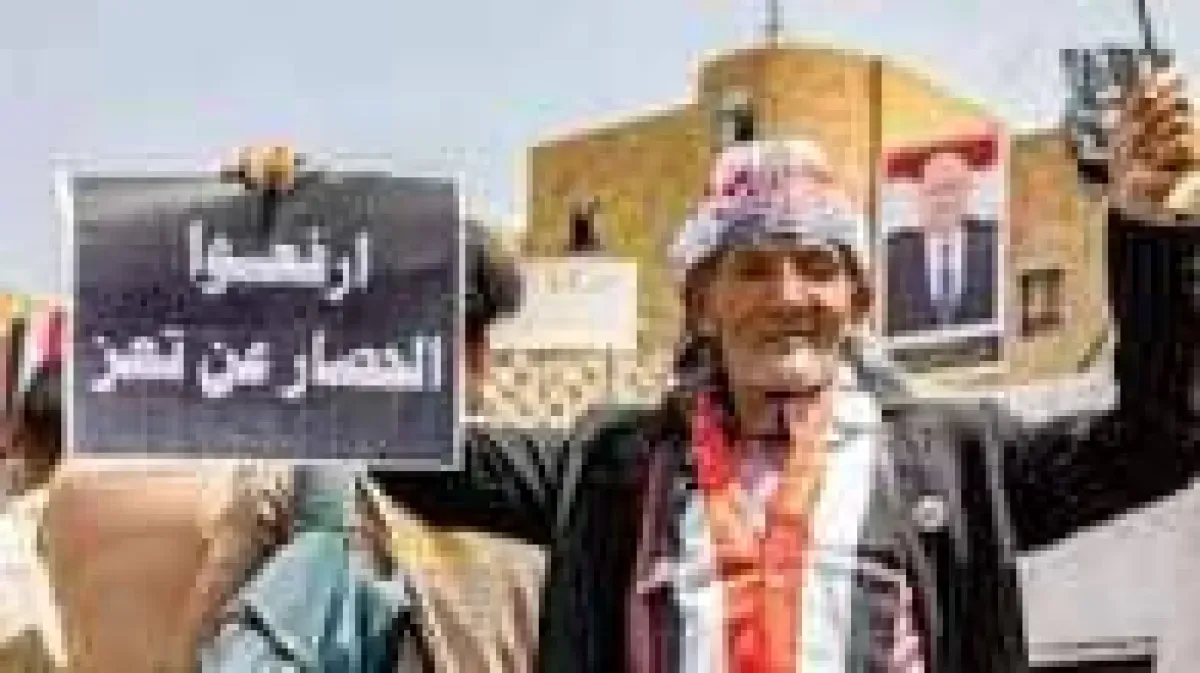
Taiz, a city long recognized as a symbol of civilian resistance in Yemen, finds itself once again at the forefront of a dangerous conflict. Escalating battles between internationally recognized government forces and Houthi rebels, coupled with a tightening siege and widespread displacement, threaten a humanitarian catastrophe. While government forces report advances in the "Dawn of Yemen" operation, the United Nations highlights a surge in displacement across Yemen, with nearly half of those fleeing seeking refuge in Taiz. The "Dawn of Yemen" operation commenced on October 5, with government forces announcing the recapture of positions in Dhubab, the vicinity of Bab al-Mandab, and the mountains of Haifan, as well as western Taiz. However, the most pressing development is not solely on the front lines, but the proximity of the fighting to densely populated areas within Taiz city. Clashes are concentrated on the western and southern axes. Military sources confirmed on October 22 that government forces and popular resistance repelled Houthi attempts to regain positions west and south of the city, supported by intensive air cover as part of the operation. A Houthi leader was reportedly killed on the Al-Shaqab front in the Sabr al-Mawazin district, indicating the continuation of intense fighting around the city. Despite declared military gains, the situation for civilians remains precarious. The city, already burdened by movement and supply restrictions, is now caught between the crossfire and the closure of vital routes connecting it to Aden. The UN High Commissioner for Human Rights, Volker Turk, has called for a humanitarian corridor to deliver aid to Taiz, warning that the closure of the Taiz-Aden road impedes the flow of supplies and deprives residents of essential goods. He noted that disrupted supplies have driven up prices for food and necessities, exacerbating the pressure on the city under siege. Amnesty International has also urged Houthi militias to immediately open vital routes in and around Taiz, cautioning that blocking access and hindering aid deliveries endanger hundreds of thousands, particularly as clashes approach residential areas. These demands place the humanitarian question at the core of the "Dawn of Yemen" operation, which aims to break the siege on Taiz and facilitate aid delivery. The Houthi militia bears direct responsibility for closing key routes connecting Taiz to Aden and other cities, obstructing the passage of food, medicine, and fuel, and restricting the movement of civilians and the wounded. However, military action alone is insufficient; urgent and binding humanitarian arrangements are needed to ensure the safe passage of relief convoys and to establish safe corridors for the evacuation of the sick, wounded, and displaced. The UN Office for the Coordination of Humanitarian Affairs (OCHA) reported that renewed fighting has displaced approximately 260,000 people in Yemen since early August, with nearly half seeking refuge in Taiz Governorate. This indicates that Taiz is not only a battleground but also a primary destination for the displaced fleeing other fronts. These figures emerge as UN reports detail 251 documented civilian casualties since August, including 57 deaths and 194 injuries, with children accounting for half of the civilian fatalities. These numbers underscore the grave danger faced by civilians and heighten the urgency for their protection and the establishment of safe evacuation and assistance routes. The crisis in Taiz extends beyond shelling and displacement to the health sector. Local authorities have warned of an impending health crisis due to fuel and medicine shortages stemming from the siege, posing direct risks to newborns and premature infants. Media reports have documented the deaths of nine civilians and injuries to 42 others in a single week due to shelling and sniper fire, signifying an expansion of targeting beyond traditional front lines. The lack of fuel creates a compounded crisis: the cessation or reduction of generator operations threatens hospitals, medicine refrigerators, and oxygen supplies, while also complicating the transportation of patients and medical supplies within and outside the city. Government forces are conducting intensive strikes against Houthi positions, gatherings, and supply lines, announcing on Thursday the execution of 780 targeting operations within 24 hours, neutralizing approximately 512 elements, and destroying or disabling over 330 military vehicles. However, these figures, released by the government's military spokesperson, do not alter the reality that the battle in Taiz is being waged in a densely populated urban environment, and any escalation directly impacts civilians. The practical question remains: can military operations be separated from humanitarian needs? The current field response suggests this separation is nearly impossible, as every advance or retreat on the fronts affects commodity prices, the movement of the displaced, hospital capacity, and the chances of aid delivery. Experts and human rights advocates emphasize that the situation in Taiz necessitates three parallel, mutually reinforcing steps: establishing a safe and sustainable humanitarian corridor for the entry of food, medicine, and fuel, and the evacuation of the wounded and most vulnerable civilians. Ensuring the protection of civilians, health facilities, schools, and shelters, and preventing targeting of residential areas. Expanding humanitarian response beyond the city, particularly in areas receiving the displaced, with urgent funding for shelter, food, water, and cash assistance. Ultimately, Taiz today represents a true test for the "Dawn of Yemen" operation. If it succeeds in securing a humanitarian corridor and protecting civilians, it may partially mitigate the cost of war. However, if the siege persists, displacement accelerates, and health services collapse, the city may enter a more severe humanitarian phase, defined not only by the scale of the battles but also by the population's capacity to survive. |