


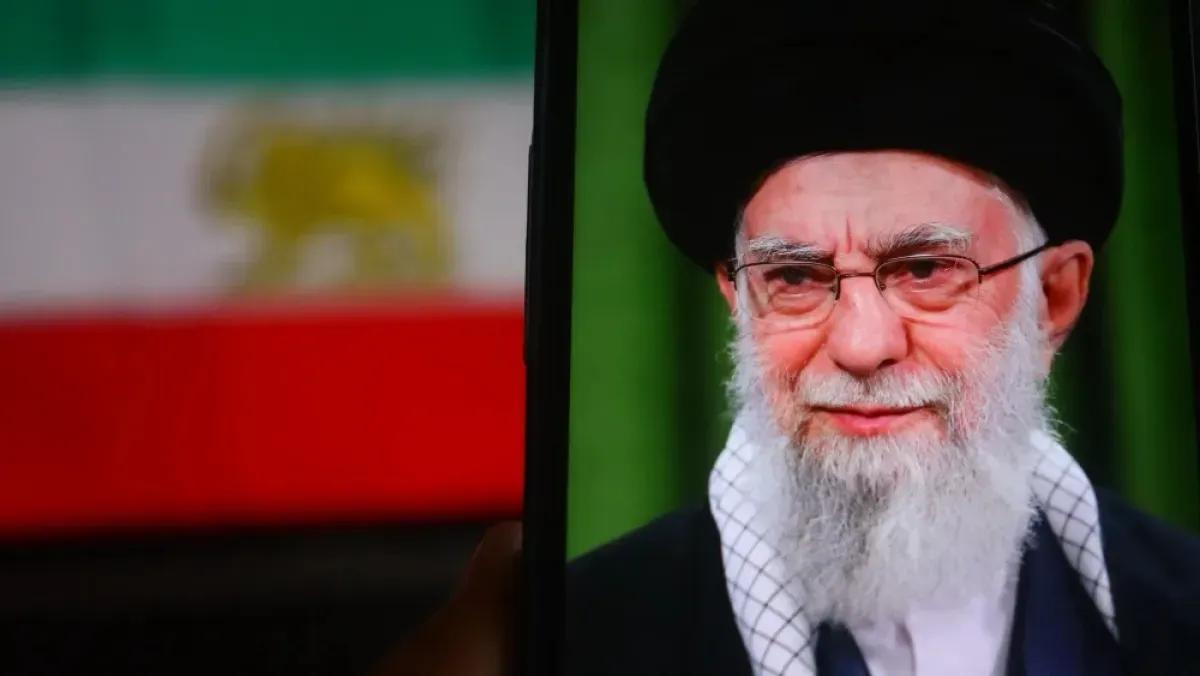
A recent internal critique published in Iran's "Jomhouri Eslami" newspaper signals deepening fissures within the ruling establishment concerning the nation's future, particularly in the wake of a preliminary agreement with the United States. The editorial suggests that the Iranian public is increasingly rejecting hardline rhetoric and factional conflict, asserting that "there is no place for extremists" in a "new Iran." According to a report by Mardou Soghom, former managing editor at Radio Free Europe, published by the Middle East Forum, the newspaper posited that a majority of Iranians are disillusioned with the performance of the ruling political factions. Citizens are reportedly aware of the extensive corruption accumulated over past decades and anticipate accountability once the repercussions of what was termed a "imposed war" subside. The report interprets the editorial not as a direct challenge to the Islamic Republic's political system, but as an indicator of growing concern within certain official circles regarding the costs of confrontational foreign policies. This concern is amplified by ongoing discussions about strategies to address the economic, social, and strategic crises that have emerged following recent conflicts. The Iranian political system, over more than two decades under the late Supreme Leader Ali Khamenei, saw an expansion of ideological factions within parliament and state institutions. Recent criticisms suggest that figures within the establishment are questioning the viability of this model in confronting current challenges. Despite these internal debates, influential figures continue to endorse Khamenei's approach to foreign relations, particularly the principle of "neither negotiation nor war." This strategy was predicated on the Islamic Republic's perceived ability to advance its nuclear program, expand regional influence, and withstand adversaries without provoking direct military retaliation. However, events in 2026, according to the report, appear to have undermined this premise. The report further contends that the political system, consolidated under Khamenei, has lost its primary pillar following his passing, leading to a contest for power among remaining factions. Parliament Speaker Mohammad Bagher Ghalibaf and his allies in the Revolutionary Guard are seen as currently wielding significant influence. The centralized decision-making authority previously held by the Supreme Leader's office has been absent since the destruction of its Tehran headquarters in a February 28, 2026, strike attributed to Israel and the United States, leaving the political establishment operating without the figure around whom the system had coalesced for over three decades. While Mojtaba Khamenei has reportedly assumed the role of Supreme Leader, his sustained absence from public view since late February has fueled speculation about his health and actual authority. Although Iranian authorities maintain he is managing state affairs, citing security reasons for his absence, observers remain skeptical of his capacity to fulfill his duties. Some have even raised questions about his survival, given the lack of any verified public appearance or address. The report concludes that the future political direction of the regime remains uncertain, with no clear indication of Ghalibaf and his allies' readiness to pursue genuine ideological shifts in state policy. The newspaper "Khorasan," reportedly close to Ghalibaf, suggested that the agreement with Washington is a tactical truce rather than a final settlement, offering the Islamic Republic an opportunity to rebuild its military capabilities and prepare for future confrontations. This perspective views negotiations as a strategic repositioning rather than a path to reconciliation. Any substantial change in Iran's policies would necessitate a comprehensive reevaluation of its nearly five-decade approach to the United States and Israel, alongside an expansion of political and social freedoms, strengthening of legal institutions, and the establishment of internal accountability. However, this scenario appears distant, particularly as critical voices within the establishment, including "Jomhouri Eslami," focus on reforms within the existing framework rather than advocating for a restructuring of the political system that has led to the nation's current crises. |