


US Study Warns of Post-Conflict Void in Iran Amid Military Success
|
3 hours ago
A-
A+
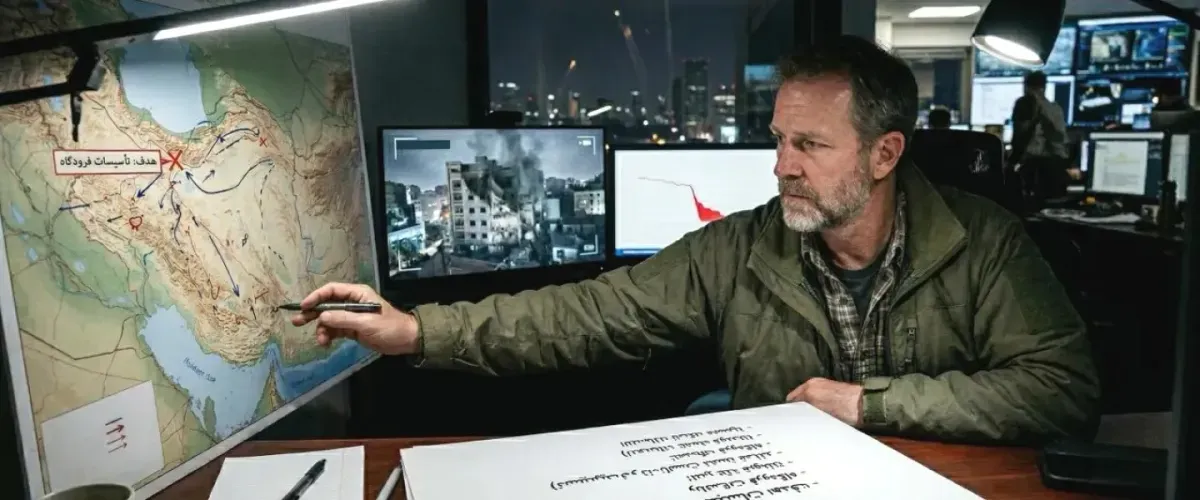
American analysts emphasize the critical need for a clear post-war plan for Iran, asserting that military victory alone is insufficient to guarantee regional stability, nearly a month after military operations commenced against the nation. The study, authored by Greg Roman, Executive Director of the Middle East Forum, highlights the complex and multi-faceted nature of the ongoing conflict. While Israel endures a difficult routine punctuated by air raid sirens and constant anticipation, Iran, despite its weakened state, continues to launch missiles. Concurrently, scenes from the war unfold across diverse locations, from Dubai to Erbil and Tehran, illustrating its widespread impact. According to the analysis, the military campaign has achieved significant tactical successes, including the elimination of Iran's Supreme Leader and the dismantling of the Islamic Revolutionary Guard Corps (IRGC) command. However, these achievements, which have caused considerable disruption in global oil markets, necessitate a transition from military engagement to institutional rebuilding. A substantial political and strategic vacuum persists, marked by the absence of a transitional framework and a succession theory that bridges the destruction of the current regime with the establishment of a stable system aligned with American interests and Iranian aspirations. The study notes a conspicuous lack of a comprehensive strategic vision among Western analytical institutions, which tend to focus on conflict minutiae without proposing a clear blueprint for an alternative system. While some advocate for ceasefires or negotiations, the fundamental question of what the post-regime order will look like and who will construct it has not received adequate attention. The author suggests that President Trump possesses the opportunity and tools to formulate such a strategic plan, provided he has a clearly defined roadmap. The current conflict, the author clarifies, demands moving beyond the "fog of war" and premature declarations of victory. American military history in the Middle East is replete with initial triumphs that devolved into strategic failures due to an inability to design the state that would emerge after the collapse of the existing order. Therefore, decisive victory must encompass not only neutralizing an adversary's capabilities but also building a system that serves American interests for an entire generation. The author underscores the importance of legitimacy in any political transition, citing the post-World War II reconstruction of Germany and Iraq after Saddam Hussein. Instead of direct military occupation, the United States should coordinate efforts to establish legitimate governance structures led by Iranians, supported by American and international backing. Legitimacy, he stresses, must stem from internal resistance elements that bore the risks during the critical period, not solely from expatriate opposition figures. Furthermore, the study addresses the issue of Iran's bureaucracy, cautioning against a wholesale purge that could lead to institutional collapse. It proposes a system of "conditional functional immunity" to ensure the continuity of essential services while holding individuals accountable for their actions. Regarding the IRGC, described as a "military-industrial complex" with vast economic holdings, the author posits that economic incentives, rather than solely military pressure, are key to its downfall. The paper also highlights risks associated with an "electoral blockade" of energy trade, the proliferation of nuclear weapons, the role of drug trafficking in financing proxies, the importance of securing intelligence archives, the rise of regional autonomy, challenges posed by the dark fleet, the potential weaponization of the environment, shifting regional alliances, Turkish nuclear risks, Russian incapacitation, and information warfare. The conclusion asserts that complete victory requires an integrated plan that transcends military success to include a theory of political succession, economic stability, management of environmental and informational risks, and the cultivation of robust regional alliances. |