



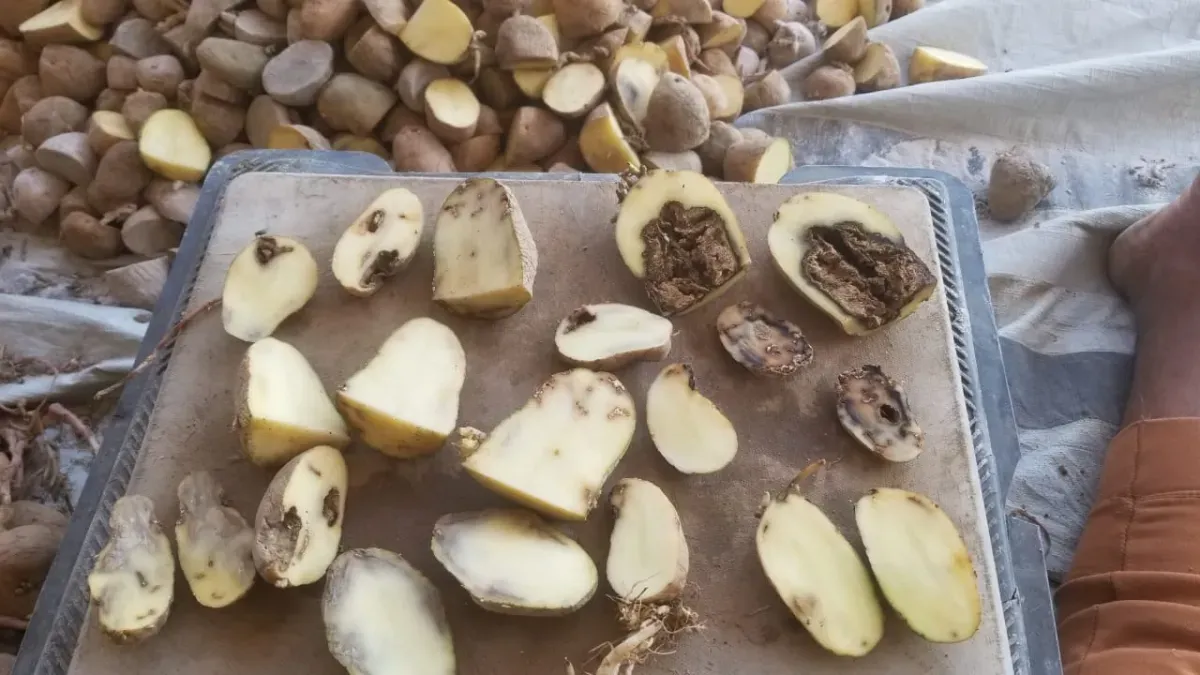
An investigative report has revealed significant loopholes in Yemen's plant quarantine and inspection systems, allowing contaminated imported seeds and seed varieties carrying plant diseases and harmful weeds to enter circulation. This has occurred despite official decrees banning their trade or mandating their return to countries of origin, leading to substantial losses for farmers and damage to agricultural land. The investigation, conducted by journalist Asim Al-Shumairy for the Arab Reporters for Investigative Journalism (ARIJ) network, highlighted that farmers in the governorates of Amran and Dhamar suffered extensive damage due to planting imported potato seeds infected with brown rot bacteria. The infestation not only destroyed crops but also contaminated the soil, rendering some land unusable for potato cultivation and other crops for years. The report documented the seizure of a 139-ton shipment of imported potato seeds destined for Agrico Yemen company at the Afar customs port in Al-Bayda governorate in late 2025. Laboratory tests confirmed the seeds were infected with brown rot bacteria and fungal diseases, and the shipment lacked prior import permits. Despite official requests to destroy the shipment, directives were issued in April 2026 to transport it to Dhamar governorate and deliver it to an organic fertilizer production plant, a move that faced official objections. Further findings indicated that shipments of carrot seeds imported from the Netherlands, which had previously shown impurities, foreign seeds, and fungal infections, were banned from circulation and ordered for return to the Netherlands. However, two companies failed to return the shipments, and another institution returned only a portion of the quantity. Subsequently, these rejected seeds appeared in farms in the Dharhan area of Sana'a governorate, contributing to the spread of harmful weeds and causing financial losses to farmers. The investigation also detailed similar incidents involving Egyptian potato seed shipments that arrived at the Al-Wadea port in September 2025, totaling 399 tons. These were released pending laboratory test results. However, quantities of these seeds were sold to farmers in Marib and planted, despite being imported as table potatoes. This resulted in crop damage and soil degradation. Experts attribute the continuation of these practices to weak oversight, multiple import points, and smuggling activities between different controlled areas. The report warned of the inadequate technical capabilities of agricultural laboratories, their outdated equipment, and a lack of training and resources, which limit their ability to detect certain diseases and contaminants. This could lead to the release of shipments without complete necessary testing. It also pointed to the absence of an effective system for tracking seeds after they reach markets and farms, and poor coordination with competent authorities in countries of origin. The investigation called for strengthening oversight and plant quarantine measures, developing laboratories, and establishing a digital system for tracking agricultural shipments. |